

Impingement ovens suit high-throughput, repetitive items such as pizza, buns and par-baked crusts, where speed and consistency matter more than variety. Convection ovens suit kitchens running a flexible, multi-product menu where gentler airflow protects delicate bakes. The trade-off is simple: impingement buys you throughput and repeatability, convection buys you flexibility and finer control over finish.
TL;DR:
- Impingement cut meat cooking times by up to 50% at similar air temperatures in peer reviewed tests, but load and tray position can change results.
- Optimized trials reported energy savings of 54% for beef and 31% for whole chicken, though those figures are not guaranteed during full kitchen operation.
- Impingement ovens can preheat in as little as 30 minutes, compared with 1 to 2 hours for older direct gas fired systems.
- For delicate pastries or varied bakery menus, gentler convection airflow reduces the risk of drying or distortion; test fan speed before changing temperature.
- If your menu splits roughly evenly between delicate bakes and high volume staples, consider a zoned or hybrid oven; otherwise, match the dominant product need.
Table of Contents
- How impingement and convection ovens actually differ
- What the research says about cook time and quality
- Throughput, preheat and the daily running of each oven
- Energy use: what faster cycles mean for your bills
- How to choose between impingement and convection
- Setting up the right oven for your menu
- When a hybrid or zoned oven makes sense
- How we help you choose and install the right oven
- FAQ
- Sources
How impingement and convection ovens actually differ
Both technologies move heated air to cook food faster than a still, radiant oven, but they do it in very different ways. Forced convection uses a fan to circulate heated air generally around the cavity, typically at moderate speeds that wrap food evenly without disturbing its surface much. Air-jet impingement instead fires heated air through small nozzles in concentrated, high-velocity jets, reported in trials at roughly 12 to 15 metres per second in optimised bread-baking setups, against the lower, general airflow of standard convection fans, according to industry comparisons.
That velocity difference matters because of what happens at the food’s surface. A layer of cooler, slower-moving air clings to any food in an oven, acting as insulation and slowing heat transfer. Impingement jets are forceful enough to punch through that boundary layer, so hot air reaches the surface directly and heat transfer accelerates sharply.
In practice, this shows up in everyday tasks:
- A pizza crust crisps and browns faster under impingement jets than under general convection airflow at the same temperature.
- A tray of delicate pastries risks drying or distorting under the same forceful jets, which is why convection remains the gentler default for varied bakery lines.
What the research says about cook time and quality
Peer-reviewed testing backs up what kitchens observe on the line. A Journal of Food Engineering study00149-1) comparing impingement and forced convection on buns and pork cutlets found impingement cut cooking time, with reductions of up to 50% for meats at similar air temperatures, while also improving browning uniformity.

Impingement reduced meat cooking time significantly compared with conventional forced convection at matched air temperatures, according to the Journal of Food Engineering study, a meaningful swing for any kitchen timing a service.
Industry testing echoes the lab findings. Reported bake-time ranges show the gap clearly:
- Home convection ovens commonly need 8 to 15 minutes for comparable items.
- Commercial convection ovens shorten that to roughly 6 to 10 minutes.
- Impingement conveyor ovens often finish the same items in 5 to 9 minutes, according to Pizza Today’s comparison.
These figures carry caveats worth noting. Tray position, oven load and the actual measured air velocity at the nozzle all shift results, so a test run at light load will not match a packed service line. Humidity in the cavity also affects crust and crumb texture, which is why pilot-scale work on nozzle distance and velocity control remains relevant to anyone tuning settings for a specific product, as detailed in humidity and jet impingement research.
Throughput, preheat and the daily running of each oven
The operational gap between these technologies often matters more than the lab numbers. On a conveyorised or batch line, impingement’s forced jets give operators repeatable results tray after tray, which suits high-volume, single-product runs such as pizza or flatbread production.
Preheat behaviour is where impingement shows a clear practical edge. Impingement ovens can reach operating temperature in as little as 30 minutes, against 1 to 2 hours for older direct gas-fired systems, according to Baking Business. That latency difference lets a kitchen change bake profiles between dayparts without losing production time.
Three factors shape day-to-day repeatability:
- Product spacing on the tray or belt affects how evenly jets or airflow reach every item.
- Oven load changes the effective air velocity, so a half-empty oven can cook faster than a full one.
- Cavity humidity alters crust formation and can mask or exaggerate cooking time differences between loads.
Maintenance differs too. Impingement nozzles need periodic cleaning to keep jets even, guided by best practices for industrial wash temperatures to ensure hygiene and fabric longevity, while convection fans need less frequent attention but still require regular filter and cavity checks for consistent airflow.
Pro Tip: Run a dummy load before committing to a new bake profile. Small timing shifts of around 10 seconds can noticeably change a par-baked crust, so testing on scrap product saves wastage once you move to real orders.
Energy use: what faster cycles mean for your bills
Faster cooking generally means less energy spent per item, but the real savings depend on how a kitchen runs its duty cycle. Recent experimental work on air-jet impingement reports substantial gains:
- Optimised impingement conditions delivered energy savings of roughly 54% for beef and 31% for whole chicken compared with standard cooking, according to a 2026 Springer study.
Energy savings of up to 54% for beef under optimised impingement conditions, per the 2026 Springer study, reflect controlled trial conditions rather than guaranteed kitchen-wide results.
Across a full shift, preheat time and how often an oven cycles on and off matter as much as per-item speed. An oven left idling between orders burns energy regardless of how fast it cooks once loaded. Faster cycle times also mean shorter periods of extraction demand, which can ease pressure on kitchen ventilation and HVAC systems during peak service.
How to choose between impingement and convection
Start with your menu mix and throughput target before looking at any oven spec sheet. A single-product, high-volume line points towards impingement; a varied menu with delicate items points towards convection.
Questions worth putting to any supplier:
- Can air velocity or jet intensity be adjusted for different products?
- Does the unit offer humidity control for crust and crumb management?
- How accessible is the cavity for daily cleaning and nozzle maintenance?
- What warranty and installation support comes with the unit?
A short selector:
- If you run one or two high-volume products through most of service, choose impingement for its speed and repeatability.
- If your menu spans pastries, roasts and delicate bakes, choose convection for its gentler, more controllable airflow.
- If footprint is tight and staff need simple operation, favour whichever technology matches your current product range rather than adding complexity.
Our convection oven buying guide covers sizing and feature trade-offs in more depth once you have settled on a direction.
Setting up the right oven for your menu
We see two patterns repeat across kitchens we work with: flexible menus settle on convection for its control over browning and moisture, while high-volume single-product lines move to speed or impingement units for raw throughput. Our speed versus convection comparison walks through both paths in more detail.
Starting points that work well in practice:
- Begin convection bakes at manufacturer-recommended temperatures and adjust fan speed before changing the set point.
- For impingement or speed units, test nozzle distance and jet angle on a dummy load first.
- Keep tray position consistent once you find a setting that works, since repeatability depends on it.
We handle installation and offer flexible payment options, so a new oven does not need to disrupt cash flow alongside service.
When a hybrid or zoned oven makes sense
Some kitchens genuinely need both. Zoned process ovens and combi units that blend gentler convection zones with faster drying or finishing zones suit menus split between delicate bakes and high-volume staples. The investment is worth it when your menu mix is roughly even between the two needs, not when one style of cooking clearly dominates your covers.
— Simon
How we help you choose and install the right oven
We stock genuine ovens from multiple top manufacturers, alongside convection, combi and speed models, so you can compare real options rather than guess from a spec sheet. Our team gives practical advice on which technology suits your menu and throughput, and we handle installation so the oven is running correctly from day one.
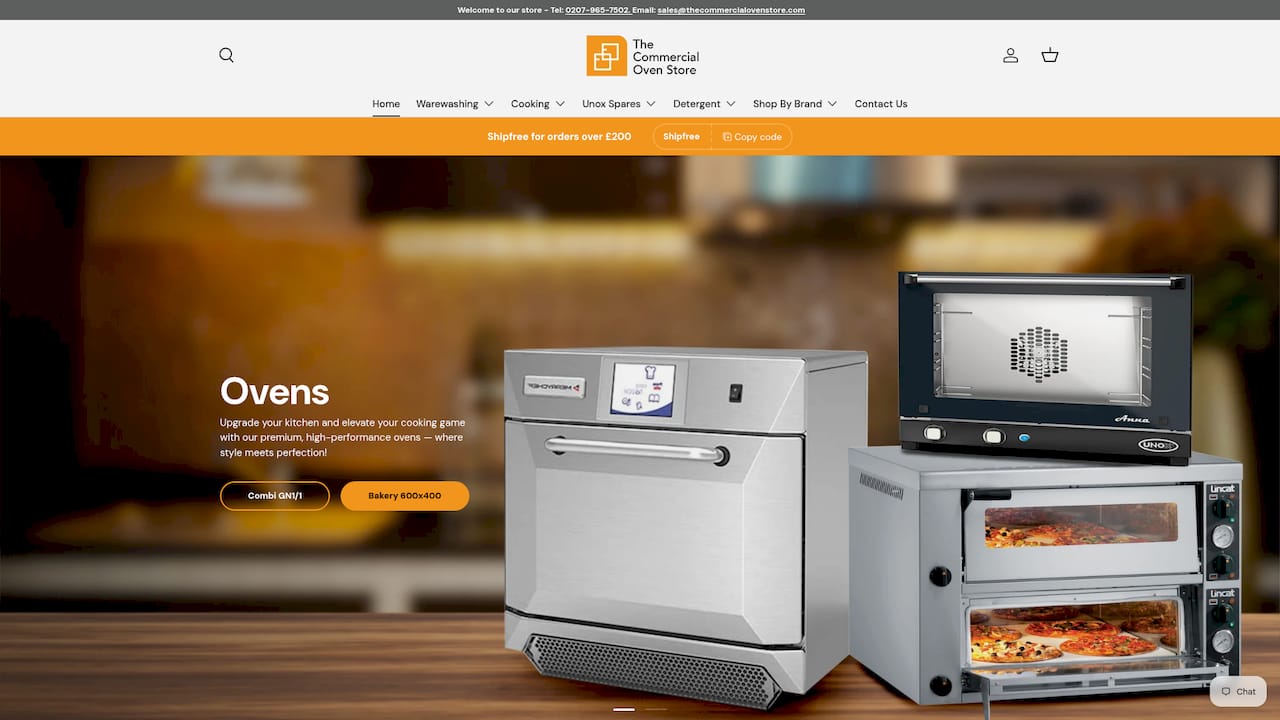
- Browse our commercial ovens collection or convection ovens range to compare models directly.
- Ask about flexible payment options if you would rather spread the cost of a new oven.
- Get in touch for a site survey if you are weighing impingement against convection for a specific menu.
Visit The Commercial Oven Store to start the conversation about your kitchen’s next oven.
FAQ
What is the main difference between impingement and convection cooking?
Impingement fires heated air through nozzles in concentrated, high-velocity jets, while convection circulates air more generally around the cavity. That jet force punches through the insulating air layer at a food’s surface, which speeds up cooking noticeably compared with standard convection airflow, according to Pizza Today.
Is impingement cooking faster than convection?
Yes, impingement ovens generally cook faster. Peer-reviewed testing found impingement cut cooking time for meats by up to 50% compared with standard forced convection at similar air temperatures, according to the Journal of Food Engineering.
Which oven type is better for a varied bakery menu?
Convection ovens suit varied menus better because their gentler, general airflow protects delicate pastries and layered bakes from the drying effect of concentrated jets. Impingement is better reserved for high-volume, repetitive items such as pizza or flatbread.
Do impingement ovens use less energy than convection ovens?
Impingement can use notably less energy per cooked item under optimised conditions. A 2026 study reported energy savings of around 54% for beef and 31% for whole chicken compared with standard cooking methods.
What should I check before buying an oven for my kitchen?
Match the oven to your menu mix and throughput target first, then check whether air velocity and humidity are adjustable for different products. Also confirm warranty cover, installation support and how easy the unit is to clean daily, since maintenance affects long-term repeatability.
Sources
- Impingement vs Convection Ovens — Pizza Today
- Innovative cooking with air jet impingement: Enhancing beef and chicken quality, safety, and efficiency — Springer (2026)
- Humidity change and its effects on baking in an electrically heated air jet impingement oven — ScienceDirect
- Make oven technology a hot topic of discussion — Baking Business