

For high-use commercial kitchens, the right move is a Planned Preventative Maintenance (PPM) contract with emergency call-out cover, backed by a Gas Safe-registered engineer for any gas appliance work. That single decision prevents the majority of costly breakdowns. Here is what to do in the next 24–72 hours:
- Book a site survey with a Gas Safe-registered (for gas ovens) or NICEIC-registered (for electric) engineer to assess your current oven fleet.
- Ask specifically whether the engineer holds manufacturer-authorised status for your brand, whether that is Rational, Unox, Blue Seal, or another.
- Start a maintenance logbook today. Record the oven model, serial number, last service date, and any known faults.
- Order a set of door seals for each oven model on-site. They are inexpensive, fail frequently, and a spare on the shelf can save a full service day.
- Request a sample PPM condition report from any provider you are evaluating, before signing anything.
Table of Contents
- What does commercial oven maintenance actually include?
- PPM contracts versus reactive repairs: which should you choose?
- What are the most common oven faults, and what should staff check daily?
- How often should ovens be serviced, and what does it cost in the UK?
- How do you choose a commercial oven engineer or maintenance provider?
- Manufacturer-authorised versus independent engineers: does it matter?
- What happens during an emergency call-out?
- Logbooks, warranties, and compliance records
- Research-backed practices that reduce downtime and extend oven life
- Key takeaways
- The maintenance mistake most kitchens make
- Useful UK resources and manufacturer pages
- Equipment and parts support from Thecommercialovenstore
What does commercial oven maintenance actually include?
Routine commercial oven maintenance splits into two distinct layers, and confusing them is where most kitchens go wrong.
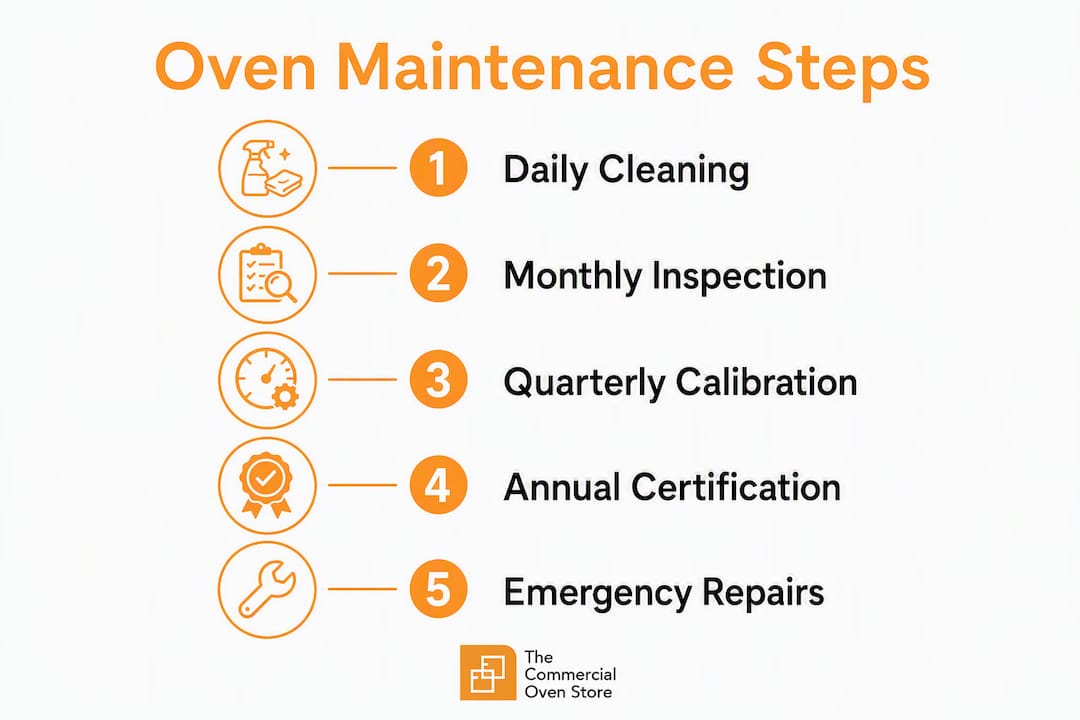
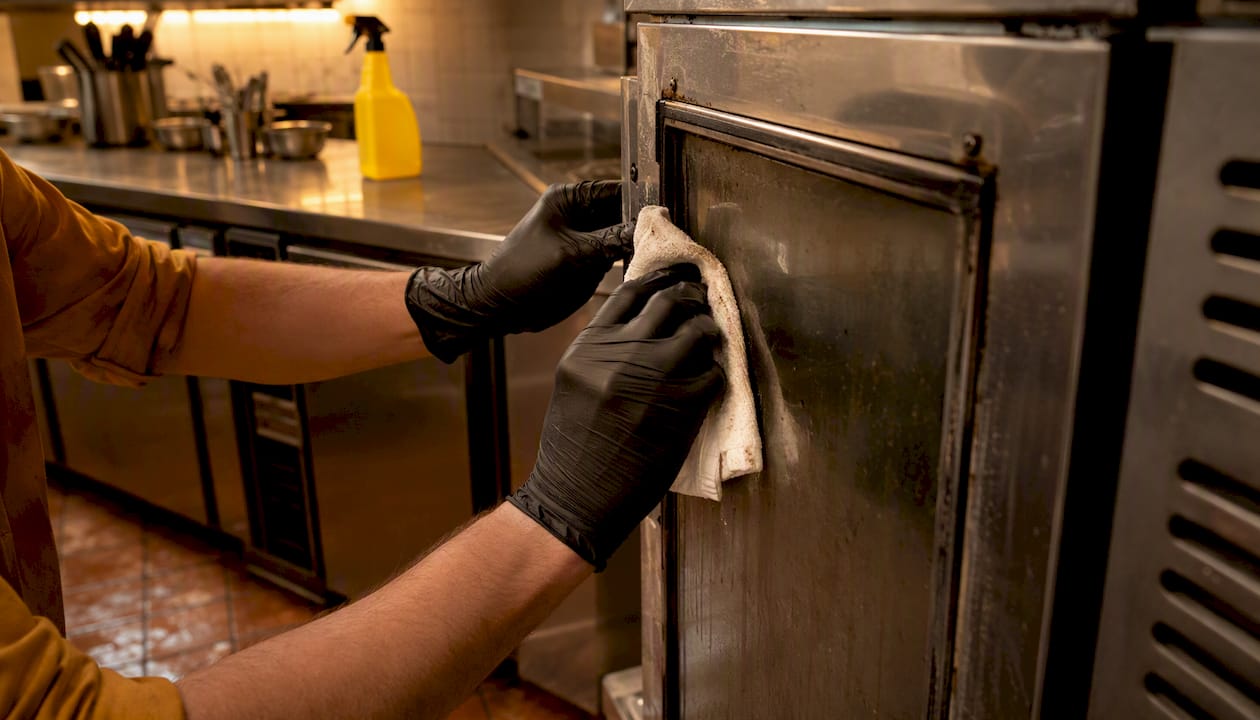
The first layer belongs to your kitchen staff: daily wipe-downs of interior cavities, clearing grease from door seals, checking that fan covers are unobstructed, and emptying crumb trays. Weekly tasks extend to cleaning fan baffle plates, inspecting door hinges for play, and checking that the oven reaches temperature within a reasonable window. These tasks cost nothing beyond staff time and prevent the majority of avoidable failures.
The second layer requires a certified engineer. This covers burner inspections, thermocouple and safety device testing, gas valve checks, electrical continuity testing, sensor calibration, door seal replacement (when the seal has hardened or cracked beyond staff competence), and the production of a written condition report. For combi ovens such as the Rational i Combi Pro, this also means descaling the boiler circuit and verifying the water filtration system against OEM specifications.
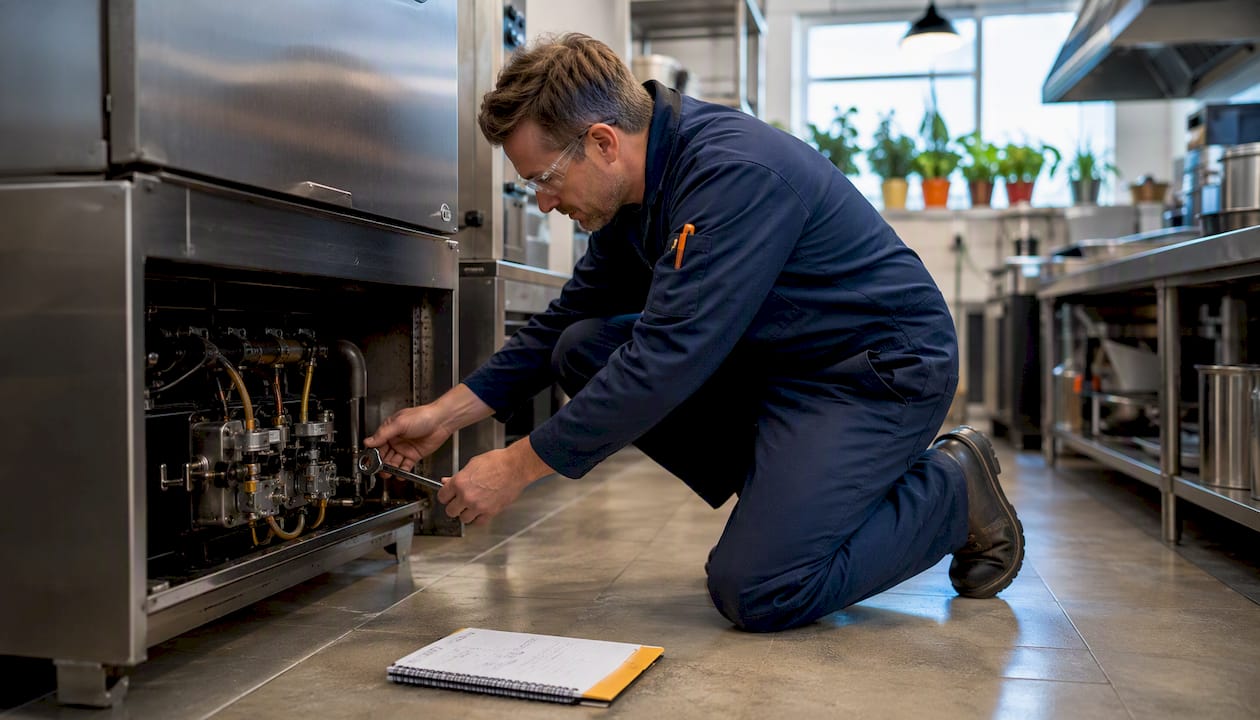
A standard condition report should record as-found and as-left readings for temperature, gas pressure (where applicable), and any safety device test results. Photographic evidence of worn components, before and after replacement, is increasingly expected by environmental health inspectors and insurers alike. Engineers who do not produce written reports are a red flag.
Pro Tip: Ask your engineer to photograph every replaced component and attach the images to the condition report. This single habit has saved operators from warranty disputes and insurance complications.
PPM contracts versus reactive repairs: which should you choose?
Planned Preventative Maintenance means scheduling engineer visits at fixed intervals regardless of whether a fault has appeared. Reactive repair means calling an engineer only when something breaks. The billing model, the risk profile, and the cost trajectory differ significantly between the two.
Maintenance budgeted like a recurring operating cost consistently produces lower total spend than reactive-only approaches, because emergency call-outs during peak service hours can cost double or triple standard rates. A kitchen running two Rational combi ovens on a reactive-only basis will almost certainly spend more over three years than one on a modest annual PPM contract.
| Dimension | PPM contract | Reactive (ad-hoc) repair |
|---|---|---|
| Service type | Scheduled visits at agreed intervals | Call-out only when a fault occurs |
| Typical visit frequency | Quarterly or bi-annual (high-use); annual (low-use) | As needed |
| Emergency call-out cover | Usually included or discounted | Full rate, often with peak surcharge |
| Calibration and sensor checks | Included in scope | Charged separately per visit |
| Condition reports | Included at each visit | May not be provided |
| Parts discounts | Often 10–15% on OEM parts | Standard retail pricing |
| Warranty preservation | Supports manufacturer warranty | Risk of voiding warranty if gaps in service records |
| Best for | High-volume restaurants, bakeries, production kitchens | Very low-use or backup units |
PPM is not always the right answer. A single convection oven used two or three times a week in a small café may not justify a quarterly contract. In that scenario, an annual service visit plus a standing arrangement with a local engineer for reactive cover is a reasonable alternative. The decision turns on how much revenue depends on that oven being operational.
PPM contracts typically run for 12 months, with some providers offering 24-month terms at a reduced annual rate. Cancellation clauses vary: check whether early termination triggers a penalty or simply forfeits any remaining prepaid visits.
What are the most common oven faults, and what should staff check daily?
Most breakdowns trace back to a handful of recurring causes, nearly all of which are detectable before they become failures.
Common faults to watch for:
- Door seal failure: hardened, cracked, or compressed seals allow heat to escape, causing temperature drift and increased energy consumption.
- Blocked fans or filters: grease accumulation on fan blades and air filters reduces airflow, stresses the motor, and creates uneven cooking.
- Burner mis-fire (gas ovens): often caused by a dirty or misaligned burner, a faulty thermocouple, or a blocked injector.
- Thermostat drift: ovens running 10–15°C above or below the set point, usually detectable with a cheap oven thermometer placed inside the cavity.
- Scale build-up in combi ovens: boiler-based units accumulate limescale rapidly in hard-water areas; left unchecked, this shortens boiler life and degrades steam quality.
Daily staff checklist:
- Wipe interior walls and base; remove food debris from the cavity floor.
- Check door seals visually for cracks or compression marks.
- Confirm the oven reaches set temperature before service begins (use a probe thermometer if in doubt).
- Clear any visible grease from fan covers.
Weekly staff checklist:
- Remove and clean fan baffle plates.
- Inspect door hinges for looseness or resistance.
- Check the exterior ventilation grilles for blockage.
- Log any unusual smells, sounds, or temperature inconsistencies.
Pro Tip: Keep a small stock of door seals, oven bulbs, and control knobs on-site. These are the three components most likely to fail between engineer visits, and a spare on the shelf means a 10-minute fix rather than a day of downtime.
How often should ovens be serviced, and what does it cost in the UK?
Service frequency depends on how hard the oven works. A bakery running a deck oven from 5am to 6pm six days a week needs a different schedule from a care home using a convection oven for lunch service only.
| Use case | Daily/weekly hygiene | Monthly check | Quarterly calibration | Annual certification |
|---|---|---|---|---|
| High-volume restaurant or bakery | Staff (daily) | Engineer or senior staff | Engineer required | Gas Safe / NICEIC sign-off |
| Medium-use café or pub kitchen | Staff (daily) | Staff (weekly log) | Engineer recommended | Annual service visit |
| Low-use (care home, school) | Staff (weekly) | Not required | Annual or bi-annual | Annual service visit |
| Production / food manufacturing | Staff (daily) | Engineer required | Engineer required (multi-point survey) | Regulatory sign-off |
For temperature sensor validation and oven-uniformity surveys, the threshold for corrective action is typically a drift of ±3°C from the set point. Monthly sensor checks and quarterly multi-point surveys are the standard for critical food production environments.
On pricing, UK commercial oven service costs vary by region, oven type, and provider. A single annual service visit for a standard convection oven typically falls in the range of £120–£250 depending on location and whether parts are included. PPM contracts covering two visits per year for a combi oven tend to run from around £300–£600 annually, with manufacturer-authorised engineers at the higher end. Emergency call-out fees during peak hours can reach two to three times the standard rate, which is the clearest financial argument for keeping critical spares on-site.
Contract SLAs in the UK market commonly specify a 4-hour response for emergency call-outs during business hours, with next-business-day response for non-critical faults. Some providers offer 24/7 emergency cover at a premium. Always ask for the SLA in writing before signing.
How do you choose a commercial oven engineer or maintenance provider?
Credentials are the starting point, not a nice-to-have. For gas appliances, the engineer must be on the Gas Safe Register; you can verify any engineer’s registration number on the Gas Safe website before they arrive. For electrical work, NICEIC registration is the equivalent standard. An engineer who cannot produce either credential for the relevant work type should not be on your site.
Beyond the basics, ask these questions on first contact:
- What is your average first-visit fix rate? (A well-stocked engineer should resolve most faults in a single visit.)
- Which brands are you manufacturer-authorised to service? (Rational and Unox both operate authorised engineer programmes; ask for written evidence.)
- What is your emergency response time, and is it guaranteed in the contract?
- Can you provide a sample condition report from a recent service?
- What are your public liability insurance limits?
- Do you carry common spare parts for my oven models in your van?
Red flags to walk away from:
- No Gas Safe or NICEIC registration for the relevant work type.
- Vague or verbal-only SLA commitments.
- Inability to provide a written condition report.
- No references from comparable kitchen operations.
- Cash-only pricing with no written quote.
- Claims of manufacturer-authorised status without documentary evidence.
On contract negotiation: push for a defined response-time SLA, a parts-pricing schedule, and a clear statement of what is and is not included in each visit. Ambiguity in a PPM contract almost always resolves in the provider’s favour.
Manufacturer-authorised versus independent engineers: does it matter?
For most standard convection ovens, a competent independent engineer with Gas Safe or NICEIC registration and the right parts access will do the job well. The distinction becomes material when you are running high-value combi ovens or when the manufacturer warranty is still active.
Rational and Unox both operate formal authorised engineer programmes. Using a non-authorised engineer on a Rational unit under warranty can void that warranty outright. The same applies to Electrolux Professional, which maintains its own service documentation and spares logistics network for large hospitality operations. For these brands, the cost premium of an authorised engineer is almost always justified during the warranty period.
Blue Seal and Falcon are well-documented in the UK market, and many independent engineers carry parts and know the ranges well. Blue Seal in particular has established OEM parts lists and service schedules that make independent servicing straightforward. Falcon’s long-standing presence in UK catering means most experienced engineers have encountered the range. Lincat, as a UK-based manufacturer, benefits from local supply chains and established service channels that make parts lead times shorter than for some imported brands. Amana units, commonly found in speed and conveyor configurations, have industry-standard parts availability across most regions.
For combi ovens specifically, descaling intervals and water filtration specifications vary by manufacturer and must be followed to the letter. An independent engineer who does not have access to the OEM service manual for your specific model is a risk.
Pro Tip: Ask any engineer to show you their manufacturer-authorisation certificate before the first visit. Keep a copy in your maintenance logbook alongside the approved-parts list for each oven model. If an engineer cannot produce it, treat the claim as unverified.
What happens during an emergency call-out?
A breakdown mid-service is a controlled emergency, not a crisis, if you have a protocol in place.
When a fault occurs during service: isolate the oven immediately using the main isolator switch or gas valve. Do not attempt to reset or restart a gas appliance that has shut down on a safety device without engineer clearance. Photograph the fault display, error code, and any visible damage before touching anything. Call your PPM provider’s emergency line and give them the oven make, model, serial number, and the error code. While you wait, brief your team on the contingency plan: which menu items can be prepared on remaining equipment, and which need to be removed from service.
Most UK providers with emergency cover will aim for a 4-hour response during business hours. Outside those hours, response times extend, and costs rise. An engineer arriving within two hours of a call during a Friday dinner service is the exception, not the norm, unless you have a premium SLA in writing.
During the repair, the engineer should document the as-found condition, the fault diagnosis, parts replaced, and the as-left readings. Request a copy of this report before the engineer leaves. This document is your evidence for any warranty or insurance claim, and it feeds directly into your maintenance logbook.
After the repair, run the oven through a full heat cycle and verify it reaches set temperature before returning it to service. Do not skip this step under pressure to resume service quickly.
Logbooks, warranties, and compliance records
A maintenance logbook is the single most important administrative tool in a commercial kitchen, and most operators underestimate it until an environmental health inspection or a warranty dispute makes its absence painful. Documenting maintenance activity is essential evidence of due diligence and can preserve warranty cover on high-end equipment.
Minimum logbook entries for each service visit:
- Date and time of visit.
- Engineer name, company, Gas Safe or NICEIC registration number.
- Oven make, model, and serial number.
- As-found readings (temperature, gas pressure, any error codes).
- Work carried out (cleaning, parts replaced, calibration adjustments).
- Parts used (part number, description, OEM or after market).
- As-left readings and pass/fail status.
- Photographs of replaced components (attach or reference file location).
- Next scheduled service date.
- Engineer signature.
Digital Computerised Maintenance Management Systems (CMMS) such as Limble or UpKeep offer searchable records, automatic reminders, and audit trails that paper logbooks cannot match. For multi-site operations or kitchens subject to regular environmental health visits, a CMMS is worth the subscription cost. For a single-site operation, a well-maintained paper logbook in a ring binder kept near the oven is still perfectly acceptable to most inspectors, provided it is complete and up to date.
Environmental health officers in the UK commonly ask to see evidence of gas safety checks, temperature calibration records, and cleaning schedules. A logbook that covers all three removes any ambiguity about whether the kitchen is managing its equipment responsibly.
Research-backed practices that reduce downtime and extend oven life
Facilities that implement a structured oven maintenance checklist report up to 40% fewer unplanned downtime events. That figure covers burner checks, belt and seal inspections, sensor validation, and full PM cycles. The reduction is not marginal.
Regular maintenance can also extend equipment life and reduce energy costs by up to around 20%, with operators reporting ovens lasting longer with routine care and improved insulation and seal condition. A combi oven that might otherwise need replacement at eight years can realistically reach twelve or more with a disciplined PPM programme.
The operational recommendations that follow from the evidence are straightforward:
- Stock critical spares (door seals, bulbs, control knobs) on-site at all times.
- Run weekly staff checks using a written checklist, not memory.
- Schedule quarterly calibration for high-use ovens, monthly for production environments.
- Keep digital or paper logs that are complete enough to satisfy an environmental health inspection.
Pro Tip: Schedule PPM visits during off-peak hours, typically early morning or a Monday when footfall is lower. Engineers working without time pressure are more thorough, and you avoid the peak-hour surcharge that can double the call-out cost.
Key takeaways
A PPM contract with a Gas Safe or NICEIC-registered engineer is the most cost-effective way to protect high-use commercial ovens from avoidable breakdowns.
| Point | Details |
|---|---|
| PPM over reactive | A PPM contract reduces emergency costs and preserves manufacturer warranties for high-use ovens. |
| Verify credentials | Always confirm Gas Safe (gas) or NICEIC (electrical) registration before any engineer works on your equipment. |
| Start a logbook now | Record every service visit with as-found/as-left readings, parts used, and engineer credentials to protect warranties and pass inspections. |
| Stock critical spares | Door seals, bulbs, and control knobs on-site can turn a potential day of downtime into a 10-minute fix. |
| Thecommercialovenstore | Thecommercialovenstore supplies commercial ovens from Rational, Unox, and Blue Seal with access to OEM-compatible parts, making it a practical single source for equipment and replacement components. |
The maintenance mistake most kitchens make
The most common failure pattern is not neglect. It is a split between good intentions and poor handover. A kitchen manager sets up a PPM contract, the first two visits go well, and then the engineer changes, the logbook gets lost in a drawer, and six months later nobody can confirm when the Rational combi was last calibrated or whether the door seal was replaced or just cleaned.
The fix is not more paperwork. It is ownership. Assign one person, whether a head chef or a kitchen manager, to hold the logbook, confirm every engineer visit is logged before the engineer leaves, and set a calendar reminder for the next scheduled service. That person does not need to understand gas pressure readings. They need to know where the logbook is and to refuse to let an engineer leave without signing it.
Balancing in-house checks with professional PPM works best when both sides know exactly where their responsibility ends. Staff handle hygiene and visual checks; engineers handle everything technical. The moment that boundary blurs, things get missed. Keep it clean, keep it documented, and the oven fleet largely looks after itself.
Useful UK resources and manufacturer pages
A short list of authoritative sources for operators who need to verify credentials, check calibration standards, or review manufacturer guidance:
- Gas Safe Register: verify any engineer’s Gas Safe registration number before they work on a gas appliance. Free public search tool.
- NICEIC: verify electrically qualified engineers and contractors for commercial electrical work.
- SoCalGas Natural Gas Foodservice Equipment Cleaning and Maintaining User Guide: detailed maintenance guidance covering burner checks, thermocouple testing, and cleaning schedules for gas foodservice equipment.
- American Society of Baking: Oven Maintenance: covers PM task lists including lubrication, safety device testing, and the importance of maintenance documentation.
- Oxmaint: Commercial Oven Maintenance Checklist for Bakeries: practical checklist covering daily, weekly, and monthly tasks for food production environments.
- Rational UK: manufacturer-authorised engineer programme details and service documentation available via the Rational UK website; relevant for warranty-preserving servicing of i Combi Pro and i Combi Classic units.
- Unox UK: reseller and authorised service network information available via the Unox UK website; relevant for Unox convection oven servicing and OEM parts.
- Thecommercialovenstore: commercial convection oven buying guide: covers oven types and use cases, useful context when planning maintenance schedules by oven category.
Equipment and parts support from Thecommercialovenstore
Hiring a PPM provider and sourcing replacement parts are two separate decisions, and the second one catches many operators off guard. When an engineer identifies a worn door seal or a failed heating element, the speed of the repair depends entirely on how quickly the right part arrives.
Thecommercialovenstore stocks commercial ovens from Rational, Unox, and Blue Seal, along with OEM-compatible accessories including installation kits, oven stands, grids, and trays. For operators who want a single point of contact for both equipment and replacement components, that combination is genuinely useful. Flexible payment options through iwocaPay mean you can manage a replacement purchase or a parts order without tying up working capital at an inconvenient moment.
If your current oven is approaching the end of its serviceable life, or if you are specifying equipment for a new kitchen, browse the full range at Thecommercialovenstore and speak to the team about which models carry the best parts availability and manufacturer support in the UK market.