

Countertop combi ovens run roughly 20 to 30 inches wide and suit cafés or small pubs. 6-rack (6×1/1 GN) models measure around 35 inches wide, suitable for small restaurants with relatively low daily covers. 10-rack full-size units, at roughly 42 inches wide, handle busy kitchens with moderately high daily portions. 20-rack floor models exceed 45 inches wide and belong in banqueting or central production kitchens.
Width tells you where the box fits against a wall. It tells you almost nothing about how many portions the oven will push out in a Friday-night rush. That number comes from Gastronorm (GN) pan capacity, and it’s the figure that should actually drive your buying decision, not the exterior measurement on a spec sheet.
- Countertop (compact): roughly 20–30" W × 20–24" D × 20–26" H, typically 3 to 6 half-size GN pans
- 6-rack (6×1/1 GN): around 35" W × 30" D × 33" H
- 10-rack (full GN): roughly 42" W × 38" D × 40" H
- 20-rack (floor/multi-deck): 45"+ W, often paired with a second deck or proving cabinet beneath
A benchmark 10-pan model measures close to 42.25" wide, 38.4" deep and 39.9" tall, a useful reference point when you’re checking whether a full-size unit will clear your existing pass or wall run.
Key Takeaways
Combi oven sizing works best when GN pan capacity, not exterior width, drives the decision, because pan count determines portions per hour while footprint only determines whether the box fits the wall.
| Point | Details |
|---|---|
| Match class to volume | Countertop suits cafés, 6-rack suits small restaurants, 10-rack suits busy kitchens, 20-rack suits banqueting or central production. |
| Lead with GN capacity | Convert peak-hour portion demand into GN pan counts before comparing exterior dimensions. |
| Plan the service corridor | Reserve 800 to 1,000mm of front clearance, not just door swing space, for safe simultaneous operation. |
| Check services before ordering | Confirm electrical phase, water pressure and drain routing, since 10-rack and larger units often need three-phase power. |
| Verify with Thecommercialovenstore | Product pages list exact dimensions and capacities for models like the i-Combi Pro 6 and 10 GN1/1, with an installation guide to confirm site readiness. |
Table of Contents
- What are the combi oven sizes and dimensions by capacity class?
- Gastronorm sizing and what pan counts actually mean for output
- Clearances, stacking and what the footprint doesn’t tell you
- How oven dimensions affect power, water and site services
- How to choose the right combi oven size for your kitchen
- Where to check exact model dimensions and get sizing advice
- Why capacity numbers matter more than model names
- Get the right size ordered through Thecommercialovenstore
- Frequently asked questions
- Sources
What are the combi oven sizes and dimensions by capacity class?
Manufacturers group combi ovens by how many 1/1 GN pans fit inside, and that number matters more than the model name printed on the door. Here’s how the four common classes break down in practice.
-
Countertop and compact units sit on a worktop or stand, typically spanning 20 to 30 inches wide by 20 to 26 inches tall, holding 3 to 6 half or full GN pans. They suit cafés, sandwich bars, or satellite kitchens with fewer than 100 covers a day.
-
6-rack (6×1/1 GN) ovens are the workhorse of small independent restaurants, typically 34 to 36 inches wide, 28 to 32 inches deep, and 30 to 34 inches tall. Rational’s iCombi Pro range publishes exact model widths and depths at this capacity, useful for checking against an existing kitchen line.
-
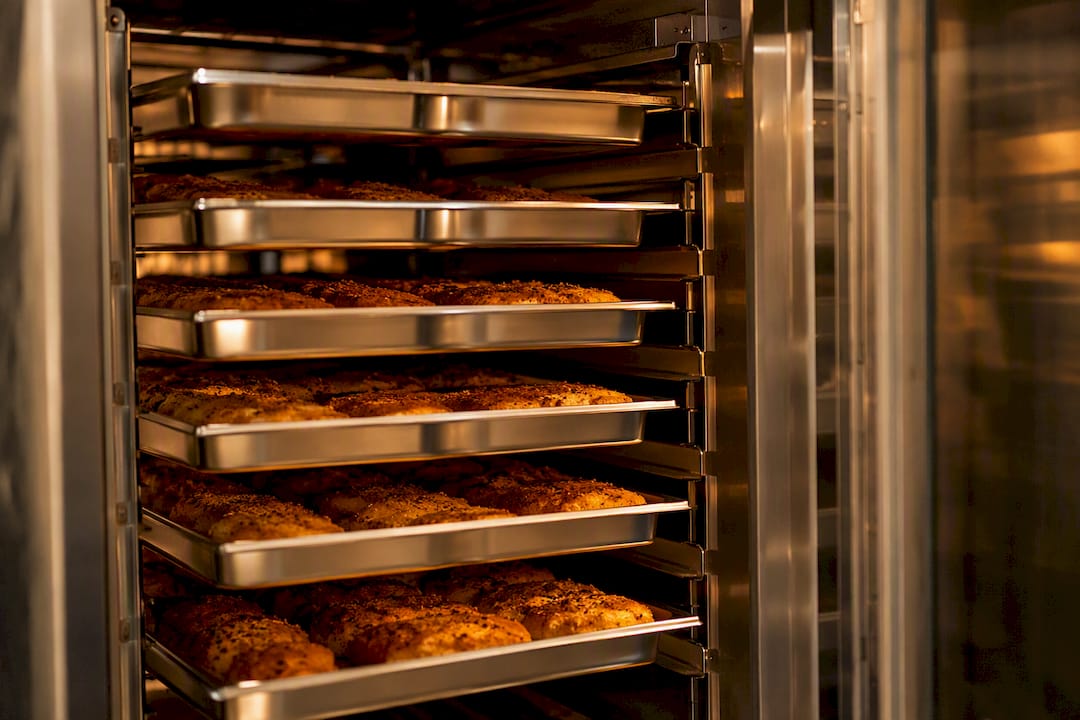
10-rack (10×1/1 GN) full-size ovens are the most common choice for mid-volume restaurants and hotel kitchens. A typical footprint runs close to 42.25" wide by 38.4" deep by 39.9" tall, and this class swaps directly with ten full-size 18×26-inch sheet pans, which is why so many bakeries and central kitchens standardise on it.
-
20-rack and floor/multi-deck models exceed 45 inches wide and often stand on their own base rather than a stand, sometimes stacked with a second oven or holding cabinet. These belong in banqueting operations, hospital catering, or central production units pushing thousands of covers a week.
Gastronorm sizing and what pan counts actually mean for output
Gastronorm pan sizes are standardised across the industry, so once you know the code, you know the dimensions regardless of brand. A GN 1/1 pan measures 530mm × 325mm, a GN 1/2 is half that width, and a GN 2/1 doubles it. Full-size sheet pans (18×26 inches) are close enough to a GN 1/1 footprint that most 10-rack ovens quote both figures on the spec sheet, as ChefsDeal’s listing for a full-size 10-pan Rational model shows.
- GN 2/1: 650mm × 530mm, roughly two 1/1 pans side by side
- GN 1/1: 530mm × 325mm, the standard rack unit in most combi ovens
- GN 1/2: 325mm × 265mm, used for smaller batches or sauces
- 18×26" sheet pan: near-identical footprint to a GN 1/1, common in bakeries
Rack pitch, the vertical spacing between shelves, decides how many of those pans you can actually load at once. Tighter pitch (around 60 to 65mm) squeezes in more racks for shallow items like biscuits; wider pitch suits gastro dishes with higher sides but reduces the racks you can use simultaneously.
Pro Tip: Work out your throughput by testing one dish: count portions per pan, time one cook cycle, then multiply by the racks you can realistically load. Ten racks at 20 portions per pan and a 12-minute cycle gives you roughly 1,000 portions an hour, before allowing for loading time.
Clearances, stacking and what the footprint doesn’t tell you
The exterior dimensions on a spec sheet are only the start. Ventilation clearance behind the unit is frequently left off site plans, and installers consistently flag it as the most commonly missed requirement, since poor clearance around the appliance restricts heat dissipation and exhaust performance.
- Leave clearance behind and above the unit for heat dissipation; check whether your model needs a full extraction canopy or just a condensate hood
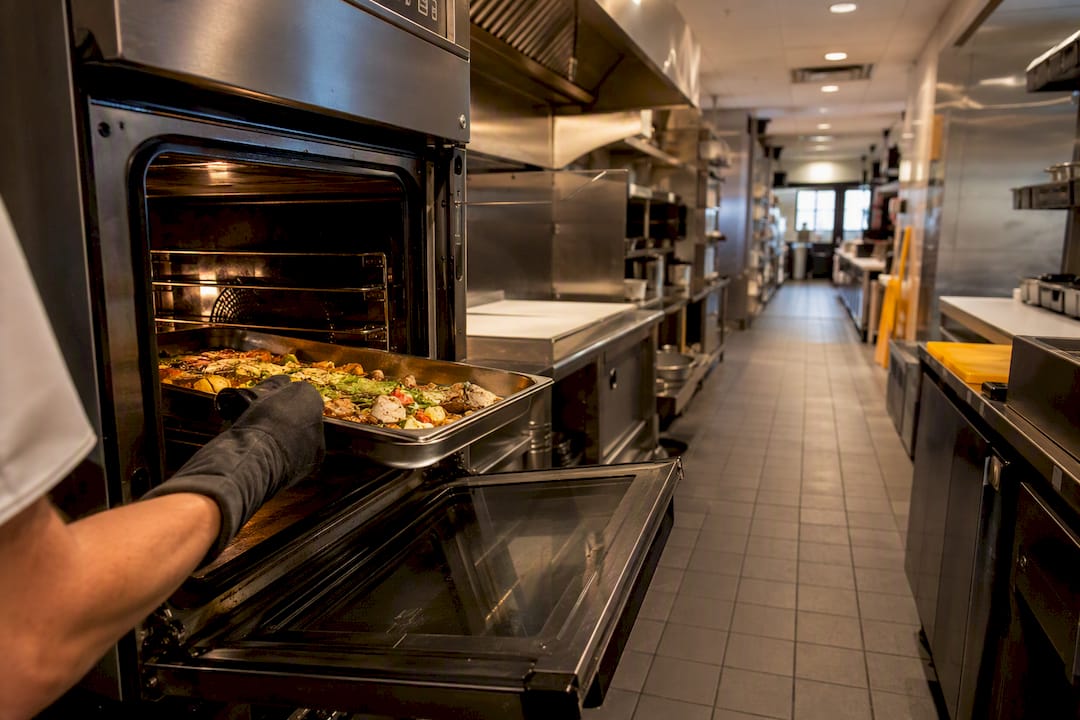
- Reserve door swing space at the front, and plan a wider service corridor of 800 to 1,000mm if other appliances sit nearby
- Calculate total stack height before stacking two ovens; a compact unit on top of a proving cabinet can push controls above comfortable eye level
- Confirm removable panels, water inlet points and drain routing are still reachable once the oven is boxed in against a wall
Stacking saves floor space in tight kitchens, but it isn’t free. Stacking increases the ergonomic load on staff, particularly around control reach and safe loading height for hot, heavy GN pans. If your team is loading a top unit above shoulder height multiple times a shift, that’s a manual-handling risk worth raising before signing off on a stacked configuration.
Pro Tip: Measure the corridor width with the door open and a loaded GN pan in hand, not just the closed-door footprint. Staff need room to turn away from the heat, not just squeeze past the appliance.
How oven dimensions affect power, water and site services
Bigger ovens don’t just take up more floor space; they draw more from your electrical and water supply, and that has knock-on costs for installation. Connected loads scale with size, running from single-figure kW on a countertop unit up to 20kW or more on large floor models, and anything past the low kW range typically needs a three-phase supply rather than standard single-phase.
- Countertop units: often under 3kW, frequently running on a standard socket
- 6-rack ovens: typically 10 to 15kW, usually requiring a dedicated circuit
- 10-rack and above: commonly 18 to 20kW+, almost always three-phase
- Water and drain connections vary by model; spec sheets list exact inlet and drain sizes, and checking these early avoids surprises during fit-out
A jump from 6-rack to 10-rack can mean upgrading your distribution board, so engaging an electrician before ordering avoids delays once the oven arrives. Counterintuitively, a larger oven run at full capacity often uses less energy per portion than a smaller one running half-empty for the same output, since the heating element cost is spread across more food.
How to choose the right combi oven size for your kitchen
Getting the size right comes down to matching real demand to real capacity, not guessing from a brochure photo. Here’s the sequence worth working through before you commit to a model.
-
Estimate daily portions and your peak hour. A café doing 80 covers a day has very different needs to a hotel banqueting kitchen doing 400 covers in a two-hour service window.
-
Convert that demand into GN or pan capacity. If your peak hour needs 200 portions and one GN 1/1 pan yields 20 portions per 15-minute cycle, you need roughly 10 racks running continuously, pointing you towards a full-size 10-rack class rather than a 6-rack.
-
Check the footprint against your kitchen line, including the clearances and service corridor covered above, not just the closed-door width on the spec sheet.
-
Confirm your services can support it. Electrical capacity, water pressure, and drain routing all need sign-off before delivery day, particularly if you’re moving from single-phase to three-phase.
-
Weigh future growth against your floor space. Buyer guidance consistently maps 6-rack ovens to small cafés, 10-rack to busy independent restaurants, and 20-rack to banqueting or central production, so if you’re between two sizes and expect covers to grow, the larger class usually pays for itself faster than a second oven bought eighteen months later.
Pro Tip: A slightly larger oven than you think you need often reduces labour, because bigger batches mean fewer loading cycles per service. It’s worth costing that against the extra floor space before defaulting to the smaller model.
Where to check exact model dimensions and get sizing advice
Spec sheets are the only reliable source for exact dimensions, since two ovens in the same capacity class can differ by an inch or two in depth. Thecommercialovenstore’s product pages list full external measurements, GN capacity, and power requirements for each model, including the Rational i-Combi Pro 6 GN1/1 and the Rational i Combi Pro 10 GN1/1.
- Cross-check exact dimensions against your kitchen line before ordering, not after delivery
- Use the combi oven installation guide for ventilation, drainage and clearance checks specific to UK kitchens
- Flexible payment through iwocaPay spreads the cost of a larger unit without tying up working capital
- Speak to the team for pre-purchase advice if you’re stuck between two adjacent capacity classes
Why capacity numbers matter more than model names
Most buying guides lead with brand names and marketing tiers. That’s backwards. A kitchen manager doesn’t need to know whether a unit is branded “Pro” or “Plus”; they need to know whether ten GN 1/1 pans will clear their peak Saturday lunch service, and whether the box fits where the old oven used to sit.
The conventional advice to “measure twice” undersells the real risk. It’s not the footprint that catches people out during installation, it’s the clearance behind and above the unit, and the service corridor in front of it once staff, trolleys, and open doors are all competing for the same eighteen inches of floor. Stacking looks like a clever space-saving trick on paper, and it often is, right up until someone’s lifting a hot GN pan above shoulder height on a busy Friday.
Prioritise throughput first: work out your peak-hour portion count, convert it to a pan count, then let that number choose your capacity class. Only after that should width, depth, and height decide whether the specific model fits your kitchen line. Get the sequence backwards and you’ll end up with an oven that fits the wall but not the service.
Get the right size ordered through Thecommercialovenstore
Sizing a combi oven correctly means matching GN pan capacity to your service, then checking that footprint against your kitchen line and services, exactly what this guide has walked through. Thecommercialovenstore stocks the full range, from compact countertop units to full-size 10-rack and 20-rack floor models, with exact dimensions and power specifications listed on every product page rather than buried in a downloadable PDF.
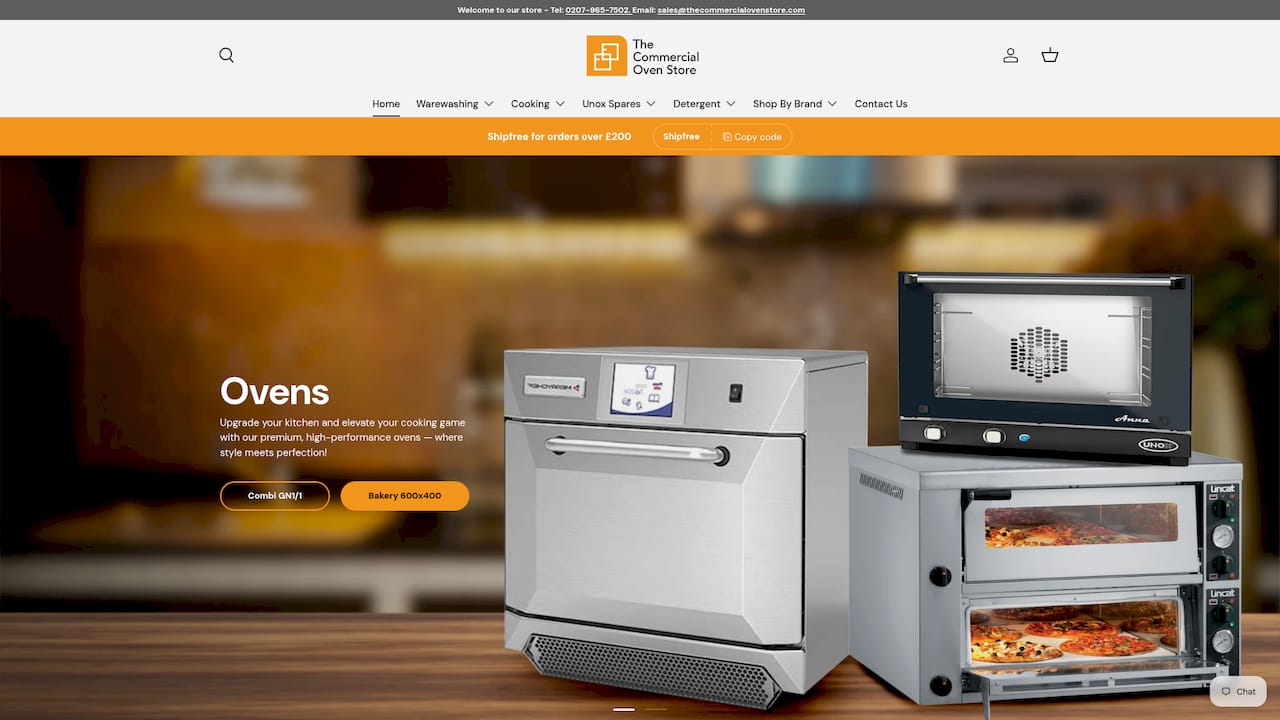
If your kitchen is tight on space rather than throughput, the CIBO/S countertop fast oven is worth a look before you commit to a full combi footprint. For sites already leaning towards a full-size or 6-rack combi, the team can talk you through clearances and services before you order, and iwocaPay lets you spread the cost rather than paying the full amount upfront. Browse the current range at Thecommercialovenstore and get the dimensions confirmed against your kitchen before you buy.
Frequently asked questions
What is the difference between a 6-rack and a 10-rack combi oven? A 6-rack oven holds six 1/1 GN pans and typically measures around 35 inches wide, suiting small restaurants with under 150 covers a day. A 10-rack model holds ten pans, measures closer to 42 inches wide, and handles busy kitchens pushing 300 to 600 portions daily.
Does a wider combi oven always mean higher capacity? Not necessarily. Two ovens of similar width can have different rack pitch, which changes how many pans actually fit inside. Always check the published GN pan count alongside the exterior dimensions.
How much clearance does a combi oven need behind it? Clearance requirements vary by model, but installers consistently flag ventilation space behind the unit as the most commonly overlooked requirement. Check the specific model’s installation instructions and never push the oven flush against a wall without confirming heat dissipation space.
Can a 10-rack combi oven run on a standard electrical supply? Usually not. Connected loads at this size commonly reach 18 to 20kW or more, which typically requires a three-phase supply rather than a standard single-phase circuit. Confirm this with an electrician before ordering.
Is it better to buy a slightly larger combi oven than I currently need? Often, yes. A larger oven allows bigger batches per cycle, which can reduce labour and cycle time even if daily volume doesn’t immediately require the extra capacity. Weigh that against available floor space and future growth plans before deciding.
Sources
- Combi data usage race — Catering Insight
- iCombi Pro — RATIONAL
- Commercial Combi Ovens buyer’s guide — TFI Canada
- RATIONAL ICP 10-FULL E 10 Pan Combi Oven — ChefsDeal