

Gas-fired combi ovens always need a ducted extraction hood. Electric combi ovens depend on how you cook: steam-heavy menus can often run on a recirculating condensing hood, but grilling, searing or anything that puts smoke into the cabinet usually tips you back into ducted extraction. Before you assume either route is settled, check three things:
- Fuel type — gas combustion gases must leave the building; there’s no ventless workaround.
- Cooking mode — smoke, grease and char point toward Type 1 ducted extraction, not recirculation.
- Manufacturer approval — a recirculating hood like RATIONAL’s UltraVent only counts if your exact model is on the exemption list, and makeup air still needs sorting either way.
Key Takeaways
Combi oven ventilation depends on fuel type and cooking mode, and getting the makeup air and manufacturer approval right matters as much as choosing the hood itself.
| Point | Details |
|---|---|
| Gas means ducted extraction | Gas-fired combi ovens always require ducted extraction; there’s no ventless exemption. |
| Electric depends on cooking mode | Heavy grilling or searing needs Type 1 grease-rated capture even on electric units. |
| Ventless has real limits | Recirculating hoods like UltraVent suit electric-only, steam-dominant use, not heavy smoking loads. |
| Makeup air is non-negotiable | Unbalanced exhaust causes negative pressure, door problems and reduced hood capture. |
| Confirm approvals before install | Check manufacturer exemption paperwork and building control sign-off to protect your warranty. |
| Thecommercialovenstore supplies both routes | Stocks manufacturer-approved combi ovens and compatible venting accessories, with iwocaPay financing available. |
Table of Contents
- What are the ventilation requirements for combi ovens?
- Which type of extraction system suits your kitchen?
- Why does makeup air matter for combi oven performance?
- What should you check before installing ventilation ductwork?
- How often should you clean and replace ventilation filters?
- What approvals protect your warranty and compliance?
- What does Thecommercialovenstore recommend for your ventilation plan?
- Why sorting ventilation early saves you money later
- Get your ventilation and combi oven sorted in one conversation
- Frequently asked questions about combi oven ventilation
- Sources
What are the ventilation requirements for combi ovens?
Whether extraction is compulsory comes down to fuel, cooking mode and what your local authority signs off on. Get this wrong at the design stage and you’ll be retrofitting ductwork through a live kitchen, which is expensive and slow.
- Gas combi ovens always need ducted extraction. Combustion by-products have to leave the building through a proper flue and canopy system. There’s no manufacturer approval that gets you around this.
- Electric ovens doing high-smoke cooking need grease-rated capture. Searing steaks, finishing meat under high heat, or any grilling function that produces visible smoke or grease-laden vapour pushes you toward a Type 1 hood, regardless of fuel source.
- Steam-dominant electric use may qualify for Type 2 or recirculating solutions. If the oven is mostly running combi-steam, regeneration or low-fat baking programs, a condensing hood may be viable, provided the manufacturer explicitly lists your model as compatible.
- Manufacturer documentation sets hard limits, not suggestions. RATIONAL’s own exemption paperwork specifies which models qualify for ventless operation and under what conditions, and stepping outside those conditions can void the warranty.
Building control and fire officers will ask which category you fall into before signing off any installation, so settle this before the oven arrives on site.
Which type of extraction system suits your kitchen?
Three broad approaches cover almost every commercial combi installation, and each solves a different problem.
- Type 1 hoods handle grease-laden vapour from grilling, roasting or char functions. These require ducted extraction, grease filters and typically a fire suppression system tied in.
- Type 2 hoods deal with heat and steam rather than grease, so they suit ovens running mostly combi-steam or convection modes without heavy fat content.
- Ducted extract systems pull air through the hood, along ductwork, and out via a rooftop or wall-mounted fan, with grease containment built into the filter stage and the duct run itself.
- Recirculating condensing hoods like the UltraVent Plus condense steam internally and, on the Plus version, filter out smoke before releasing tempered air back into the kitchen. They’re built for electric ovens only and won’t cope with heavy grilling or continuous smoking loads.
Pro Tip: If your menu mixes steam cookery with occasional grilling, don’t assume a recirculating hood covers both. Ask the manufacturer for the specific cooking-mode limits before you commit, because “occasional” grilling on paper often becomes daily grilling in a working kitchen.
Vendor listings for ventless UltraVent-type units are explicit that they’re not suitable for gas ovens or heavy grilling, and most recommend checking with your local authority before relying on one as your only ventilation.
Why does makeup air matter for combi oven performance?
A hood only works as well as the air replacing what it extracts. Commercial kitchen ventilation is a closed loop of hoods, filters, ductwork, exhaust fans and makeup air, and if that loop is unbalanced the whole system underperforms, according to a detailed breakdown of how these systems work.
Pull too much air out without replacing it and the kitchen runs at negative pressure. Doors become hard to open, cross-draughts pull smoke back into the room instead of up the hood, and burners can struggle to ignite properly. A hood without tempered makeup air will capture less and cost more to run, since it’s fighting the building rather than working with it.
Signs worth reporting to your M&E engineer:
- Doors that suck shut or slam unexpectedly
- Pilot lights or burners that behave inconsistently
- Visible smoke or steam escaping past the hood edge instead of being drawn up
If you notice any of these, the fix usually isn’t a bigger fan. It’s rebalancing the exhaust against a properly sized, tempered air supply, which is a job for a qualified designer, not guesswork on site.
What should you check before installing ventilation ductwork?
Site-readiness decides whether your install day goes smoothly or turns into a week of delays. Work through this before ordering equipment:
- Confirm clearance and hood overhang against the manufacturer’s manual. Installation guidance commonly specifies overhang distances and a recommended capture range, with figures around 400 to 800 cubic metres per hour turning up frequently across combi installation notes.
- Verify fuel type against any ventless exemption. Gas rules this out entirely; electric models need checking against the manufacturer’s approved list, model by model, since adapter kits and compatibility vary by unit.
- Plan the duct route, roof curb and fan access before the oven is delivered. Retrofitting a duct run through an occupied kitchen costs far more than designing it in from the start.
- Sort grease condensate drainage if you’re running a Type 1 ducted system with heavy grease loads.
- Ask your installer, building control officer and fire safety officer the same three questions: what category of hood does this fall under, what’s the required makeup air rate, and does the duct route meet fire separation requirements?
Our combi oven installation guide walks through UK site-readiness in more depth if you want to check your kitchen against it before booking a survey.
How often should you clean and replace ventilation filters?
Baffle filters and pre-filters on ducted hoods need checking daily during service and a proper wash weekly, more often if you’re running heavy grilling loads. Recirculating units with HEPA-type filtration typically need cartridge replacement on a fixed schedule set by the manufacturer, since capture efficiency drops steadily as the filter loads up.
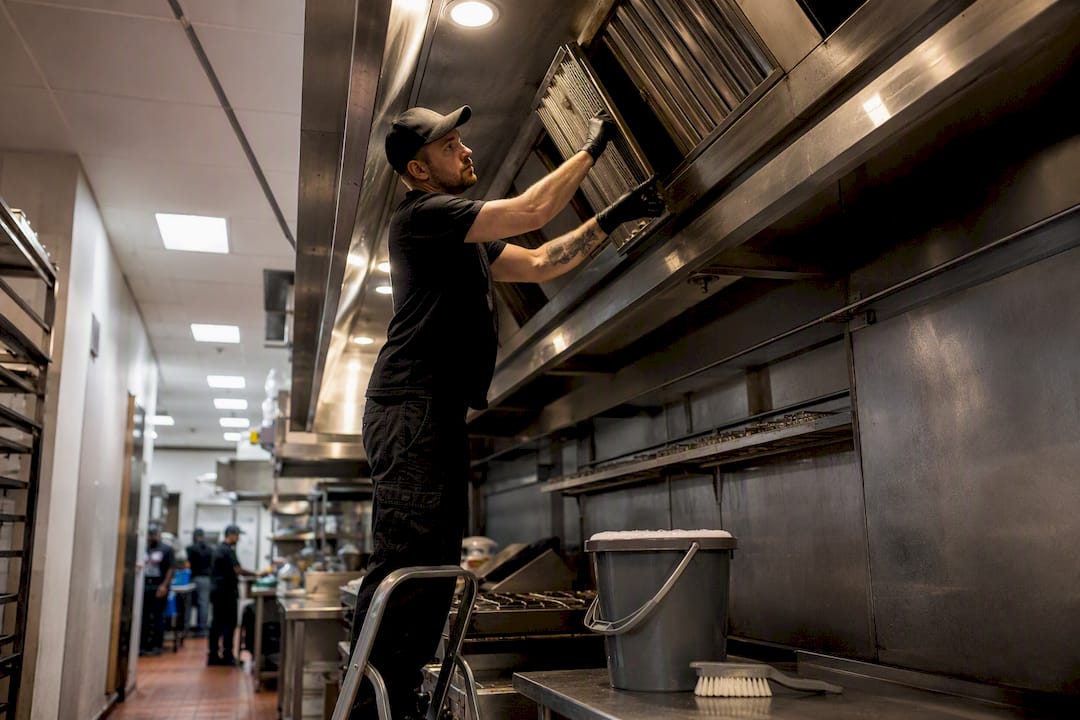
Duct and fan cleaning is a separate job, usually scheduled quarterly to annually depending on grease load, and it’s worth clarifying upfront whether that falls to you or your landlord. Ventless units also generate condensate that needs managing safely rather than left to pool.
Scheduled cleaning and documented maintenance sit at the centre of fire-safety compliance, and skipping it is one of the more common ways ventilation systems fail an inspection.
Pro Tip: Keep a simple maintenance log by the hood. Insurers and fire officers ask for it, and it’s the fastest way to prove you haven’t been quietly ignoring a filter change.
Deferred maintenance doesn’t just reduce capture. It raises fire risk and can void the oven’s warranty outright.
What approvals protect your warranty and compliance?
Before accepting any ventilation plan, confirm it against the manufacturer’s own paperwork rather than what an installer assumes is fine.
- Confirm the installation references recognised ventilation and fire-protection standards cited in the manufacturer’s own notes, not a generic interpretation from the installer.
- Get sign-off from building control and, where grease-producing cooking is involved, your local fire authority, before the oven goes live.
What does Thecommercialovenstore recommend for your ventilation plan?
We field ventilation questions daily from operators choosing between models like the RATIONAL iCombi Pro and smaller units such as the RATIONAL i-Combi Classic, and the answer almost always starts with fuel type and cooking mode.
Before we can give a proper site-readiness answer, have this ready:
- The exact model code and fuel type
- Your highest-load cooking modes (percentage of grilling versus steam)
- Kitchen layout, including existing duct runs or hood positions
- Whether other gas appliances share the same space
That’s usually enough to tell you whether ducted extraction or a recirculating hood fits your site.
Why sorting ventilation early saves you money later
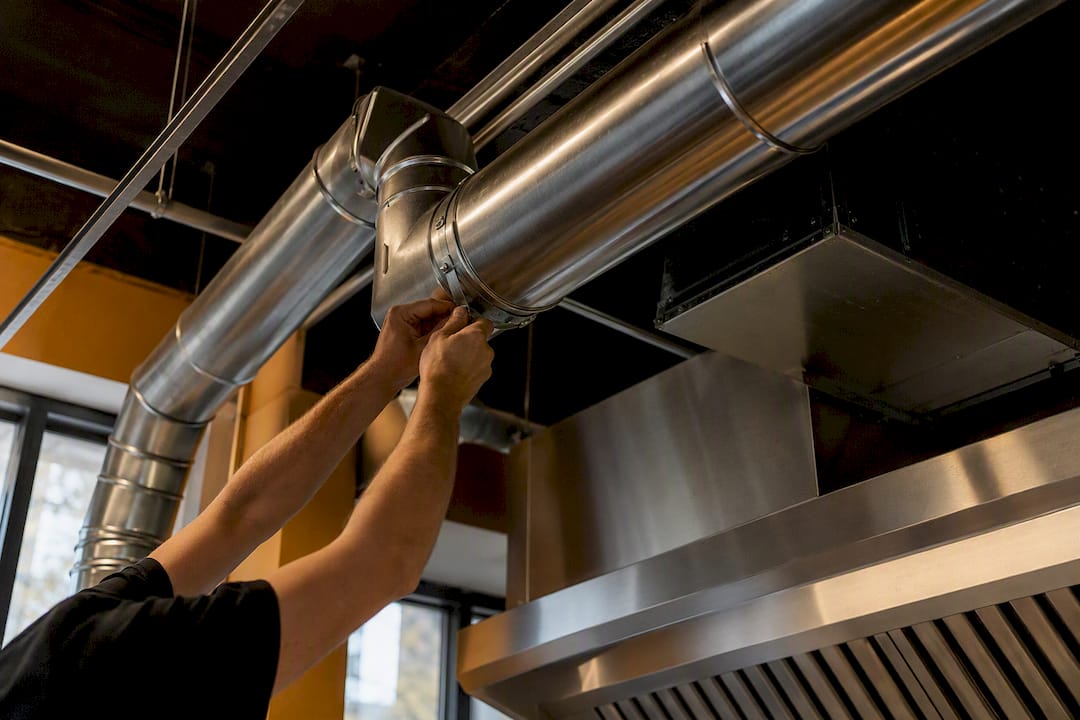
Get ventilation decided before you order the oven, not after. I’ve seen too many kitchens where a beautiful combi oven sits idle for weeks because the extraction wasn’t planned alongside it. Talk to your M&E designer and the manufacturer’s technical team at the same time you’re speccing the appliance, and lean on suppliers like Thecommercialovenstore who deal with this daily.
Get your ventilation and combi oven sorted in one conversation
Most suppliers sell you the oven and leave the ventilation question to your installer, which is exactly where projects stall. Thecommercialovenstore stocks manufacturer-approved combi ovens from RATIONAL and Unox alongside compatible venting accessories, including recirculating options like the Unox Hood with Steam Condenser, so you’re specifying the oven and its extraction solution together rather than discovering a mismatch on install day.
Our team talks you through model compatibility, clearance requirements and whether your kitchen qualifies for ventless operation before you spend a penny, and if cash flow is tight, iwocaPay lets you spread the cost of the oven and accessories rather than paying it all upfront. Browse the current range at Thecommercialovenstore and get in touch with your model shortlist, fuel type and cooking modes to hand, and we’ll tell you straight whether a ducted hood or a recirculating unit fits your site.
Frequently asked questions about combi oven ventilation
Does every combi oven need an extraction hood? Gas models always do. Electric models depend on cooking mode: steam-heavy use may qualify for a recirculating hood, while grilling or searing usually needs ducted extraction.
Can I use a recirculating hood instead of ducted extraction? Only if your exact oven model is on the manufacturer’s approved list and your cooking mode stays within its stated limits, typically steam and low-smoke functions rather than heavy grilling.
What is makeup air and why does it matter for combi oven airflow management? Makeup air is the replacement air brought in to balance what the extraction fan removes. Without it, the kitchen runs at negative pressure, which weakens hood capture and can affect door and burner performance.
How often do ventilation ducts need cleaning in a commercial kitchen? It varies with grease load, but quarterly to annual duct and fan cleaning is common, alongside daily or weekly filter checks depending on cooking volume.
Will unapproved ventilation void my combi oven warranty? Yes. Manufacturers state clearly that ventilation outside their approved conditions can void warranty cover and create safety risks, so always check the exemption documentation for your specific model first.
Sources
- How commercial kitchen ventilation systems work — Hoodfilters blog
- Combi oven installation / ventilation requirements (excerpts) — parts town manual