

If you can see white, crusty deposits around the steam nozzles or the door seal, stop guessing and act. Run the oven’s built in descale programme immediately if it has one. If deposits are heavy, or the unit has no automatic cycle, isolate the water supply and follow the manufacturer’s manual descale steps, or call a service engineer rather than improvising.
Two checks confirm limescale fast: look for white or grey scale at the steam generator inlet, and time how long the oven takes to reach steam temperature against your usual figure. A jump of several minutes almost always points to scale, not a faulty element.
- Check the steam nozzle and door seal for white crust
- Time the steam up cycle and compare it with your log
- Check the display for a descale prompt or error code
- If deposits are heavy, isolate water and call a Rational-approved engineer
Pro Tip: Keep a laminated card of your model’s descale error codes taped inside the service cupboard. When Watercare filtration lapses, that code is usually the first sign staff actually notice. Thecommercialovenstore stocks spare parts and filtration accessories if you need to act today.
Key Takeaways
Limescale in a combi oven starts as a water quality problem and ends as a steam generator repair bill if the two maintenance tracks, chamber cleaning and descaling, aren’t managed separately.
| Point | Details |
|---|---|
| Act on visible scale fast | Run the OEM descale programme immediately, or isolate water and call an engineer if deposits are heavy. |
| Separate the two tracks | Automatic wash cycles clean the cavity only; descaling protects the steam generator, and both need an owner. |
| Match frequency to water hardness | Descale monthly as a baseline, more often in hard water regions, and always when the unit prompts. |
| Track filtration, don’t assume it | Filter cartridges have a finite life; log change dates rather than trusting the system indefinitely. |
| Source parts and advice in one place | Thecommercialovenstore supplies Rational ovens, filtration accessories and spares for scale-affected kitchens. |
Table of Contents
- Why limescale in a combi oven causes real damage
- How do you know it’s limescale and not something else?
- Safe steps to descale your combi oven today
- When should you call a service engineer instead?
- Stopping limescale before it starts
- What manufacturers actually say about descaling
- A copy-ready maintenance rota for your kitchen
- Fast troubleshooting before you call for service
- How Thecommercialovenstore keeps your kitchen running scale-free
- Frequently asked questions
- Sources
Why limescale in a combi oven causes real damage
Limescale is calcium and magnesium carbonate that drops out of hard water as it heats. In a combi oven that mineral load lands directly on the steam generator, the heating elements, and the sensors that read chamber humidity and temperature.
The damage isn’t cosmetic. Scale insulates heating elements, so they work harder and longer to produce the same steam. That means uneven cooking, slower recovery between loads, and sensor readings that drift, which is often what triggers mysterious error codes long before anyone spots a visible deposit.
Preventative work that combines water treatment, filtration and regular descaling is what actually prevents sensor faults, uneven cooking and premature component failure, rather than any single fix on its own.
A pattern worth flagging: uneven cooking, sensor faults, or a scale-related error code frequently show up before an obvious mechanical failure — which is exactly why experienced chefs sometimes miss the early warning and only notice once output has already dropped.
How do you know it’s limescale and not something else?
Start with a visual check of the steam nozzle and injector points. A white or chalky crust is scale. A dark, sticky residue is carbonised grease or fat, which needs a chamber clean, not a descale.
Next, compare cook times against your baseline log. Scale slows steam recovery specifically; a faulty fan or door seal tends to cause temperature swings instead, not a steady lengthening of steam up time.
A chamber that looks spotless can still be hiding a scaled steam generator. Automatic wash programmes clean the cavity but do nothing to protect the components that actually generate steam.
For service teams, log three things every time: a photo of the deposit, the exact error code shown, and the steam up time versus baseline. That trio turns a vague “it’s playing up” call into a diagnosis an engineer can act on before they’ve even arrived.
Safe steps to descale your combi oven today
If your oven has an automatic descale programme, use it first. Most modern units flag when a cycle is due, and skipping that prompt is one of the most common reasons for expensive repairs such as full steam-generator replacement.
- Check the display for a descale prompt or scale related error code.
- Confirm you have the manufacturer’s OEM descaling solution, not a generic acid or vinegar.
- Put on the PPE listed in the manual: gloves and eye protection are standard.
- Ensure the kitchen is ventilated and the oven is isolated from active service.
- Start the automatic programme, or follow the manual descale sequence step by step if no programme exists.
- Run the full rinse cycle the manufacturer specifies, never a shortened version.
- Check the steam up time afterwards and log it against your baseline.
Pro Tip: Run descale cycles overnight or during your lowest production window. A full cycle plus rinse can tie up the oven for well over an hour, and nobody wants that mid-service.
Never pour descaler anywhere the manual doesn’t specify. If in doubt about dosage or cycle length, follow the OEM instructions for your exact model rather than a generic online guide.
When should you call a service engineer instead?
Stop attempting DIY descale if deposits are thick, crusted, or you’ve run the programme twice with no improvement in steam up time. That pattern usually means scale has hardened inside the boiler itself, not just around visible surfaces.
Corrosion inside the steam generator, repeated error codes after a completed descale cycle, or visible pitting on stainless surfaces are all signs the fault has moved beyond a chemical fix. At that point an engineer will typically carry out mechanical in-boiler descaling or replace affected components.
Water treatment reduces the risk of this happening, but filtration only works if it’s actually monitored and maintained — a system left unchecked offers no real protection at all.
Before the engineer arrives, gather your service history, water treatment records, warranty documents, and the photos and error codes from your log. That preparation alone can shave real time off a call out.
Stopping limescale before it starts
Prevention beats cure, and for a combi oven that almost always means controlling water quality before it ever reaches the steam generator.
- In line commercial filtration (Watercare-style systems) strips minerals at source, and commercial filtration systems are specifically engineered to protect combi and steam ovens.
- Water softeners work well upstream in very hard water regions, reducing the mineral load reaching every piece of kitchen equipment, not just the oven.
- Reverse osmosis or demineralisation suits kitchens running high volume steam cooking where even filtered mains water still leaves residue over time.
- Distilled water is worth considering only where the manufacturer explicitly recommends it, since some units are calibrated for a minimum mineral content.
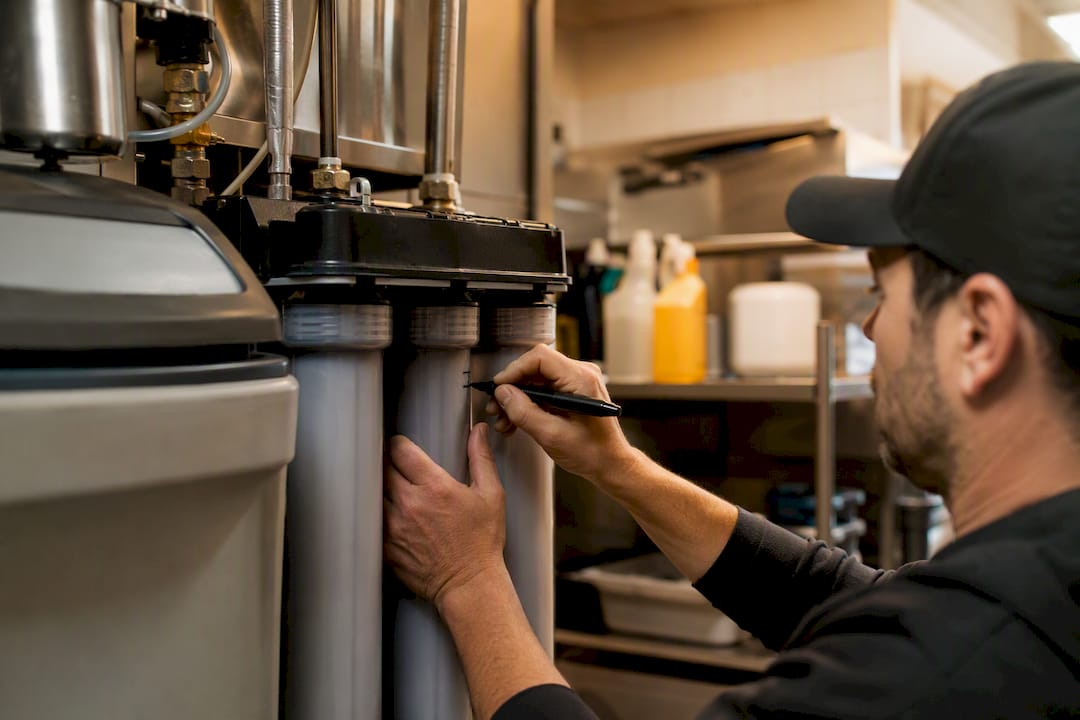
Filtration isn’t a fit and forget job. Cartridges have a finite service life, and performance drops off quietly once a cartridge is spent, often well before anyone notices a problem.
Pro Tip: Write the cartridge install date on the housing itself in permanent marker. Relying on memory or a spreadsheet nobody opens is how filtration silently lapses.
A cold water softener fitted upstream of a FilterFlow water boiler covers both the oven and any hot water equipment sharing the same supply, which matters in kitchens where several appliances draw from one hard water main.
What manufacturers actually say about descaling
Never use vinegar or household acids in a combi oven, regardless of what a forum post suggests. Non-OEM descalers and generic acids are a leading cause of warranty invalidation and can permanently damage stainless finishes and internal seals.
Rational, Hobart, and other major manufacturers each design their steam systems and descale prompts differently, so the interval and chemical that suits one model may not suit another.
The rule that never changes across brands: use the OEM cleaner and rinse tabs specified in the manual, and run the programme exactly as instructed, not as adapted for convenience.
Check your unit’s manual or installation guidance for the exact descale interval your model expects, since this varies by manufacturer and by local water hardness.
A copy-ready maintenance rota for your kitchen
Water hardness varies hugely by region, and that variation is what should set your descale frequency, not a generic monthly rule copied from another kitchen.
- Daily: run the automatic cavity clean cycle and wipe down the door seal.
- Weekly: inspect the steam nozzle for early scale, and run a rinse cycle even if the descale prompt hasn’t triggered.
- Monthly, or when prompted: run the full descale programme; in very hard water areas this may be needed fortnightly.
- Every filter change interval: replace filtration cartridges on schedule, not when performance visibly drops.
- On any 15%+ increase in steam up time: treat it as an early trigger to check for scale, don’t wait for the display prompt.
Build a simple handover log: date, steam up time, any error codes, and cartridge change dates. Escalate to a service call the moment two consecutive entries show a rising trend.
Fast troubleshooting before you call for service
Replicate the fault if you can, note the exact error code shown, and photograph the steam nozzle or generator access panel. Measure current steam up time against your logged baseline.
Scale related codes typically relate to steam generation or water level sensing, while codes pointing to door interlocks, fans, or gas ignition usually indicate a separate mechanical fault entirely.
Good logs change everything for a technician. Turning up to a vague “it’s not working” call versus one with photos, codes, and steam up times is the difference between a ten minute fix and an hour of diagnosis.
If in doubt, isolate the water supply, keep the oven out of service, and hand your log straight to whoever attends.
Why chamber cleaning and steam-generator descaling must be managed separately
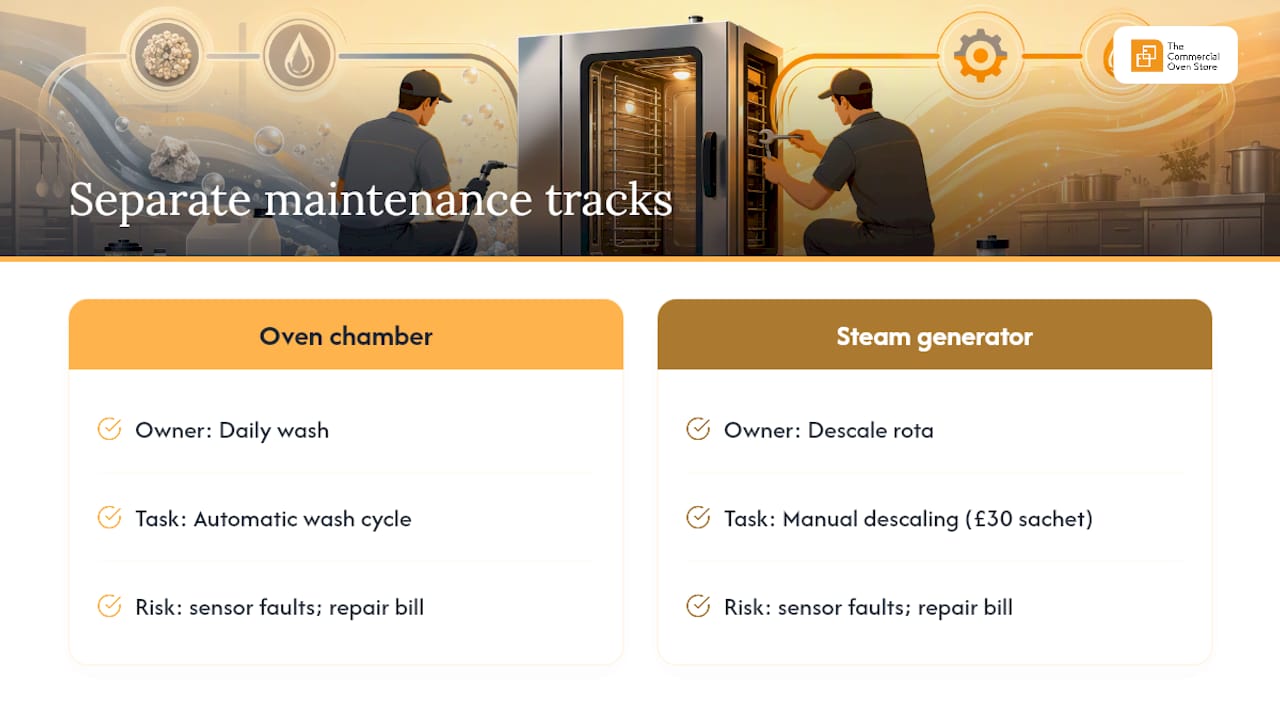
The mistake I see most often is treating the automatic wash cycle as complete maintenance. It isn’t. A wash programme strips carbonised grease from the cavity brilliantly, but it does nothing whatsoever for the steam generator sitting behind the scenes.
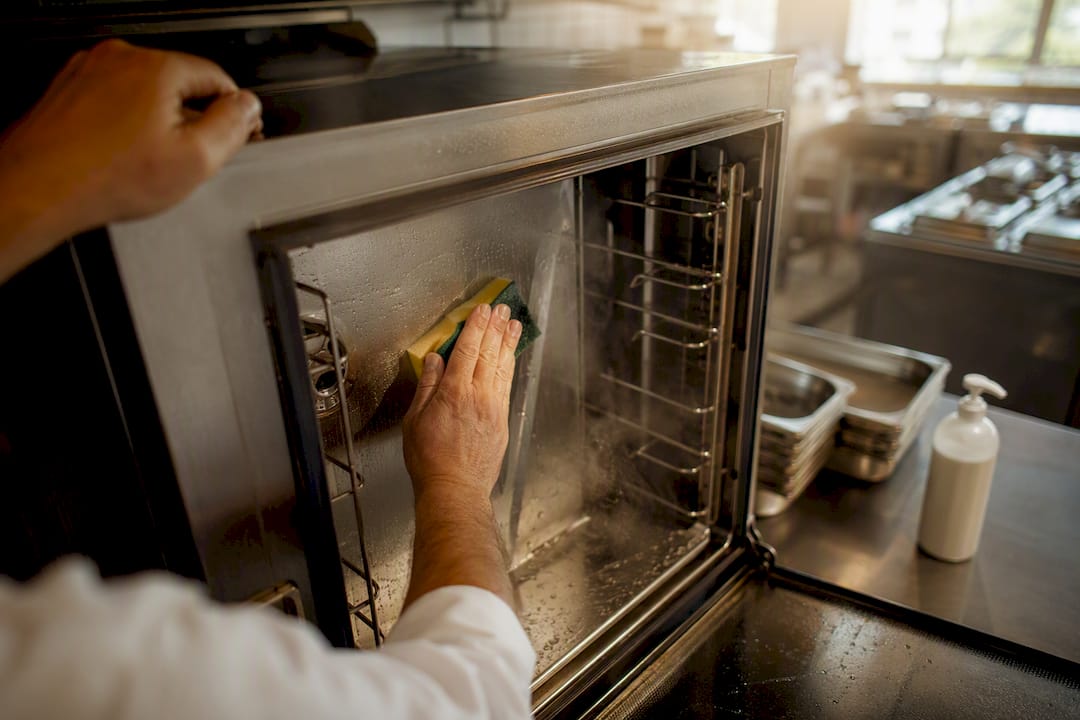
Neglect either track and you get the same result eventually: sensor faults, uneven cooking, and a repair bill that started as a £30 descale sachet and ended as a boiler replacement. Assign one named person on the rota to own descaling, separately from whoever owns the daily wash. Two tasks, two owners, no gaps.
How Thecommercialovenstore keeps your kitchen running scale-free
Chasing down OEM descaler, the right filter cartridge, or a spare stand at 6am before service is nobody’s idea of a good morning. Thecommercialovenstore stocks genuine Rational combi ovens alongside the filtration and softening kit that keeps them scale free, so you’re sourcing everything from one place instead of hunting across three suppliers.
The team can talk you through whether a standalone filter, a full softener, or a straight oven replacement makes more sense for your water hardness and volume, and flexible payment options through iwocaPay mean a scale-damaged steam generator doesn’t have to mean an unmanageable upfront bill. If your current unit is beyond economical repair, browse the full oven range and get a straight recommendation before you commit to anything.
Frequently asked questions
Can I use vinegar to descale my combi oven? No. Vinegar and other household acids can damage seals and stainless components and will typically void your warranty. Use only the OEM descaling solution specified in your manual.
How often should a commercial combi oven be descaled? It depends on your local water hardness and usage volume. Follow the manufacturer’s prompt where fitted, and expect anywhere from fortnightly in very hard water areas to monthly in softer supply regions.
Does a water softener remove the need to descale? No. A softener or filter reduces mineral load significantly, but cartridges wear out and hardness can still slip through, so scheduled descaling remains necessary even with filtration installed.
What’s the difference between cleaning the chamber and descaling? Chamber cleaning removes grease and food residue from the cooking cavity. Descaling removes mineral scale from the steam generator, a completely separate component that automatic wash cycles don’t touch.
Will limescale affect my oven’s warranty? Using non-OEM descalers or ignoring manufacturer-recommended maintenance can invalidate your warranty. Stick to Rational, Hobart, or your specific maker’s approved products and cycles.
Sources
- Dialing in Uptime: A Practical Guide to Preventive Maintenance for Commercial Combi Ovens
- How to Clean a Combi Oven - ProToCall
- How to prevent limescale damaging your kitchen equipment | HOBART
- Commercial Water Filtration Systems for Combi & Steam Ovens
- Maintenance tips: Combi oven care - FERmag