

The fastest gains come from three levers: real-time KDS and POS integration, station-level measurement, and tighter mise en place, with a proper expo role. Kitchens that fix these three typically shave several minutes off average ticket time within a month, according to operator case data. Everything else in this guide is about implementing and measuring those three properly.
TL;DR:
- Ensuring real-time POS and KDS integration with correct station mapping can significantly reduce ticket handling time.
- Mapping bottlenecks through station-level data and implementing firing windows or station splits can prevent small delays from cascading.
- Proper mise en place, including batch prep and maintaining par levels, can eliminate non-cooking delays like searching or defrosting.
- Staff cross-training and accurate staffing schedules based on actual ticket volume help prevent bottlenecks and over-reliance on single points.
- Upgrading equipment like high-speed ovens should be a last step after process improvements, focusing on real throughput and recovery times.
Table of Contents
- Quick wins you can implement tonight
- How KDS and POS integration cuts ticket time
- Where does your kitchen actually lose time?
- Cut discovery time with better mise en place
- Staffing and cross-training that prevent bottlenecks
- Does your menu design slow the kitchen down?
- Equipment checks that keep ticket times down
- The KPIs that tell you if it’s working
- A 30 day plan to reduce kitchen ticket times for good
- What most kitchens get wrong about speed
- When an oven upgrade is the right move
- Sources
Quick wins you can implement tonight
Some fixes cost nothing and pay off before your next service. If you’re still running paper tickets in a kitchen doing meaningful covers, that’s the first thing to change, but there are smaller adjustments worth making before you touch any hardware.
- Check your POS is set to send orders in real time rather than batching them, since batching alone can bury 30 to 60 seconds of hidden delay per ticket.
- Put one person on expo duty with a visible timer or colour-coded system flagging any ticket running late.
- Walk the line before service and fix the one thing that’s actually slowing you down, whether that’s a slow printer, a reheat zone that can’t keep up, or a mise en place bin sitting empty.
- Write simple per-station targets on a whiteboard so cooks know what “on pace” looks like for that shift.
None of this requires new kit or a training day. It requires someone deciding, tonight, that the ticket rail is the most important object in the building.
Pro Tip: Time your slowest ticket of the shift, not your average. The 90th percentile is where customer complaints actually come from, and it’s usually one station, not the whole kitchen, causing the problem.
How KDS and POS integration cuts ticket time
Paper tickets give you no visibility into where time is actually going. A kitchen display system gives every station a live view of what’s fired, what’s waiting, and what’s overdue, plus the reporting to prove it. Casual-dining chains running advanced KDS setups report dramatically shorter ticket times than paper-based equivalents, and the reduction usually comes from removing invisible delay rather than making anyone cook faster.
Most kitchens don’t get the full benefit because of a handful of configuration mistakes. Before blaming staff, check these:
- Confirm the POS pushes orders to the KDS the moment they’re keyed, not on a batch delay, as explained in the role of online ordering for restaurants and customers at Wild Foodz.
- Map menu items to the correct station screens rather than copying the old paper ticket layout onto a digital one.
- Split screens by function (grill, pass, fry) instead of by server or table.
- Turn on hold and fire logic for multi-course orders so a starter doesn’t sit finished for ten minutes while the main is still cooking.
Digital tickets typically reduce order errors and shave minutes off average handling time compared with handwritten dockets, largely because nobody’s reading anyone’s handwriting under pressure. The routing logic behind ticket triage systems in other industries makes the same point: get the right work to the right person immediately, and most of your delay problem disappears before anyone even starts cooking.
Where does your kitchen actually lose time?
Ticket time rarely dies in one dramatic moment. It leaks out in small pauses: a cook waiting on a printer, a plate sitting under the pass while a side finishes, someone walking to the walk-in mid-service because a bin ran dry. Finding the leak means mapping the pass and timing each station separately rather than guessing from how stressed the kitchen felt on a Friday night.
Station-level ticket-time data, not anecdote, is what actually identifies the real bottleneck. One station is almost always the choke point, and it’s rarely the one your team complains about loudest.
Once you’ve found it, three fixes tend to apply:
- Use firing windows so components with different cook times hit the pass together, instead of the fastest item sitting and dying under heat.
- Split an overloaded station in two during peak, even temporarily, rather than letting one cook absorb every ticket.
- Reassign the expo to intercept and resequence work the moment one station starts falling behind, before the backlog cascades to every other ticket behind it.
Hold logic on the KDS solves a version of this automatically: it delays firing a long-cook item until the rest of the plate is close to ready, which cuts down on remakes at the pass caused by food going cold before it’s collected.
Cut discovery time with better mise en place
A surprising share of ticket time isn’t cooking at all. It’s a cook stopping to find, portion, or defrost something that should already be sitting ready in a labelled container.
- Set par levels for your ten highest-volume items first, based on a typical Friday, then adjust weekly once you see what actually sells out or gets binned.
- Batch-prep components that hold their quality (sauces, marinated proteins, sliced vegetables) without pre-cooking anything that degrades on standing.
- Mark bins with a visual low-stock signal, a strip of tape, a coloured card, so replenishment happens before a cook notices an empty container mid-ticket.
Pro Tip: Review par levels by day of week, not as a single number. A Tuesday par and a Saturday par for the same item can differ by three or four times, and using one figure for both means you’re either wasting food or running out at the worst possible moment.
Staffing and cross-training that prevent bottlenecks
A kitchen with one person who can run the grill station is one sick day away from a disaster shift. Cross-training two or three people per station means a bottleneck at 8pm doesn’t take the whole kitchen down with it.
- Rotate junior staff through every station during quiet periods so nobody is a single point of failure during a rush.
- Give the expo a written checklist: call times, hold windows, plate checks, allergen flags, so the role doesn’t depend on one person’s memory.
- Build rosters from actual ticket-volume data by hour rather than gut feeling about which nights feel busy.
Speed of service improves fastest when digital ordering, KDS timers, and staffing decisions are pulling in the same direction rather than treated as separate projects. A rota built on last month’s actual ticket volume, not this month’s guesswork, catches the Thursday-night rush that “feels” quiet but isn’t.
Does your menu design slow the kitchen down?
Some dishes cost you far more time than they’re worth. If one item on the menu needs six components fired at different intervals and a garnish nobody can find quickly, it’s dragging your average ticket time up every time it’s ordered, regardless of how good it tastes.
- Identify your two or three slowest-selling-but-slowest-to-make dishes and either simplify the build or accept the trade-off consciously.
- Group dishes that share components (a shared braise, a shared sauce base) so one batch serves several menu items instead of separate one-off prep.
- For large or family-style orders, set a scheduled firing window rather than trying to fire everything simultaneously against the clock.
A menu with five overlapping proteins and three sauce bases is a fundamentally faster kitchen than one with fifteen dishes that share nothing.
Equipment checks that keep ticket times down
Even a perfectly designed workflow stalls if the equipment can’t keep pace. A few checks daily prevent the kind of slowdown that looks like a staffing problem but is actually a hardware problem.
- Test the kitchen printer or KDS screen before service, not after the first ticket jams.
- Check fry oil recovery time and pass heat lamps, since a fryer that’s slow to recover creates a queue nobody notices until it’s too late.
- Confirm oven recovery time between batches, particularly for multi-level cooking where uneven airflow slows one shelf while another finishes early.
Programmable and speed ovens earn their cost fastest in kitchens where a large share of ticket time is cooking or reheating rather than assembly, a distinction worth making before any purchase. Where that’s true, high-speed ovens can cut per-ticket cook time meaningfully. Where it isn’t, the money is better spent on process. Regular maintenance also prevents the kind of mid-service breakdown that undoes a month of process improvements in one bad Saturday.
The KPIs that tell you if it’s working
None of this matters if you’re not measuring it. Average ticket time hides your real problem, because a handful of disastrous tickets can sit under a decent-looking average while your busiest table of the night waits twenty minutes.
Track these four numbers weekly, by station where possible:
- Average ticket time and 90th percentile ticket time, since the gap between them tells you how consistent your kitchen actually is.
- Fulfilment time by individual station, not just kitchen-wide, to find which one is dragging the rest down.
- Remake rate, which usually spikes when hold logic or firing windows are wrong.
- Expo delay rate, the time a finished plate sits waiting for the rest of the ticket.
Run a one-week baseline before changing anything, then test a single change at a time rather than overhauling the kitchen overnight. Testing one variable at a time is what separates a real fix from a lucky quiet Tuesday. Build a two-minute daily habit into shift handover: one metric reviewed, one corrective action logged, so problems get caught within a day rather than a month.
A 30 day plan to reduce kitchen ticket times for good
- Days 0 to 7: Roll out the quick wins from earlier, real-time POS entry, an expo with a timer, one equipment fix, and start logging baseline ticket-time data every shift.
- Weeks 2 to 3: Fix KDS configuration issues (station mapping, hold logic), remap the pass if you’ve found a bottleneck, adjust par levels based on week-one data, and cross-train staff at the identified weak station.
- Week 4: Compare average and 90th percentile ticket times against your baseline, write down what worked as a simple SOP, and set a recurring fortnightly review so gains don’t quietly slide back.
Pro Tip: Don’t change five things in week one. If ticket times improve, you won’t know which change did it, and you’ll have no idea what to protect when a new manager or head chef arrives.
What most kitchens get wrong about speed
The instinct in most kitchens is to hire more people or shout louder during a rush. Neither fixes a bottleneck; both just add cost or noise to a problem that’s usually structural. The kitchens that actually get faster are the ones that treat ticket time as a number to be measured, not a feeling to be managed.
Ovens matter, but only in the right place. A programmable oven with fast recovery time genuinely transforms throughput in a kitchen doing high-repetition reheats or multi-level baking, and that’s a real, provable gain. It does nothing for a kitchen whose real problem is a POS batching orders or an expo role nobody’s actually assigned. Process first, equipment second, always in that order. Get the process right and an equipment upgrade becomes a multiplier rather than a rescue attempt.
The honest ROI conversation is uncomfortable for suppliers to have, because it sometimes means telling a kitchen not to buy anything yet. It’s the right conversation regardless.
— Simon
When an oven upgrade is the right move
Sometimes the bottleneck genuinely is the oven, not the process around it. If your kitchen is running a high volume of reheats, multi-level bakes, or repetitive high-turnover items and your current oven’s recovery time is the thing holding every ticket back, that’s when equipment becomes the higher-leverage fix rather than another SOP.
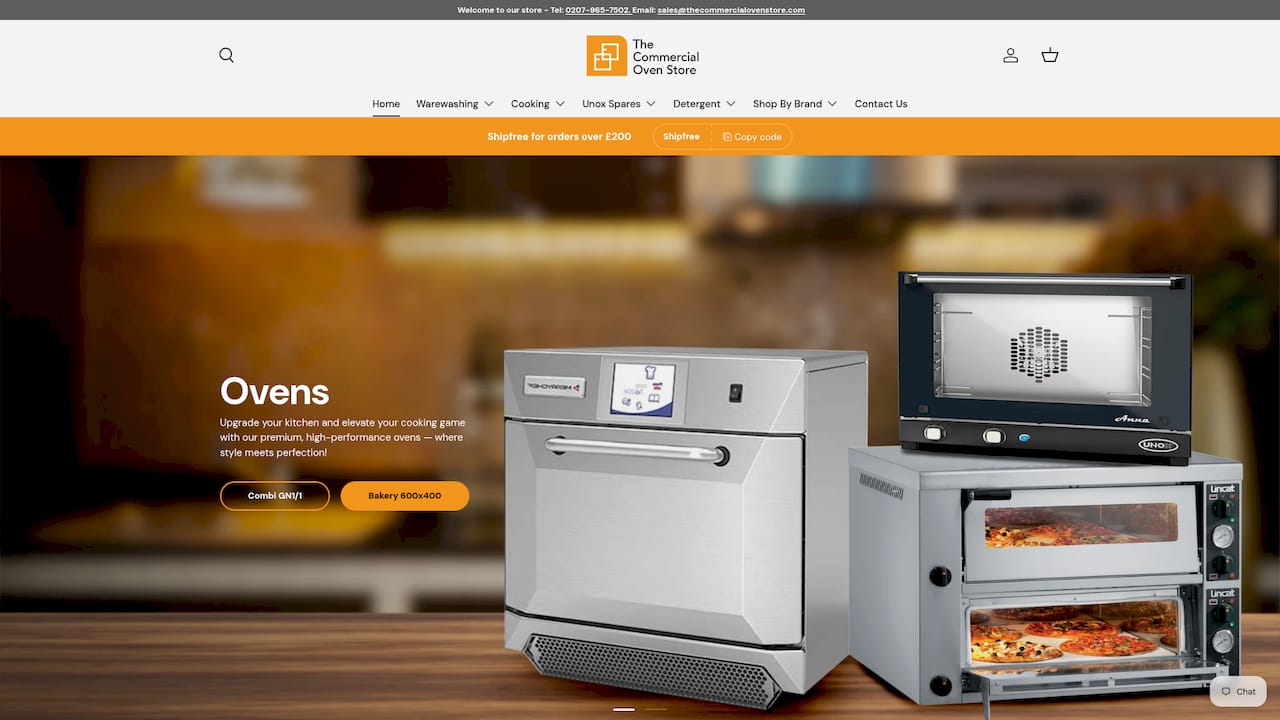
Before you buy, ask any supplier three things: real throughput under continuous use (not the marketing figure), recovery time between batches, and total cost of ownership including install and servicing. Some e-commerce suppliers stock throughput-focused kit from Unox, Lincat, and Rational, built for exactly this kind of repetition, and offer flexible payment methods so an upgrade doesn’t need to hit your cash flow in one lump. If your kitchen fits that high-repetition profile, the Unox Bakerlux SHOP.Pro Master Arianna.Matic is worth a look, and our guide to choosing the right high-speed oven walks through matching oven specification to your actual ticket volume. Visit Thecommercialovenstore to talk through your kitchen’s numbers with our team before you commit to anything.
Sources
- How kitchen flow optimization increases restaurant throughput, cuts ticket times, and protects margins in 2026 — Restaurant Tech Hub
- How kitchen screens improve restaurant efficiency — EzeePOS
- Hospitalidad
- Ticket triage agent: first response in 45 seconds — Agent Works