

Eco mode on a combi oven genuinely cuts energy and water use, but only when the kitchen matches the setting to the job. Switching to an ENERGY STAR certified combi oven can save around $1,200 a year and roughly 9,550 kWh, largely from reduced steam and standby losses. The catch: browning, searing and fast recovery service periods often need full production mode, so test recipes before you commit a whole menu to eco settings.
TL;DR:
- Eco mode’s water and energy savings depend heavily on matching the setting to specific phases of kitchen operation, especially idle periods.
- Boilerless models reduce water use per cycle to around 10 gallons, cutting energy consumption linked to water heating and improving overall efficiency.
- Proper implementation includes mapping idle windows, batching loads, and saving recipes with eco parameters to maximize savings without sacrificing quality.
- Eco mode is ineffective for high-temperature browning, rapid searing, or peak recovery, where full-power operation is essential for quality and speed.
- Successful adoption requires integrated operational changes, including staff training, scheduling, and acceptance testing, rather than relying solely on appliance settings.
Table of Contents
- What does eco mode do on a combi oven?
- How much energy and water does eco mode actually save?
- How do you get real savings from eco mode in a busy kitchen?
- When should you avoid eco mode?
- How does Thecommercialovenstore help kitchens buy the right oven?
- What do successful eco-mode rollouts actually look like?
- Where can you verify these figures yourself?
- What actually matters most when you’re deciding on eco mode?
- Ready to choose the right combi oven for your kitchen?
- Sources
What does eco mode do on a combi oven?
Eco mode isn’t a separate cooking mode. It’s a set of adjustments layered onto the oven’s existing convection, steam and combi functions that trim energy and water without shutting the appliance down.
Convection mode circulates dry hot air for browning and crisping. Steam mode injects moisture for gentle, even cooking, most relevant to reheating, poaching and proving. Combi mode blends both, which is where most eco settings do their heaviest lifting because steam generation is the single biggest energy and water draw in the whole appliance.
Eco mode typically changes three things: it reduces idle heat retention when the oven sits between orders, cuts steam volume where a recipe doesn’t need full saturation, and flattens the heating curve so the burner or element doesn’t cycle as aggressively. None of that changes what the oven can cook, only how hard it works to get there.
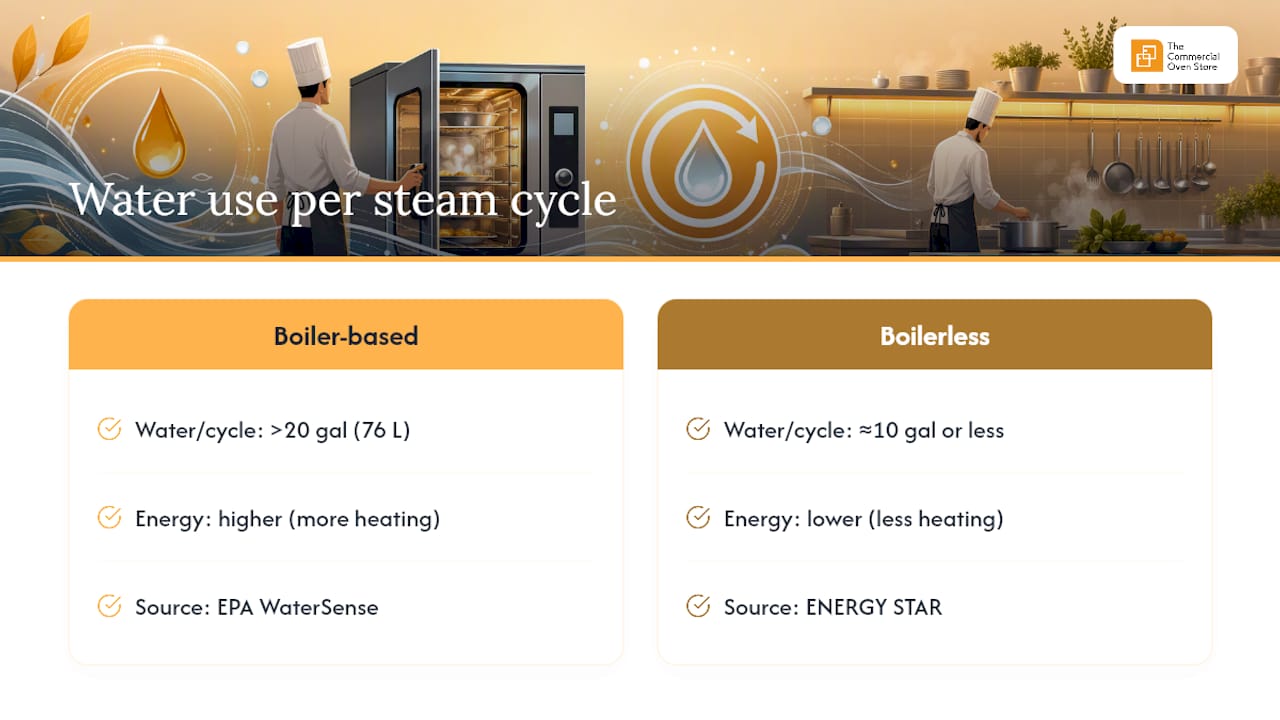
Where the water savings come from matters just as much as the energy story. Boiler-based combi ovens generate steam in a separate tank and tend to use it liberally; boilerless (direct injection) models atomise water straight into the cooking chamber and use it far more sparingly, a distinction covered in detail by EPA WaterSense.
Common eco-mode features on current models include:
- Standby timers that drop the oven into a low-energy holding state after a set idle period
- Reduced fan speed during low-demand cooking to cut motor load
- Eco-clean cycles that use less water and lower temperatures than a full descale or deep clean
- Smart steam control that meters moisture to the recipe rather than flooding the chamber by default
How much energy and water does eco mode actually save?
The clearest independent figure comes from ENERGY STAR, which puts the annual saving from switching to a certified commercial combi oven at roughly $1,200, with lifetime utility savings around $8,000 over the appliance’s working life. That’s not an eco-mode-only figure. It reflects the whole certified appliance, of which eco mode is one contributing feature alongside insulation, door seals and burner efficiency.
Water tells a sharper story. EPA WaterSense reports that boiler-based combi ovens can use more than 20 gallons (76 litres) per steam-mode cycle, while ENERGY STAR certified boilerless models bring that down to around 10 gallons or less per cycle. Given that heating water accounts for a meaningful share of a combi oven’s total energy draw, halving water use per cycle has a direct knock-on effect on the energy bill, not just the water bill.
Standby behaviour adds a second layer of saving. One vendor example from Convotherm estimates around 28% energy saving for an oven left idle roughly 2.2 hours a day, purely from automatic standby switching. Treat that as an illustrative figure from one manufacturer’s testing rather than a universal guarantee, but it does show why idle-time settings matter as much as cooking-time settings.
For UK kitchens working out whether the sums add up locally, it’s worth running the numbers against your own tariff using a running-cost calculator with UK examples rather than relying on US utility rates baked into the ENERGY STAR figures.
How do you get real savings from eco mode in a busy kitchen?
Eco mode pays off when it’s applied to the right windows of service, not switched on and forgotten. Here’s a sequence that works for most professional kitchens moving from full production settings to a mixed regime.
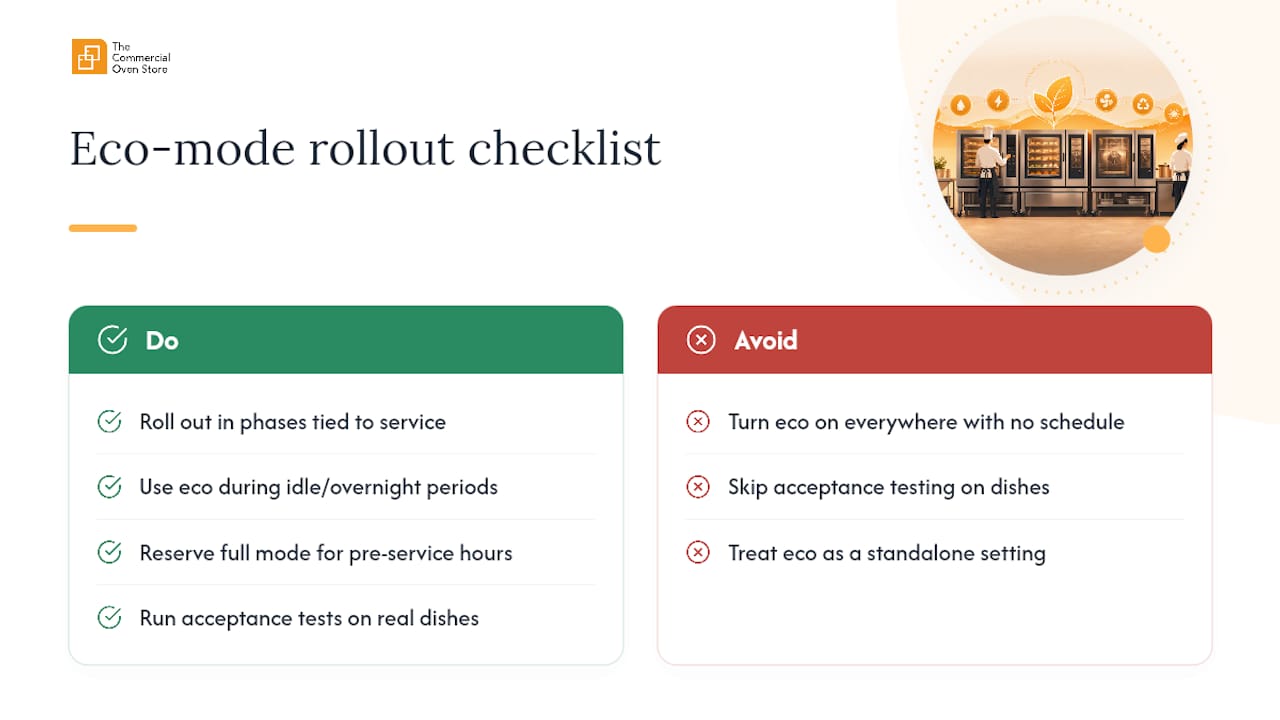
- Map your idle windows first. Identify genuine downtime, overnight, between breakfast and lunch service, late afternoon lulls, and set standby timers to trigger only in those windows.
- Keep full production mode for peak service. Eco settings that slow recovery time are the wrong choice when tickets are stacking up; switch back manually or via a programmed schedule.
- Build eco parameters into saved recipes. Most combi ovens let you save cooking programs; bake the reduced steam and fan settings into the recipe itself so staff don’t have to remember to adjust anything mid-service.
- Batch to full loads where possible. Running a half-empty chamber on eco settings still uses close to the same energy as a full one, so consolidate smaller batches rather than running the oven twice.
- Stage your preheats. Pre-heating too early wastes the exact idle-energy savings eco mode is meant to capture; time preheat to service, not to the start of the shift.
- Track two numbers weekly. kWh per service and water litres per cycle. Both are visible on most modern combi oven displays and give you a fast read on whether eco settings are actually working.
Cleaning routines matter more than most operators expect. Eco-clean cycles and cartridge-based descaling systems, covered in more detail in guidance on combi oven cleaning, keep the boiler or steam injectors free of scale that otherwise forces the unit to work harder to hit target humidity.
Pro Tip: Run a two-week trial on one oven before rolling eco mode across your whole kitchen. Log kWh per service and water per cycle against your usual production week, then compare quality scores on your three highest-volume dishes before deciding on a full switch.
When should you avoid eco mode?
Eco mode isn’t the right setting for every dish or every part of service. Certain foods and moments genuinely need the oven running at full output, and forcing eco settings onto them costs you more in wasted product and slow tables than it saves in energy.
- High-temperature browning and rapid searing, where reduced heat curves leave proteins pale and underdeveloped
- Short-cycle crisping items like pastries or breaded goods, where a flattened heat ramp extends cook time and softens texture
- Peak service recovery, where standby-style throttling slows the oven’s return to working temperature between back-to-back orders
Before switching a section of the menu to eco settings permanently, run a simple acceptance test: cook your five highest-volume dishes on eco mode and compare colour, texture and total cook time against your current full-production baseline. If two or more fail on appearance or timing, keep that menu segment on standard settings and reserve eco mode for the rest of the day.
How does Thecommercialovenstore help kitchens buy the right oven?
Some combi ovens on the market include eco-relevant features like boilerless steam generation, standby timers and eco-clean cycles varying by model and worth checking against your kitchen’s actual steam demand before you buy.
Beyond the product range, practical support for a large purchase can include:
- Sizing advice matched to covers per service and existing kitchen layout
- Guidance on which eco features suit high-steam operations versus dry-heat-dominant menus
- Accessories and stands to fit the oven into your existing footprint
- Service contracts that help keep descaling and eco-clean systems running at their rated efficiency
| Buyer concern | What to check before purchase |
|---|---|
| Upfront cost | Flexible payment options may be available to spread capital outlay |
| Steam-heavy menu | Consider boilerless models for lower water and energy per cycle |
| Payback timing | Request payback information using manufacturer and ENERGY STAR figures |
| Ongoing efficiency | Maintenance plans can help with descaling and eco-clean upkeep |
For kitchens weighing up whether to switch from gas or older electric ovens entirely, the buyer’s checklist for switching to electric combi walks through typical payback windows and sizing considerations before you commit.
What do successful eco-mode rollouts actually look like?
The kitchens that get eco mode right rarely flip a single switch and call it done. They treat it as a phased change tied to specific service patterns.
A catering operation running large-batch banqueting work, for instance, gets most value from eco settings overnight and between events, when ovens sit idle for hours at a stretch, while keeping full production mode reserved for the two or three hours before each function starts. A bakery chain running boilerless combi ovens for proving and reheating tends to see the clearest water reduction, because that operation’s steam use is constant and high-volume rather than occasional, which is exactly where the boiler versus boilerless gap shows up most starkly.
Sites that fail to see savings almost always share the same pattern: eco mode switched on across the board with no distinction between peak and idle periods, and no acceptance testing on the dishes that actually need full heat. Wider sustainability planning across food service, including staff training and workflow scheduling, is covered in the 2026 operator guide from Wild Foodz, which reinforces a point worth repeating here: the equipment setting only delivers if the rota and prep schedule are built around it. Kitchens that treat eco mode as one part of a wider operational review, rather than a standalone appliance setting, are the ones that see the numbers move on their energy bills.
Where can you verify these figures yourself?
Don’t take running-cost claims on faith, check them against the primary sources.
- ENERGY STAR: Commercial ovens for certified product listings and headline savings figures
- EPA WaterSense guidance on combination ovens for water-per-cycle data
- Thecommercialovenstore to browse current combi oven models and discuss financing
What actually matters most when you’re deciding on eco mode?
The conventional advice treats eco mode as a single toggle that either saves money or doesn’t. That’s the wrong frame. The evidence points to eco mode as a multiplier: it amplifies good operational habits and does very little for a kitchen that hasn’t sorted its scheduling, batch sizing or maintenance first.
What gets overrated is the headline percentage. What gets underrated is the boiler versus boilerless decision at purchase stage. That single specification choice affects your water and energy baseline more than any setting you’ll ever toggle afterwards.
If you’re prioritising one thing, prioritise the acceptance test before the rollout. Two weeks of side-by-side data on your actual menu tells you more than any manufacturer brochure, and it stops you finding out the hard way that your signature dish doesn’t survive a flattened heat curve.
— Simon
Ready to choose the right combi oven for your kitchen?
You can find expert advice to help size ovens against your covers, menu and steam demand, rather than relying on generic capacity charts. There is access to boilerless and eco-featured models from brands like Unox, Rational and Merrychef, plus options to spread the cost through financing rather than tying up capital in one purchase.
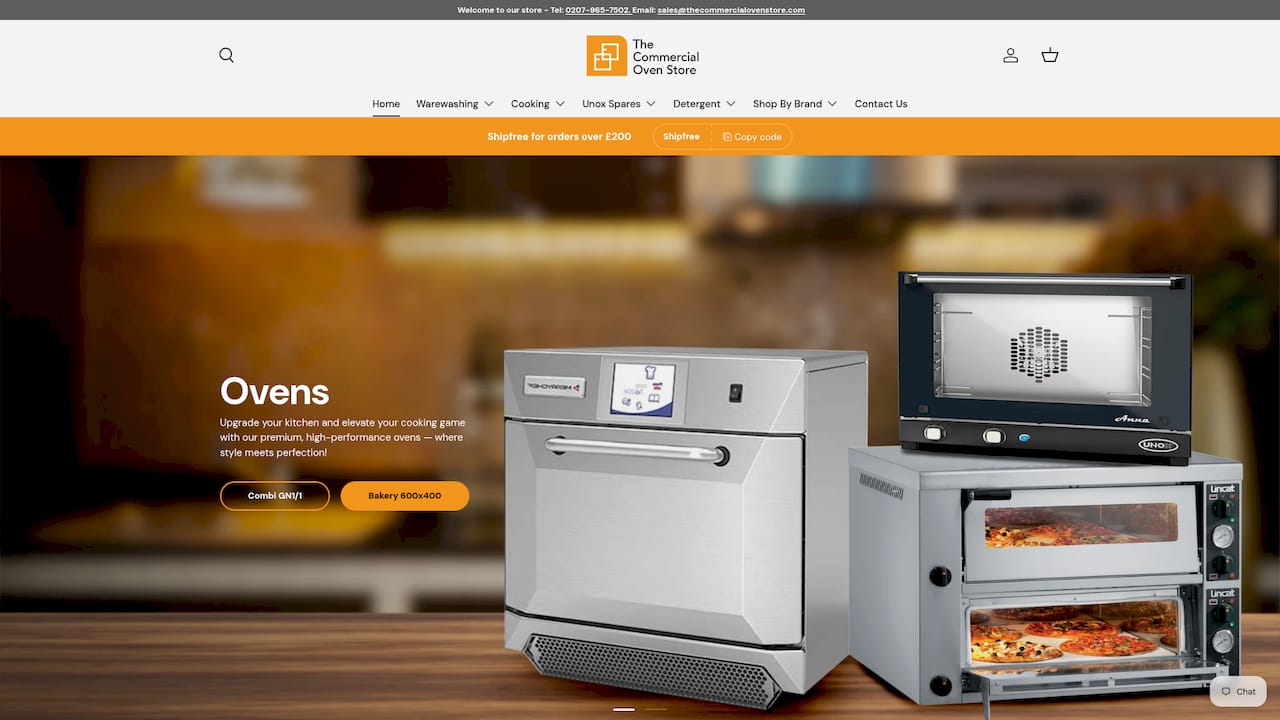
If you’re weighing up a steam-heavy operation, models like the Unox Bakerlux SHOP.Pro™ Master Arianna.Matic are worth a look for their programmable settings and load flexibility. Get in touch through Thecommercialovenstore for a sizing conversation and a payback estimate built around your actual service pattern, not a generic manufacturer average.