

The best enclosed oven stand is a smooth-finish stainless-steel unit with removable door seals, enough GN rail pairs for your current trays, and a load rating matched to the oven sitting on top. Hygiene and fit are the two things that go wrong most often, and both are fixable before you order if you check the right specifications. Installation support is usually available too, so measuring correctly matters more than guessing.
TL;DR:
- Use a stainless-steel stand made from grade 304 with a smooth, seamless finish to ensure hygiene and ease of cleaning.
- Verify rail spacing in millimetres and match it precisely to your trays before ordering to prevent incompatibility issues later.
- Confirm the load rating with your supplier, including both per shelf and total capacity once the oven is mounted, to avoid overloading.
- Measure your oven accurately, including feet and clearance, and provide photos plus model details to ensure proper fit and safe installation.
- Choose fixed legs with leveling feet for heavy ovens needing stability, or castors with locking brakes for mobility during cleaning or layout adjustments.
Table of Contents
- Key features that determine hygiene and durability
- Sizing and compatibility: measuring your oven correctly
- Hygiene standards and a practical cleaning routine
- Installation, mobility and maintenance considerations
- Specification checklist and questions to ask your supplier
- How we help you specify and install the right stand
- Order, install and pay in a way that suits your kitchen
- Common mistakes we see on site, and one way to avoid them
- FAQ
- Sources
Key features that determine hygiene and durability
Not every enclosed stand on the market is built the same, and the differences show up fastest during a hygiene inspection or after six months of heavy service. Grade 304 stainless steel with a smooth, non-absorbent finish is the baseline: food hygiene regulations expect food-contact and food-adjacent surfaces to be easy to clean and disinfect, and a rough or painted surface fails that test quickly. Seamless welds and rounded internal corners matter for the same reason: a sharp seam or a right-angled joint collects grease and becomes a point an inspector will flag.
Door design affects daily labour as much as hygiene. Double doors with removable seals let staff pull the gasket out for a proper soak rather than scrubbing it in place, and secure latching stops doors swinging open mid-service.
- Stainless-steel grade and a smooth, seamless finish reduce harbour points for dirt and grease.
- Removable door seals cut cleaning time and let staff replace a worn seal without replacing the door.
- Internal GN rail count must match the trays you actually use, not a generic average.
- Load ratings should cover the stand alone and the combined weight once an oven is mounted above it.
Rail spacing is the detail buyers skip most often. A stand built for 1/1 GN rails spaced for six pairs is useless if your kitchen runs 2/1 trays, so check the exact pairing before ordering rather than assuming “GN compatible” covers your format.
Pro Tip: Ask for the rail spacing in millimetres, not just the GN size, and compare it against the trays you already own before you commit to an order.
Sizing and compatibility: measuring your oven correctly
A stand that is five millimetres too narrow or too short will not take the oven’s feet cleanly, and resizing a stainless-steel unit on site is rarely practical. Measure before you order, not after it arrives.
- Measure the oven’s full footprint, including the position of its feet, and record the clearance needed for the door to open fully.
- Photograph the oven from the front, side and underneath, and send these alongside the model number when you contact a supplier.
- Confirm the GN format, whether 1/1, 2/1 or another size, and count how many rail pairs you need for trays currently in rotation.
- Set the stand height against your existing benching or pass-through line so the oven sits at a comfortable working height, not just a standard default.
- Choose castors if the unit needs to move for cleaning or layout changes, or fixed legs if stability under a heavy combi oven matters more than mobility.
A commercial convection oven buying guide is a useful reference if you are still finalising which oven model the stand needs to support.
Hygiene standards and a practical cleaning routine
Enclosed stands exist to keep trays, grids and accessories off open shelving and inside a container that is actually designed to be cleaned, which lowers the chance of cross-contamination near the oven. That only works if the cleaning routine matches the standard the stand is built to meet.

UK food hygiene guidance expects disinfectants used on kitchen equipment to meet BS EN 1276 or BS EN 13697, and checking for these codes on a product label takes seconds but confirms the disinfectant is suitable for food-contact surfaces.
The Food Standards Agency’s cleaning guidance recommends a two-stage approach: remove visible dirt and grease with detergent, rinse if needed, then apply a disinfectant that meets the standards above and leave it for the manufacturer’s stated contact time before wiping or rinsing again.
- Clean visible dirt first; disinfectant applied over grease does not work properly.
- Leave disinfectant on the surface for its full contact time rather than wiping it off early.
- Remove door seals periodically for a deep clean rather than relying on wipe-downs alone.
- Add the stand to the oven’s own cleaning rota, not as an afterthought.
Some specialist environments use validated alternatives to standard hot-water disinfection; the FSA and FSS guidance on alternative systems sets out what operators need to validate and document before relying on one.
Installation, mobility and maintenance considerations
Castors make sense when a stand needs to move for cleaning behind or under it, but they need locking brakes and a weight rating that covers the stand and the oven combined. Fixed legs with levelling feet suit heavier combi ovens where stability matters more than mobility, and they still need adjusting so the unit sits flat on an uneven kitchen floor.
- Secure the oven to the stand following the manufacturer’s fixing instructions, and leave clear access at the rear or side for service engineers.
- Check anti-tip fittings are in place before the oven goes into daily use, particularly on mobile units.
- Build seal replacement, rail checks and fixing inspections into the same maintenance schedule that covers the oven itself.
Combi ovens in particular benefit from a stand height that leaves enough clearance for routine servicing, a point covered in more detail in guidance on combi oven cleaning.
Specification checklist and questions to ask your supplier
Copy this list before you request a quote, so nothing gets confirmed after the stand has already shipped.
- Material grade and finish (304 stainless steel, smooth and seamless).
- Internal GN rail count and exact spacing in millimetres.
- Load rating, both per shelf and combined with the oven above.
- External dimensions, including door swing clearance.
- Castors or fixed legs, and whether levelling feet are included.
- Removable door seals, and whether replacements are stocked.
- Warranty period and what it covers.
- Whether professional installation is included or offered separately.
- Delivery lead time.
Ask your supplier directly: can you confirm the load rating and rail spacing against my oven model? Are seals replaceable and kept in stock? What is the lead time, and is installation available?
Pro Tip: Send your measurement photos and the oven’s exact model number in your first message to a supplier. It is the single fastest way to avoid a re-order.
How we help you specify and install the right stand
We advise on matching enclosed stands to specific oven models, including rail spacing, load ratings and door clearance, so the unit fits first time. Our installation service covers fitting the oven and stand together, and we can point you to maintenance guidance such as our speed oven maintenance guide for ongoing upkeep. Contact our team for a measurement check or a tailored quote before you order.
Order, install and pay in a way that suits your kitchen
We supply enclosed oven stands alongside the commercial ovens and bakery ovens they sit under, and our team will check rail spacing and load ratings against your exact model before anything ships. Our installation service covers fitting the stand and oven together, so you are not left matching fixings on site.
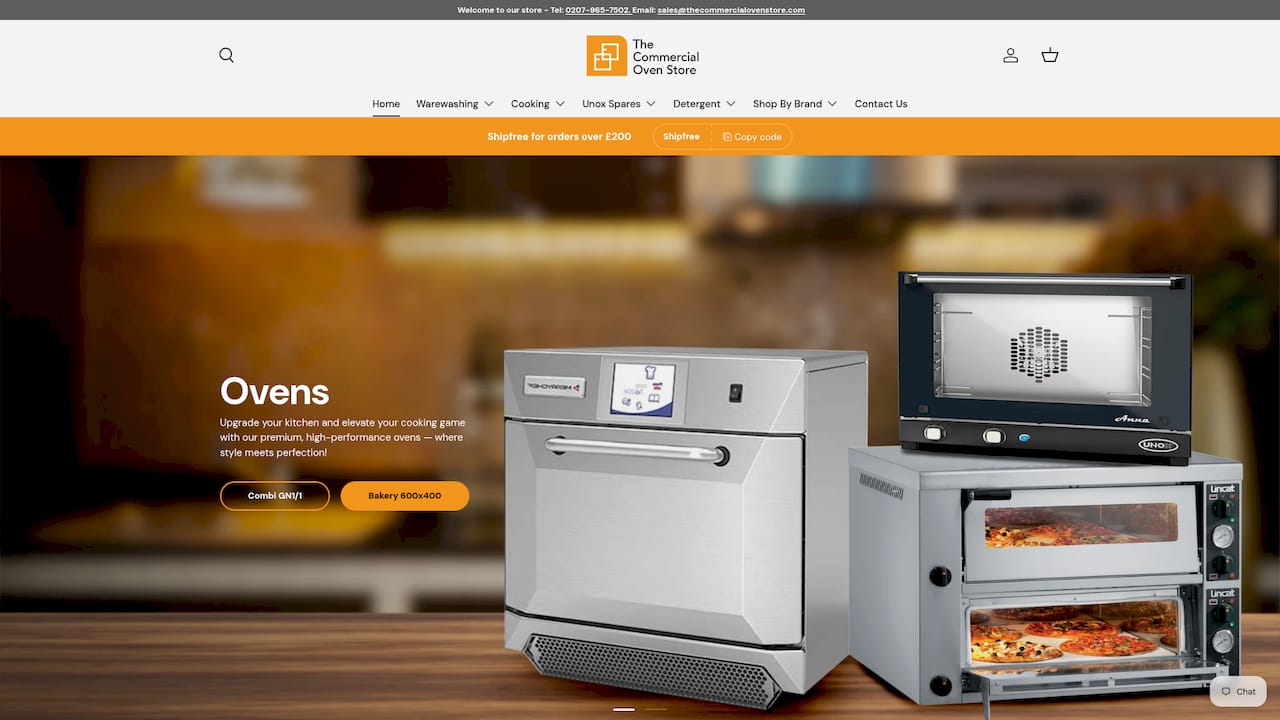
- Browse compatible convection ovens and matching stands by model.
- Book professional installation so the stand and oven are fitted and levelled correctly.
- Use flexible payment options, including iwocaPay, to spread the cost of a new oven and stand.
Get in touch through our product pages for a specification check or a quote tailored to your kitchen.
Common mistakes we see on site, and one way to avoid them

The errors that cause the most grief are rarely dramatic: wrong rail spacing for the trays in use, a seal that was never replaceable in the first place, or a stand height that forces staff to stoop all shift. Each one is cheap to fix on paper and expensive to fix once a stand has already been delivered and fitted around an oven.
If there is one habit worth adopting, it is this: measure the oven, photograph it, and get the rail spacing confirmed in writing before you place an order.
— Simon
FAQ
What material should an enclosed oven stand be made from?
Grade 304 stainless steel with a smooth, seamless finish is the standard choice because it meets the easy-to-clean requirement set out in UK food hygiene regulations. Avoid painted or rough-finished surfaces, since they trap grease and are harder to disinfect effectively.
How many GN rail pairs do I need in an enclosed stand?
The right number depends entirely on the trays you currently use, not a generic figure, so count your 1/1 or 2/1 GN trays before ordering. Confirm the exact rail spacing in millimetres with your supplier rather than assuming “GN compatible” covers your format.
Which disinfectant standards should I check for on cleaning products?
Look for products labelled to BS EN 1276 or BS EN 13697, which are the standards referenced in UK food hygiene guidance for disinfecting kitchen equipment. The Food Standards Agency also recommends cleaning with detergent first, then applying disinfectant for its stated contact time.
Should I choose castors or fixed legs for a heavy combi oven?
Fixed legs with levelling feet generally suit heavier combi ovens better, since stability matters more than mobility once the unit is in daily service. Castors work well where the stand needs to move for cleaning, provided they carry locking brakes and a weight rating that covers the stand and oven together.
Does the store offer installation for enclosed oven stands?
Installation services may be offered that cover fitting the oven and stand together, with flexible payment options possibly available. Contact the team with your oven model and measurements for a tailored quote.