

If your church cooks regularly from scratch, you will usually need commercial-grade ventilation and must register as a food business, so your first move should be contacting your local food safety team and commissioning a ventilation survey. Gas appliances also need a Gas Safe engineer and a competent electrician involved before anything is installed.
TL;DR:
- Most churches cooking from scratch need to register as a food business and conduct a ventilation survey before installing oven equipment.
- Domestic extractor fans do not meet commercial ventilation standards; canopies should extend beyond appliances and ducts discharge at least one meter above eaves.
- Gas ovens must be installed by Gas Safe engineers and fitted with ventilation interlocks to prevent dangerous gas buildup.
- Choose oven types based on kitchen usage, with countertop convection for occasional use and combi ovens for higher throughput, sizing them for volunteer capacity rather than peak demand.
- Regular cleaning and inspection of filters, ducting, and safety certificates are essential to maintain compliance and prevent fire risks.
Table of Contents
- What regulatory checks and permissions you must do first
- Ventilation basics: when domestic guidance doesn’t apply
- Electrical and gas requirements: wiring, power and interlocks
- Which oven type suits my church kitchen?
- Practical placement, hood installation and fire safety
- Cleaning, servicing and recordkeeping for inspections
- Common pitfalls in church kitchen projects
- How we can help with supply, survey and installation
- FAQ
- Sources
What regulatory checks and permissions you must do first
Before any oven arrives, work out whether your church counts as a food business. Under Food Standards Agency guidance, any premises providing food on a regular basis must register with the local authority at least 28 days before starting, and this applies whether the cooking happens weekly for a lunch club or daily for a nursery. Occasional one-off bake sales rarely trigger registration, but a standing rota of cooked meals almost always does.
Hygiene facilities matter just as much as paperwork; for guidance on eco-friendly choices in food service operations, consider insights on eco friendly food packaging for EU operators. Food premises need adequate arrangements for cleaning and storing utensils, with hot and cold drinking-quality water, and separate sinks are often expected for washing food and cleaning equipment.
Heritage buildings add another layer. Planning consent and listed-building permissions can affect anything involving external ducting or visible vents, so involve your Diocesan Advisory Committee or conservation officer early.
- Register with your local authority at least 28 days before regular food service begins
- Confirm hot and cold water supply and separate sinks for food and equipment washing
- Contact the planning department before any ducting or vent work on listed fabric
- Request written advice from food safety and planning teams rather than relying on assumptions
Ventilation basics: when domestic guidance doesn’t apply
Many committees assume a domestic extractor fan will do. It will not, once cooking becomes commercial in character. Approved Document F sets domestic extract rates at 15 to 60 litres per second, but these figures do not apply once a kitchen functions commercially, which HSE Catering Information Sheet No 10 addresses directly: it sets out ventilation objectives including removing fumes at the point they are produced, supplying make-up air, allowing easy cleaning, and preventing a build-up of combustion products from gas appliances.
A few practical rules follow from that:
- Fit one canopy per significant appliance, extending beyond the equipment edge on all open sides
- Choose stainless-steel canopies with grease filters that are simple to remove and clean
- Supply make-up air at approximately the majority of the extract rate, tempered where the kitchen gets cold
- Route ducting to discharge well clear of windows, doors and neighbouring properties
Discharge height matters too. Local planning guidance commonly requires extract ducting to discharge at least 1 metre above eaves or ridge where neighbouring buildings are nearby, with duct runs built for access and odour control. Our guide to UK oven ventilation rules walks through the domestic versus commercial distinction in more depth if you want the longer version.
Pro Tip: Get a ventilation specification drawn up before you choose an oven, not after. Changing the duct route once equipment is on order almost always costs more.
Electrical and gas requirements: wiring, power and interlocks
Before ordering anything, find out what the building can actually supply. Many churches have a single-phase domestic-style connection that will not run a larger combi oven, so a competent electrician needs to check capacity against BS 7671 wiring principles and provide a compliance report before installation. Our guide to commercial oven power requirements covers how to work out what supply a given oven needs.
Gas ovens bring a stricter requirement. Any gas appliance must be installed and tested by a Gas Safe registered engineer, and the ventilation system usually needs a gas interlock: a safety control that stops gas flow if extraction is not running, preventing a build-up of combustion products in an unventilated space.
- Have a competent electrician assess the supply and certify the work under BS 7671
- Use only a Gas Safe engineer for gas appliance installation and testing
- Fit a ventilation-to-gas interlock where gas catering equipment is specified
- Keep commissioning reports, isolation labels and certificates together for inspections
Which oven type suits my church kitchen?
Match the oven to how the kitchen is actually used rather than to what looks impressive in a brochure. A servery that reheats bought-in food for occasional events can usually manage with a domestic-style oven or a small countertop convection unit, with minimal ventilation demand. A hall running weekly community lunches or a toddler group snack rota needs more throughput and starts to tip into commercial territory, where a countertop convection or combi oven makes sense.
- Countertop convection ovens suit occasional to weekly batch cooking, need modest power and a basic canopy
- Combi ovens suit halls serving several dozen meals regularly, combining steam and convection for speed and consistency
- Speed ovens suit high-turnover servery counters where queue time matters more than batch size
Some combi ovens can run on a reduced ventless setup rather than full ducted extraction, depending on cooking profile, which our piece on combi oven ventilation explains in more detail. For a fuller look at throughput and footprint trade-offs, our convection oven buying guide is worth reading before you commit to a model.
Pro Tip: Size the oven to your volunteer rota, not your busiest Sunday. An oversized combi oven run by two volunteers a fortnight sits idle and racks up needless running costs.
Practical placement, hood installation and fire safety
Getting the canopy right prevents most of the problems that surface later. It should extend beyond the equipment edge on every open side, sit in stainless steel for hygiene, and hold grease filters that come out easily for cleaning. Running an oven under a hood with filters removed or clogged is a genuine fire risk, since grease build-up in ductwork is one of the more common causes of kitchen fires.
- Overlap the canopy beyond the appliance footprint on all open sides
- Keep a spare set of grease filters so cleaning never means running unfiltered
- Clean filters weekly if the kitchen is in frequent use, less often for occasional servery kitchens
- Consider automatic fire suppression where fryers or heavy grease loads are involved
Our guide to commercial oven placement covers siting decisions alongside ventilation coordination in more detail. In historic buildings, Historic England’s advice on ventilation for places of worship points towards bespoke terminal details, such as stone louvres or cast-iron covers, that satisfy a conservation officer without an ugly box bolted to the tower.
Cleaning, servicing and recordkeeping for inspections
A simple schedule keeps volunteers on track and gives an inspector something concrete to look at.
- Wipe down surfaces and remove crumbs and spills after every use
- Clean grease filters weekly, or more often during busy periods
- Book a professional duct clean and fan service annually, or sooner if use is heavy
- Keep inspection panels clear and accessible at all times
Accessible panels and a documented service history matter because they are often the first thing a food safety officer checks. Keep your commissioning record, gas safety certificates, ventilation test results and a dated cleaning log together in one folder.
Pro Tip: Photograph the duct run and canopy once installed. It saves time explaining the setup to a new volunteer or an inspector years later.

Common pitfalls in church kitchen projects
Three problems come up again and again: ducting terminated awkwardly against stonework because nobody consulted a conservation officer early, extract capacity underestimated because someone assumed a domestic figure would do, and a gas oven installed without the ventilation interlock it needed. Each one is cheaper to fix on paper than on site.
The fix in all three cases is the same: survey first, involve the conservation officer and a competent installer from the start, and treat the interlock as non-negotiable for gas kit.
— Simon
How we can help with supply, survey and installation
We offer commercial ovens from various established manufacturers, and our team can talk through which model suits your hall before you commit to anything. Beyond the oven itself, we provide installation services and advice on matching equipment to your kitchen’s layout and expected use, plus flexible payment options for churches that would rather spread the cost than find it in one go.
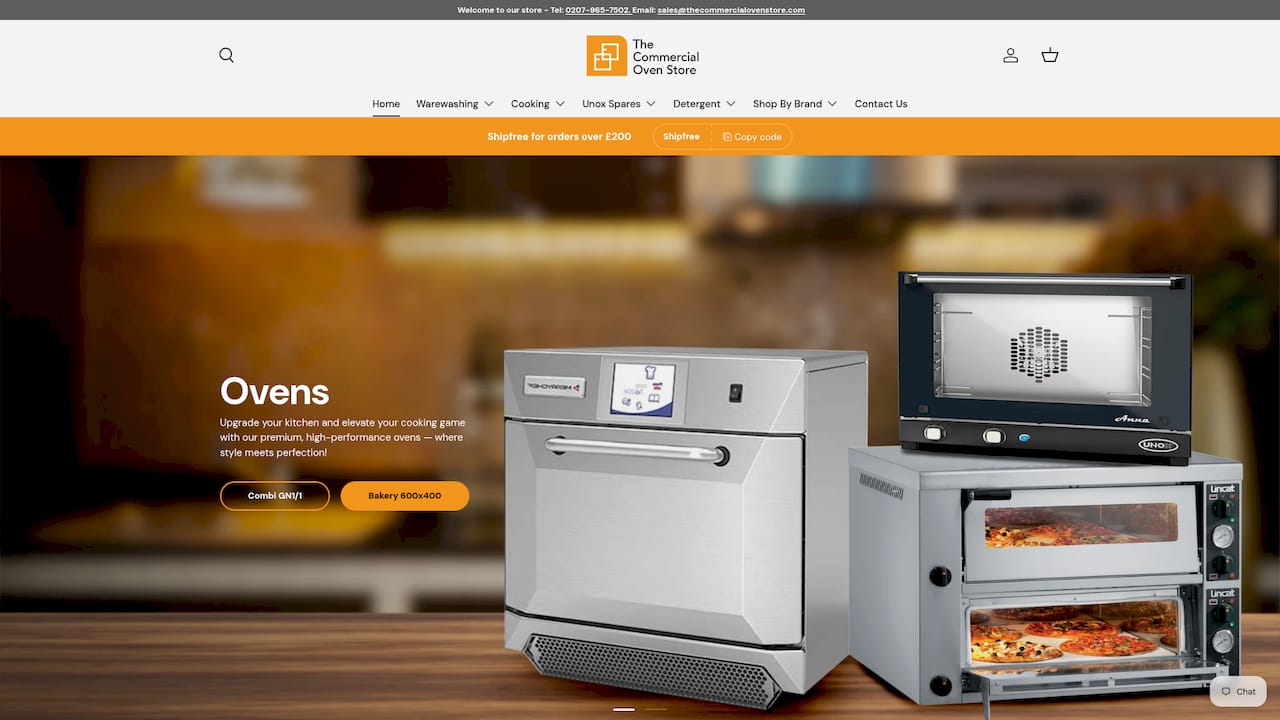
- Browse our commercial ovens and convection ovens ranges for models suited to church-scale kitchens
- Speak to our team about installation and ventilation coordination before you order
- Ask about iwocaPay if spreading the cost suits your church’s finances better than a single payment
If you are still working out what your kitchen actually needs, visit The Commercial Oven Store and start a conversation with an adviser rather than guessing from a spec sheet.
FAQ
Does a church kitchen always need commercial ventilation?
Not always. A servery reheating bought-in food occasionally may manage with domestic-style extraction, but a kitchen cooking from scratch regularly is treated as commercial and needs ventilation designed to HSE Catering Information Sheet No 10 principles rather than domestic figures.
When must a church register as a food business?
Registration with the local authority is required at least 28 days before regular food provision begins. A one-off bake sale typically does not trigger this, but a weekly lunch club usually does.
Can a gas oven run without a ventilation interlock?
No. Gas catering appliances should be fitted with an interlock that stops gas flow if the extraction system is not running, which prevents dangerous build-up of combustion products in the kitchen.
What oven does The Commercial Oven Store recommend for a small church hall?
For occasional to weekly use, a countertop convection oven or a compact combi oven usually fits best, and we can advise on the right size once we know your expected volumes and power supply.
How high above the roof does kitchen extract ducting need to discharge?
Local planning guidance commonly requires ducting to discharge at least 1 metre above eaves or ridge where neighbouring buildings are close by, with the duct built for access and cleaning.
Sources
Start with the Food Standards Agency, Approved Document F, and HSE’s catering ventilation guidance below.
- Register a food business
- Approved Document F: ventilation
- Catering Information Sheet No 10 – Ventilation in catering kitchens
- Food and drink premises: planning requirements for kitchen extraction/ventilation systems