

Pizza-focused menus need a deck or conveyor pizza oven; multi-item stalls do better with a countertop convection or combi oven; grab-and-go sandwich and snack trucks want a high-speed impingement oven. The real decision hinges on three things: your power source, your ventilation setup, and how many items you need out the hatch per hour. Everything else, including safety, cost and installation, follows from those three constraints.
TL;DR:
- Selecting the right oven depends primarily on menu throughput, power source capabilities, and ventilation requirements, rather than personal preference.
- Convection ovens are versatile for batch cooking, while high-speed impingement models excel in speed for sandwiches and wings, and pizza ovens prioritize flavor and authenticity.
- Adequate installation involves compliance with ventilation rules, gas safety standards, and proper site measurement to ensure efficient workflow and legal approval.
- Power options typically include mains electricity, LPG, or 24V units, with generator or inverter sizing critical to sustain oven operation and avoid capacity issues.
- Cost and maintenance vary significantly across categories, with upfront investment covering not only the oven but also installation, ventilation, and routine servicing costs.
Table of Contents
- Food truck oven types: matching the machine to the menu
- How do you choose the right oven for your truck?
- What safety and legal steps come before installation?
- What power and fuel options work in a moving kitchen?
- What does a food truck oven cost to buy and run?
- Getting your oven measured, fitted and signed off
- Operator perspective: speed usually beats flavour under pressure
- How Thecommercialovenstore gets you from spec to service
- Sources
- FAQ
Food truck oven types: matching the machine to the menu
Every mobile kitchen ends up choosing between a handful of proven categories, and each one trades speed for versatility in a different way.
Convection and stacked countertop ovens are the workhorses of the mobile catering world. They handle pastries, roasts and batch cooking without fuss, typically drawing 3 to 9kW and fitting into a bench footprint under a metre wide. If your menu changes seasonally or you bake as well as reheat, this is usually where you start.
High-speed impingement ovens blast hot air at the food, cutting cook times dramatically for sandwiches, wings and frozen items. Some ventless models use catalytic converters to reduce hood requirements, though they still need regular servicing to keep the catalytic element working. Throughput is the selling point here.
Conveyor and deck pizza ovens, along with mobile wood-fired trailers, sit at the authenticity end of the spectrum. A well-built mobile brick oven can bake a Neapolitan pizza in around 90 seconds once it’s up to temperature, but that speed comes with a heavier trailer, secure flue mounting and extra roadworthiness checks.
24V truck ovens are compact reheating units powered directly from the vehicle’s electrics. They suit tiny operations doing light warming, not full cooking runs.
- Convection: versatile, moderate power, moderate speed
- High-speed impingement: fastest throughput, higher unit cost
- Pizza deck/conveyor/wood-fired: best flavour and authenticity, the largest footprint
- 24V units: lowest power draw, lowest capability
How do you choose the right oven for your truck?
Start with numbers, not preference. Follow this sequence:
- Calculate your target throughput. Work out orders per hour at peak service, then check how many items each oven chamber can hold and how long a cook cycle takes.
- Match the oven to your menu shape. A single hero product (pizza, toasties) points towards a purpose-built oven; a varied menu points towards convection or combi.
- Settle your power source before you shop. Decide between 24V, 230V mains-via-generator, or LPG, then confirm your vehicle’s electrical system and generator can actually sustain the load without draining the battery.
- Weigh the operational realities. Preheat time, how easily you can reach the interior to clean it, and whether spare parts are readily available all affect your service window, not just your menu.
Operators consistently report that speed-to-table and repeatable results matter more day-to-day than chasing marginal flavour gains.
Pro Tip: Measure your working bench depth and the full swing of the oven door before you commit to a model. A door that can’t open fully in a galley-width van will slow every single service, not just the busy ones.

What safety and legal steps come before installation?
You must register your mobile food business with your local authority at least 28 days before you start trading, and you need to register each premises separately if you trade across more than one local authority area. This registration is free, but skipping it or leaving it too late is one of the most common reasons new trucks miss their launch date.
Beyond registration, Food Standards Agency guidance on premises, hygiene and packaging applies to mobile units in the same way it applies to a fixed kitchen. If you deliver via third-party apps, the same hygiene and packaging obligations follow the food out of the hatch.
Ventilation is where most first-time buyers underestimate the requirement. TB140 and related technical bulletins call for mechanical extraction, extract canopies and safety interlocks on many gas catering installations in confined spaces. A commonly applied rule of thumb is free ventilation equivalent to at least 250mm² per kW of appliance input, or 1000mm² as a minimum, split between high and low openings.
- Gas work must go through a Gas Safe-registered engineer, never a general electrician.
- Interlocks that stop gas flow without adequate extraction are considered essential, not optional, in confined mobile spaces.
- UKLPG CoP 24 Part 3 covers flue construction, ventilation rates and CO alarm recommendations specific to mobile catering units.
- A domestic-style oven pushed into commercial hours is a real fire risk. It was never rated for that cooking load.
Read the full breakdown of UK ventilation rules for oven installation before you talk to an installer, so you go into that conversation knowing what to ask.
What power and fuel options work in a moving kitchen?
Power sizing catches out more first-time buyers than almost anything else on this list. A 24V oven is genuinely limited: it will warm a pre-cooked filling, but it will not roast, bake, or run a high-speed cycle at any real volume.
Most serious mobile kitchens run on 230V mains through an inverter or generator, or on LPG. Either way, size the generator or inverter to the oven’s full draw, not its average draw, and check the vehicle’s alternator can recharge the battery bank between services rather than slowly losing capacity across a long day.
LPG installations bring their own checklist:
- Choose between a cylinder locker or a vehicle-mounted tank, sized to your daily running hours.
- Pipework, hose length and materials must meet standard gas safety requirements, not improvised fittings.
- Flues need secure mounting that accounts for vibration on the road, not just a static kitchen fit.
- Valve-proving systems are standard practice, stopping gas re-entering the system until it’s proven safe.
- Interlocks must be tested at commissioning, every time, not assumed to work because they worked last year.
What does a food truck oven cost to buy and run?
Purchase prices vary hugely by category. A small 24V reheater sits at the cheap end; a countertop convection oven costs more but does far more; high-speed impingement ovens carry a premium for their speed; a full mobile pizza trailer or wood-fired setup is the biggest single outlay once you add trailer build and flue work.
Running costs split into a few clear buckets:
- Energy: LPG and mains electricity cost differently per hour, and your choice affects your daily margin more than most owners expect.
- Maintenance: ventless high-speed units need regular catalytic converter servicing to keep working as advertised.
- Installation: canopy and extract work, gas interlock commissioning, and Gas Safe engineer or electrician call-out fees all land before you cook a single order.
- Routine upkeep: a moving unit takes more mechanical wear than a static kitchen appliance, so budget for it.
Thecommercialovenstore offers flexible payment options, including leasing, to spread that upfront cost, alongside its range of high-speed ovens built for exactly this kind of throughput demand.
Getting your oven measured, fitted and signed off
A proper site measurement and specification visit checks your available bench space, the extraction route, and whether your existing power setup can actually take the new load, before anyone commits to a model.
Commissioning is the step that turns a fitted oven into a legal, working one. An engineer tests interlocks, checks the flue route, and confirms the installation meets the standards a food safety officer will look for on inspection day.
Expert advice and installation support are provided alongside the oven range, with flexible payment options available for businesses that prefer to spread the cost rather than pay upfront.

Operator perspective: speed usually beats flavour under pressure
A wood-fired pizza trailer wins on flavour, but a sandwich van running a high-speed oven wins on queue length. Most operators end up choosing the second, because consistency under pressure keeps a lunchtime queue moving in a way artisan technique rarely does.
— Simon
How Thecommercialovenstore gets you from spec to service
There is direct access to genuine ovens from manufacturers like Unox, Rational and Merrychef, backed by advice from people who understand ventilation, power draw and van layout as well as they understand the ovens themselves.
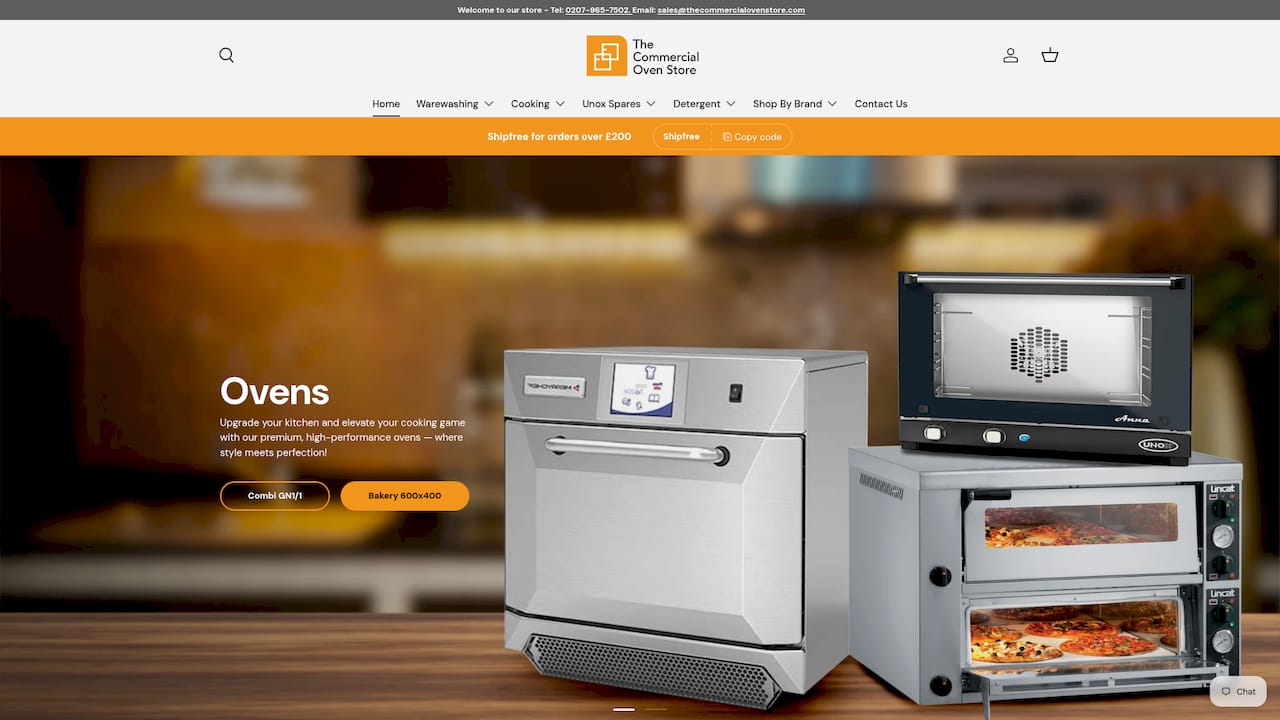
Instead of piecing together an oven, an installer and a generator sizing calculation on your own, expert advice and professional installation are available from one place, along with flexible payment options if spreading the cost suits your cash flow better than paying it all upfront. Browse the full commercial ovens collection or look specifically at convection ovens if a versatile multi-item menu is your priority. If pizza is your hero product, the Lincat twin-deck countertop pizza oven is worth a look for a fixed-footprint setup.
Get in touch to book a site consultation or phone call, and talk through your menu, your van, and your power setup before you buy anything.
Sources
FAQ
Can you put ovens in a food truck?
Yes, provided the installation meets ventilation and gas safety standards for confined commercial spaces, including extraction and interlocks where TB140 guidance requires them. Electric ovens still need adequate power sizing and secure mounting against road vibration.
What is the most profitable item on a food truck?
This varies by menu and location, but items with low ingredient cost and fast cook times, such as toasties, wraps or single hero pizzas, tend to give the best margin per minute of oven time. Choosing an oven that matches that item’s ideal cook cycle, rather than a generic all-rounder, is usually what protects that margin during a rush.
Do you need a licence for a food truck in the UK?
You need to register your food business with your local authority at least 28 days before trading, and register separately in each area you trade in. You’ll also need street trading consent from relevant councils, food hygiene compliance, and gas or electrical safety certification for any cooking equipment fitted.
How much do commercial ovens cost?
Prices vary widely by category, from compact 24V reheating units at the lower end through to countertop convection, high-speed impingement, and full mobile pizza trailers at the higher end. Thecommercialovenstore lists current prices on its commercial ovens collection and offers flexible payment options via iwocaPay for businesses spreading the cost.