

For most mixed-menu catering operations, a convection oven is the right starting point, with a combi added where steam or re-thermalisation is part of the menu. Pizza and high-volume bake need deck, conveyor or rack ovens instead. Whatever the menu, three things decide whether the purchase actually works on site: ventilation capacity, available power, and realistic throughput per hour.
TL;DR:
- Proper utility checks for power, water supply, and ventilation are essential before selecting a commercial oven, especially for combi and rack models.
- Oven sizing should be based on peak-hour throughput and cover demand, with added headroom for seasonal or menu variations to avoid under- or over-sizing.
- Clearances, door swing, service access, and hood capture capacity must be measured precisely on-site to prevent installation setbacks and compliance issues.
- Gas, electrical, and ventilation requirements need early verification, with special attention to three-phase power, water softening, and exhaust sizing, to avoid costly delays.
- The most reliable oven choice depends on matching the oven type to the menu, site utilities, and operator skill, with expert advice and site surveys reducing installation risks.
Table of Contents
- Types of commercial catering ovens: what each does best
- How do you size an oven to your menu and covers?
- What space and clearance checks matter before ordering?
- Which utilities and ventilation checks come before you buy?
- What does an oven actually cost to buy and run?
- Maintenance, cleaning and safety: what’s actually required?
- What do site surveys reveal that spec sheets don’t?
- Editorial take: what the trade press leaves out
- How Thecommercialovenstore Can Help You Choose
- Sources
- FAQ
Types of commercial catering ovens: what each does best
Menu-led selection is the standard trade approach: work out what you’re cooking and how many covers you’re pushing through service, then pick the oven family, then check whether your utilities and ventilation can support it. Brand features come last, not first, according to FoodServiceNerd’s buying guide. That order matters because it stops you falling in love with a machine your kitchen can’t actually run.
Convection ovens are the default workhorse for a reason. Fan-forced hot air cooks evenly across multiple trays, they run on standard electrical or gas supplies, and most operators can be trained on one within a shift. They handle roasting, baking, and reheating competently without excelling at any single task. Where they fall short is steam cookery and rapid re-thermalisation for banqueting-style service, and a full convection oven buying guide is worth reading before you commit to a model.
Combi ovens add injected steam to convection heat, which is why they’ve become standard in hotels, care catering and any kitchen doing bulk re-thermalisation. A single combi can steam vegetables, roast meat, and bake bread in the same session, cutting the number of appliances a kitchen needs. The trade-off is site complexity: combis need a water supply, usually softened, a drain connection and often more electrical capacity than a straight convection unit. That combination of requirements is a common source of installation cost overrun when it isn’t scoped early.
Deck ovens cook directly on a stone or ceramic base, giving pizza, artisan bread and some pastry products a crust quality that fan ovens can’t replicate. They’re simple, durable, and forgiving of power interruptions, but they demand skilled operators who can read a deck’s hot spots and manage load times by feel rather than by timer. Footprint and weight are also considerations. A stacked two or three-deck unit is heavy enough that floor loading needs checking before delivery.
Conveyor (impingement) ovens push trays through a heated tunnel on a belt, delivering consistent bake times with minimal operator skill required. They’re the choice for high-volume pizza, flatbread, and toasted sandwich operations where speed and repeatability beat artisan character. The compromise is versatility: a conveyor does one job very well and almost nothing else.
Rack and rotating ovens cycle full baking racks through the heat, which suits bakeries and high-volume production kitchens needing large batch consistency. They take up considerable floor space and usually need three-phase power, but for anyone baking hundreds of units a day, the batch consistency justifies the footprint.
Speed ovens combine microwave, convection and sometimes impingement technology to cook or finish dishes in a fraction of standard time. They suit front-of-house finishing, cafés and quick-service formats where counter space is tight and speed matters more than batch size. They’re not a replacement for a production oven, more a finishing tool bolted onto an existing kitchen workflow.
A few requirements tend to rule oven types in or out before you even compare models:
- Steam cookery or bulk re-thermalisation almost always points to a combi, whatever else the menu contains.
- Three-phase power availability limits which rack, deck stack, or high-capacity combi models are realistic without an electrical upgrade.
- A floor drain and water supply are non-negotiable for combi ovens; their absence adds cost before the oven itself is even paid for.
- Ventilation capacity, covered in detail further down, can rule out gas or solid-fuel options regardless of how well they suit the menu.
- Operator skill level determines whether a deck oven’s manual judgment calls will work with your current team, or whether a conveyor’s consistency is the safer bet.
How do you size an oven to your menu and covers?
Sizing starts with covers, not square footage. A kitchen doing 150 covers across a two-hour dinner service needs a very different oven capacity to one doing the same 150 covers spread across an all-day café format, even though the total volume is identical.
- Calculate peak-hour throughput first. Take your busiest single hour of covers, not your daily average, and work out how many plates need oven-cooked components in that window. A Friday lunch rush pushing 60 covers in 45 minutes needs an oven that can turn trays fast enough to keep pace, not one sized for the quieter Tuesday average.
- Convert covers into trays or pans per hour. If each cover needs one gastronorm pan’s worth of product and your oven holds six pans with a 20-minute cook and cooling cycle, you’re looking at roughly 18 pans per hour from a single unit. Compare that figure against your peak demand before assuming one oven will do the job.
- Decide between more capacity or staggered turns. A second, smaller oven running staggered turns often costs less and gives you redundancy if one unit fails mid-service, compared with a single large unit that becomes a single point of failure. Bakeries in particular benefit from sizing to roughly one and a half times projected demand, a rule of thumb covered in more detail in this bakery oven sizing guide.
- Weigh operator skill against automation. A conveyor or impingement oven removes timing judgment from the equation entirely, which suits high-turnover staff or menus with strict consistency requirements. A deck oven demands a trained operator who can read colour and adjust load position, which works if you have stable, experienced staff but becomes a liability with high turnover.
- Build in headroom for menu changes. Seasonal specials, private functions, and menu expansions all add unplanned oven demand. Sizing exactly to today’s covers with zero spare capacity is a common mistake that shows up the first time you cater an event outside normal service.
- Check ticket times against cook times. If your kitchen promises 12 minute ticket times but your oven’s cook cycle runs 18 minutes, no amount of capacity planning fixes the mismatch. The oven’s cycle time has to fit inside the service model, not the other way round.
The instinct to buy the biggest oven available is understandable but often wasteful. Oversized equipment costs more upfront, uses more energy at partial load, and takes up floor space that a smaller, better-matched unit wouldn’t need.
What space and clearance checks matter before ordering?
Fitting failures are avoidable, and almost always come down to skipping measurements that take ten minutes to check properly. Door swing is the most commonly missed one: a combi or convection oven’s door needs clear space to open fully, which is often more than kitchen planners allow for when they measure only the appliance footprint.
Service access is the second most common oversight. Engineers need room to pull an oven forward or remove side panels for servicing, and a unit wedged tight against a wall or neighbouring equipment turns a routine service call into a half-day job of disconnecting and moving appliances first.
Before placing an order, work through this checklist against your actual kitchen plan:
- Confirm floor footprint including any base stand or leg clearance, not just the appliance’s stated dimensions.
- Check door swing radius against adjacent equipment, walls, and walkway width required for safe staff movement.
- Verify service access space on all sides the manufacturer specifies for maintenance and panel removal.
- Confirm ceiling height clears the canopy hood and any required gap between the oven top and extract capture zone.
- Check stacking compatibility if combining two units, since not all ovens are rated for a second unit on top.
- Map the pass-through and plating line so the oven’s position doesn’t create a bottleneck during peak service.
Hood capture area needs to be checked against both the oven’s footprint and its heat output, not assumed adequate just because a hood already exists over that spot. A hood sized for a small convection oven will not reliably capture the plume from a larger combi or a deck oven stack installed in the same position. This guide to oven placement in UK kitchens walks through capture zone sizing in more depth.
Pro Tip: Chalk out the oven’s full footprint, including open door swing, directly on the kitchen floor before you order. It takes fifteen minutes and catches clearance problems that architectural drawings routinely miss, especially in older buildings where walls and columns are rarely square.
Which utilities and ventilation checks come before you buy?
Utility mismatches are the single biggest cause of delayed installations, and they’re entirely avoidable with checks that take a phone call, not a site visit. Single-phase electrical supply, standard in most small kitchens, caps you out of larger combi and rack oven models that need three-phase power. Confirming three-phase availability, and the realistic cost and lead time of an upgrade if it isn’t already there, is worth doing before you fall for a specific model rather than after signing the order.
Gas-fired ovens need installation by a Gas Safe registered engineer, and the installer needs to confirm air inlet and ventilation requirements are met before connecting the appliance, following gas safety guidance for catering premises. Skipping this step, or using an unregistered installer, is both illegal and a genuine safety risk.
Combi ovens bring their own site demands: a water supply, usually softened to protect the boiler and steam generator from limescale, and a drain connection for condensate and cleaning cycles. These requirements are frequently underestimated at quoting stage, adding cost and time once a plumber is involved. A dedicated guide to combi oven installation pitfalls covers the most common site surprises in detail.
Ventilation is where most post-purchase disputes originate. HSE’s Catering Information Sheet No 10 states that kitchen ventilation must remove cooking fumes, provide adequate make-up air, and be sized to the actual cooking load, with the canopy hood matched to the appliance and properly maintained to prevent grease build-up. Local ventilation technical notes go further, recommending specific extract rates and high-efficiency grease filtration matched to cooking load severity, according to Tower Hamlets Council’s ventilation guidance. DW172 and CIBSE technical standards give installers the detailed extract rate and ductwork specification framework that a competent ventilation contractor should be working to.
Extract capacity has to be sized against your specific appliance and cooking load, not assumed adequate from an existing hood. Mismatched systems are a leading cause of ventilation-related compliance failures and unplanned retrofit costs, and a full breakdown of UK oven ventilation rules is worth reading before finalising any oven order.
Solid fuel appliances, including charcoal grills, tandoori and wood-fired ovens, carry a distinct carbon monoxide risk that goes beyond standard ventilation concerns. HSE’s guidance on solid fuel appliances recommends specialist advice on installation, ventilation and fuel handling for any of these appliance types, and that advice should come before purchase, not after installation problems emerge.
A checklist worth running through before signing any order:
- Confirm single or three-phase supply and get a written quote for upgrade cost and lead time if needed.
- Verify gas installation will be carried out by a Gas Safe registered engineer with air inlet requirements checked.
- Confirm water supply, softening, and drain provision for any combi oven purchase.
- Get extract rate and canopy sizing confirmed against your specific appliance model, not a generic hood already fitted.
- Ask whether solid fuel equipment needs specialist installation advice beyond standard ventilation planning.
What does an oven actually cost to buy and run?
Purchase price is only the entry fee. A countertop convection oven for a small café typically sits at the lower end of the market, while multi-deck combi units and rack ovens for high-volume kitchens command significantly more, driven by capacity, steam generation technology, and control sophistication. Deck ovens for pizza sit in a wide range depending on stone deck count and construction quality, and conveyor ovens scale with belt width and heat zone count.
Running costs depend heavily on fuel type and duty cycle. Gas ovens generally cost less to run per hour of heavy use than electric equivalents, though electric units are simpler to install where three-phase power already exists and gas infrastructure doesn’t. A combi oven’s steam generation adds water treatment and periodic descaling costs that a straight convection oven never incurs, and duty cycle matters: an oven running near-continuously through an 8-hour service recovers heat differently, and costs differently, than one used for short bursts throughout the day.
Service and parts expectations vary by oven type and usage intensity. A combi oven in daily heavy use typically needs more frequent servicing attention than a simple convection unit, given the added complexity of its steam system, water treatment, and electronic controls. Budget for:
- Annual servicing as a baseline, with combi ovens often needing more frequent boiler descaling depending on local water hardness.
- Replacement parts such as door seals, heating elements, and steam generator components as wear items over the oven’s working life.
- Detergent and rinse aid costs for combi ovens with automated cleaning cycles, which add a recurring consumable expense absent from simpler equipment.
- Downtime cost during servicing, which matters more for a kitchen with a single oven than one with redundant capacity.
Where cash flow is the bigger constraint than total cost, leasing or flexible payment arrangements can reduce procurement risk by spreading the outlay and avoiding a large upfront hit during a period when you’re also paying for installation, ventilation upgrades, and possibly an electrical upgrade all at once. That’s often the moment total cost of ownership planning matters most, since three or four separate invoices landing in the same month can strain a kitchen’s budget far more than the oven price alone would suggest.
Maintenance, cleaning and safety: what’s actually required?
Cleaning protects both food safety and equipment life, and the two are more connected than most kitchens treat them. Grease and food residue left in an oven cavity doesn’t just risk cross-contamination; it degrades heating elements and steam generators over time, shortening the equipment’s working life well before it would otherwise need replacing.
- Run daily cleaning cycles appropriate to the oven type. Combi ovens with automated cleaning programmes still need manual attention to door seals and drain points that automated cycles miss, covered in this combi oven cleaning guide.
- Schedule annual servicing as a minimum, following the maintenance priorities HSE’s Catering Information Sheet No 12 sets out for catering equipment, with more frequent checks for high-usage or combi units.
- Increase electrical inspection frequency for kitchen equipment. IET guidance recommends more frequent fixed and portable electrical checks in demanding kitchen environments than in general commercial premises, given the heat, moisture and vibration equipment is exposed to.
- Clean grease filters and canopy hoods on a fixed schedule, not reactively. A blocked filter reduces extraction efficiency and raises fire risk, and local ventilation guidance recommends attention to filter efficiency and dwell time as part of ongoing maintenance, not a one-off installation consideration.
- Keep dated maintenance records. Environmental Health Officers expect to see service history during inspections, and a documented maintenance trail also protects you if an equipment failure ever becomes a liability question.
- Use competent engineers for gas and electrical work specifically, never general handymen, given the safety and insurance implications of unqualified work on catering equipment.
Speed ovens, despite their smaller footprint, need their own maintenance rhythm covering filter cleaning and internal component checks, detailed in this speed oven maintenance guide.
Pro Tip: Keep a single maintenance log per oven, even in a small kitchen, rather than relying on memory or verbal handover between shift managers. When an EHO visit or insurance claim asks for service history, a five-minute log entry after each visit saves hours of reconstructing dates from memory.
What do site surveys reveal that spec sheets don’t?
Spec sheets tell you an oven’s dimensions and power draw. They rarely tell you what actually goes wrong on installation day, and the patterns repeat often enough to be worth flagging before you order.
Ventilation shortfall is the most frequent surprise. A kitchen with an existing hood assumes it will cope with a new, larger oven, only to find on commissioning that extract capacity falls short and a costly retrofit follows. Missing three-phase power is the second recurring issue: a kitchen quotes for a combi or rack oven assuming standard power is adequate, then discovers mid-installation that an electrical upgrade is needed, adding both cost and weeks of delay. Clearance mis-measurement rounds out the common list, usually because a floor plan measurement didn’t account for door swing or an adjacent piece of equipment installed after the original kitchen design.
Installation support and expert advice services help customers avoid common site issues with commercial ovens from manufacturers such as Unox, Rational, and Merrychef. A practical commissioning checklist worth requesting from any supplier or installer before delivery:
- Written confirmation of extract rate and canopy sizing matched to the specific oven model ordered.
- Confirmed electrical supply type and amperage, with any upgrade cost and lead time stated in writing.
- A signed-off floor plan showing door swing, service access, and adjacent equipment clearances.
- Water and drain confirmation for any combi oven, including softening requirements.
- A commissioning report on delivery day confirming the oven performs to spec once installed and running.
Editorial take: what the trade press leaves out
The trade press spends most of its ink on features: cooking modes, touchscreen controls, humidity sensors. That’s not wrong, exactly, but it’s the wrong order of priorities. The equipment that matters least at the point of failure is the oven itself. What fails is the site preparation around it: the hood that was never resized, the three-phase supply that got quoted as an afterthought, the drain that was assumed to exist and didn’t.

HSE’s own guidance on ventilation and maintenance reads as dry, technical material, but it’s more practically useful than most buying guides because it addresses the failure points that actually stop an oven working on day one. Kitchen managers under pressure to make a decision often skip straight to comparing cooking performance between two similar models, when the more consequential decision, ventilation capacity and utility fit, gets a fraction of the attention.
If there’s one thing worth prioritising above all else, it’s confirming ventilation and power capacity before falling in love with a specific oven. Everything else, including which manufacturer’s steam technology cooks slightly better, is a secondary decision once the site can actually support the equipment.
— Simon
How Thecommercialovenstore Can Help You Choose
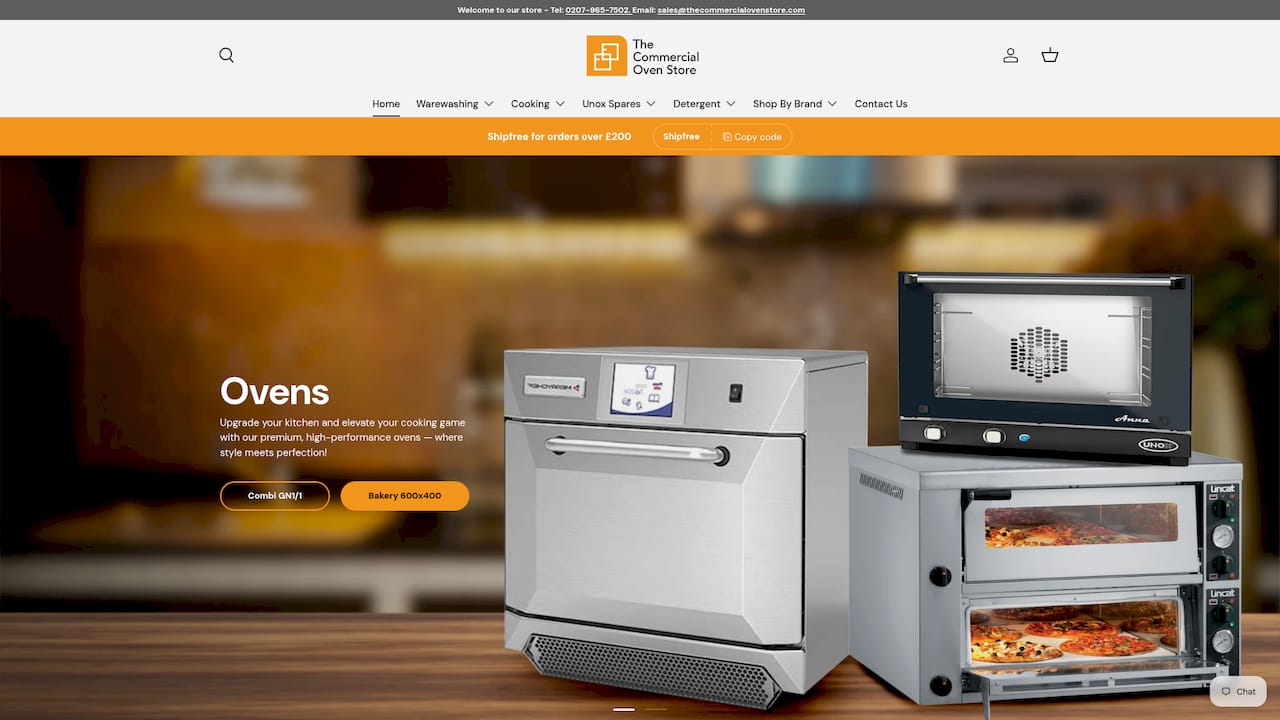
Getting the oven type right is only half the job; getting it installed without a ventilation or power surprise is the other half, and that’s where Thecommercialovenstore’s installation service and expert advice earn their keep. The business sells genuine ovens from manufacturers including Unox, Rational and Merrychef across commercial oven, bakery oven and convection oven categories, backed by professional installation and personalised advice on matching a model to your kitchen’s actual utilities.
That advice matters most before you order, not after, since the site checks covered throughout this guide, three-phase confirmation, extract sizing, drain and water provision, are exactly where installations go wrong when nobody checks them early. Flexible payment options can help spread the cost of an oven and its installation, which is beneficial when additional expenses such as ventilation upgrades or electrical work occur. Kitchens weighing quality against throughput more broadly may also find this piece on defining high-quality foodservice a useful frame for thinking about where oven choice fits into overall service standards.
If you’re at the stage of shortlisting oven types, request a site survey or browse the current oven range to see which models fit your menu, power supply, and ventilation setup before you commit to a purchase.
Sources
- Catering Information Sheet No 12 - Maintenance priorities in catering (HSE)
- Advice note — new ventilation systems (Tower Hamlets Council)
- How to choose a commercial oven: convection vs combi vs deck vs conveyor (FoodServiceNerd)
FAQ
What Ovens Do Professional Chefs Use At Home?
Many professional chefs favour combi ovens at home for the same reason they use them at work: one appliance handles steam, roasting and baking without needing separate equipment. Domestic-scale combi and combination steam ovens from commercial-adjacent brands have become common in serious home kitchens for that versatility.
Which Brand Of Oven Is The Most Reliable?
Reliability depends more on matching the oven correctly to your duty cycle and maintaining it properly than on brand alone, since even well-built equipment fails early when oversized ventilation or power mismatches strain it from day one. Manufacturers such as Unox and Rational have strong reputations in UK commercial kitchens, but routine servicing following HSE maintenance guidance affects long-term reliability as much as the manufacturer does.
What Is The Best Brand Of Oven In The UK?
There’s no single best brand; the right choice depends on your menu, throughput and site utilities rather than brand name alone. Thecommercialovenstore supplies ovens from established manufacturers including Unox, Rational and Merrychef, and its expert advice service helps match a specific model to your kitchen’s actual requirements rather than recommending on brand reputation alone.
What Are The Four Types Of Ovens?
Commercial kitchens commonly work with four broad oven families: convection, combi, deck, and conveyor, though rack and speed ovens are increasingly treated as a fifth and sixth category in high-volume or fast-service settings. Each suits a different menu profile, from convection’s general-purpose roasting and baking to deck ovens’ pizza and artisan bread specialism.
How Do I Know If My Kitchen Needs A Combi Oven?
If your menu includes steam cookery, bulk re-thermalisation, or a mix of roasting and steaming in the same service, a combi oven usually earns its higher installation complexity. Kitchens doing straightforward baking and roasting without a steam requirement are often better served by a simpler convection oven, which avoids the water, drain and softening requirements a combi demands.