

Most built-in domestic ovens use a drop-down door hinged at the base. Side-swing doors, hinged like a cupboard, are the better choice for tall housing units set at eye level, because they spare you the awkward forward reach over a hot, open door. The general advice is to pick side-swing for eye-level ovens and drop-down for under-counter installations or anywhere front clearance is limited.
TL;DR:
- Side-swing doors are best for tall, eye-level ovens to reduce reach and burn risks, especially where side clearance allows a full swing.
- Drop-down doors are more cost-effective and suitable for under-counter or low-mounted ovens, providing a flat resting surface for trays.
- Proper clearance and correct hinge side are essential; measure the installation height, swing radius, and traffic flow before finalizing the model.
- Reversible hinges are uncommon and should be verified during ordering, as most fixed-handed models cannot be easily converted later.
- Prioritize clearance and placement over aesthetic preferences to avoid functional issues, and specify exact hinge side and height with the supplier upfront.
Table of Contents
- Drop-down vs side-swing: how each oven door works
- How do you choose the right door swing for your kitchen?
- What clearance and handing rules matter for installation?
- Which door style is safer and easier to live with?
- Advice from The Commercial Oven Store on specifying the right swing
- What the layout-first approach gets right that most guides miss
- Get the right oven door swing specified from the start
- Sources
Drop-down vs side-swing: how each oven door works
A drop-down door pivots on hinges at the bottom of the frame and folds forward to a near-horizontal position, usually somewhere between waist and worktop height. A side-swing door, sometimes called side-opening, hinges vertically down one edge and swings out like a cabinet door, which suits ovens mounted higher in a tower housing.
The mechanical difference shapes almost everything else about how the oven behaves in daily use. A side opening oven avoids the need to reach over a hot door surface, which matters most when the cavity sits at chest height or above. A drop-down door, by contrast, gives you a flat surface to rest a tray on the way out, but that same weight has to be carried by the hinges and the cabinet base underneath.
Here’s how the two stack up in practice:
- Access: side-swing opens sideways, so nothing blocks the space directly in front of the cavity; drop-down opens forward and takes up floor or worktop space while open.
- Resting surface: drop-down doors double as a landing spot for hot trays; side-swing offers no equivalent, so you need a nearby worktop or trivet.
- Burn risk: side-swing keeps hands away from the hot door face when lifting food out at height; drop-down can put forearms close to a hot surface during forward reaches.
- Cleaning and maintenance: drop-down doors are simpler to wipe down in one motion; side-swing hinges see more lateral stress over time and may need more frequent checks.
- Weight handling: drop-down puts sustained hinge load on the cabinet base every time it opens, since the door itself becomes a shelf for whatever you’re lifting out.
On price and availability, drop-down remains the default across most domestic ranges and is generally cheaper and easier to source than side-swing equivalents. Side-swing tends to appear on premium built-in models and purpose-built tall housing units, where the ergonomic gain justifies the extra cost.
How do you choose the right door swing for your kitchen?
Start with the installation height, because that single measurement decides more than any other factor. An oven set into a tall unit at eye level or above almost always benefits from side-swing; anything under the counter, where you’re already bending down, works fine with a drop-down door.
Run through this checklist before you commit to a model:
- Confirm installation height. Eye-level or chest-height cavities favour side-swing; low or under-counter positions suit drop-down.
- Measure side clearance. Side-swing needs open space beside the unit for the door to sweep through, so check nearby cabinetry, worktop returns, and door swing paths.
- Map the traffic flow. Note which direction people walk past the oven and which side holds the main prep surface, since an open door in the wrong spot creates a bottleneck.
- Identify who uses it most. Anyone lifting heavy dishes or trays regularly will feel the ergonomic benefit of side-swing more than an occasional user will.
- Decide the hinge side. Choose left or right hand based on which side keeps the door open away from the busiest walkway and closest to the main worktop.
Reversible doors are worth specifying if you’re unsure about final kitchen layout or expect to renovate later, though not every side-hinged model offers this. Many commercial and built-in units are fixed-handed from the factory, so getting the order right the first time avoids a costly swap.
Pro Tip: Mark the intended hinge side directly on your kitchen plans before ordering, and confirm handing with the supplier in writing. Installers working from a plan that doesn’t specify LH or RH will default to whatever the standard model ships as, and that’s rarely the side you actually wanted.
What clearance and handing rules matter for installation?
Give a side-swing door enough room to complete its arc without hitting an adjacent unit, appliance, or door handle. As a general planning rule, allow clearance approximately equal to the door’s width on the hinge side, plus a margin for handles and trim, and check the manufacturer’s own swing radius before finalising cabinetry. For drop-down doors, leave enough depth in front of the unit for the door to sit fully open at close to horizontal while someone still has room to stand and lift trays safely.
Working out door handing is simpler than it sounds. Stand on the side of the opening where the door would swing towards you, then note which edge the hinges sit on. Trade convention marks this as LH or RH, with LHR and RHR used where a reversed hinge position needs distinguishing from the standard layout.
A few points worth flagging before you order:
- Many side-hinged commercial and built-in units are fixed-handed at manufacture, so retrofitting a hinge swap later often means replacing the whole door.
- Reversible hinges exist on some models, but they’re the exception rather than the rule, so never assume reversibility without checking the spec sheet.
- Drop-down doors place sustained hinge load on the cabinet base every time they’re opened, so heavier units need adequately rated hinges and a reinforced housing.
Cabinet reinforcement matters more than most buyers expect. A drop-down door on a full-size oven can be heavy once glass and insulation are included, and that weight is fully supported by the hinge and cabinet base every time it’s lowered. Skipping reinforcement checks at installation is one of the more common reasons hinges fail early.
Which door style is safer and easier to live with?
Side-swing doors tend to reduce burn risk at eye level because you’re not reaching over a hot, open door to lift food out. That’s the main reason designers favour side-swing for tall housing units, especially where the household includes anyone lifting heavy dishes regularly. Drop-down doors have their own upside: that flat, open surface is genuinely useful as a landing spot for a hot tray, but it only works well when the oven sits low enough that you’re not leaning over it.
For anyone with reduced mobility or limited reach, height and door style deserve equal weight in the decision. A side-swing oven mounted too high can be just as awkward as a drop-down oven mounted too low, so match the installation height to the user before worrying about hinge type.
A few habits reduce risk regardless of which door style you choose:
- Keep heat-resistant gloves within reach of the oven, not stored across the kitchen.
- Fit an anti-slip mat in front of any oven where trays get carried across the floor.
- Brief anyone new to a busy kitchen on which side the door opens before their first shift.
Pro Tip: In shared or commercial kitchens, a five-minute walkthrough on hinge side and swing direction prevents far more near-misses than any amount of signage does.
Advice from The Commercial Oven Store on specifying the right swing
Generally, customers are advised to consider side-swing models for eye-level installations or where staff need to lift heavy trays repeatedly, since that layout consistently reduces reach-related strain and burn risk. For under-counter or low-mounted units, a drop-down door usually remains the simpler, more cost-effective choice.
When you’re ready to specify an oven, send your supplier these details up front:
- Required handing (left or right) based on your traffic flow and prep surface layout.
- Installation height and available side clearance for the door swing.
- Adjacent unit dimensions, so clearance conflicts get caught before delivery, not after.
- Required hinge rating for heavier drop-down doors, particularly on commercial-grade units.
For planning clearances properly, the commercial oven placement guide walks through avoiding bottlenecks around open doors, and compact options like the CIBO/S countertop oven show how drop-down doors work in tighter spaces. Flexible payment options are available for customers who’d rather spread the cost of specifying the right unit.
What the layout-first approach gets right that most guides miss
Most advice on this topic treats door swing as a preference, something to pick based on looks or habit. That’s backwards. The oven’s mounting height should decide the hinge type, not the other way round, and far too many kitchen plans get finalised before anyone checks whether the door will actually clear the walkway or block the main prep surface.
The conventional wisdom oversells side-swing as the universally better option. It isn’t. Side-swing earns its place at eye level, where reaching over a hot door genuinely is a hazard, but bolting a side-hinged unit into a low, under-counter position adds cost and side clearance requirements for no real ergonomic gain. Drop-down doors remain the sensible default lower down, precisely because their flat resting surface works with gravity instead of against it.
If there’s one thing readers should prioritise first, it’s clearance, not style. Measure the swing path, mark the handing on the plan, and confirm it with the supplier before the cabinetry gets built. Everything else, including which door genuinely looks better, is a distant second.
— Simon
Get the right oven door swing specified from the start
There is an option to specify the exact door swing your kitchen needs, avoiding guesswork or clearance problems after delivery. Buying commercial-grade ovens from brands like Rational and Unox through this supplier means you get help matching handing, installation height, and clearance to your actual layout, supported by a specialised team.
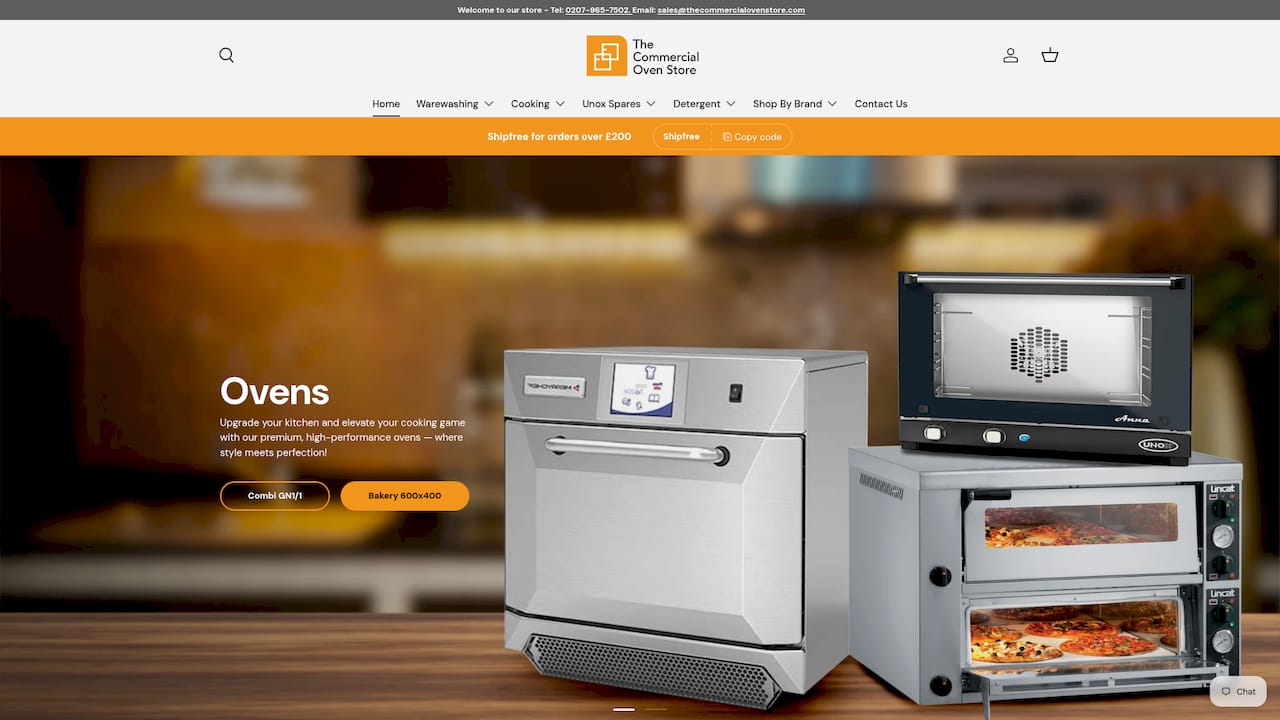
If you’re planning a tall housing unit, a convection oven such as the Blue Seal E28 M4 is worth reviewing for door type and clearance requirements before you finalise cabinetry. Larger operations comparing capacity against footprint can also check the Commercial Oven 70L range for scale reference. Whatever the layout, Flexible payment options through iwocaPay mean you don’t have to choose between the right specification and manageable cash flow. Visit Thecommercialovenstore to send your clearance measurements and handing requirements to the team before you order.
Sources
- Side opening single ovens explained: are they worth it? — Cata Appliances blog
- Drop-down door vs side-swing door: which oven access design is best? — Productvia
- What is a right-hand vs left-hand door? — The Tools Trunk