

For most commercial kitchens, the right choice is a stainless-steel open stand fitted with heavy-duty, total-lock castors. That combination gives you a hygienic surface that wipes clean in seconds, mobility for daily cleaning and maintenance, and a load rating built for the weight of a loaded combi or convection oven. Adjustable machine stands, ultra-high stands and lateral-support stands cover nearly every oven size you will encounter.
TL;DR:
- Choosing the right stand involves matching its dimensions, tray support spacing, and load capacity precisely to your oven’s specifications to ensure safety and functionality.
- Heavy-duty stands with reinforced castor mounting plates and total-lock polyurethane wheels are crucial for stability and ease of movement in daily commercial kitchen use.
- Confirm oven footprint, tray format, and clearance for ventilation before ordering to prevent fit issues and ensure proper fit and safety.
- Regular maintenance includes wiping down stainless steel surfaces, drying castor housings, and inspecting welds for early corrosion signs to maintain cleanliness and longevity.
- Professional installation and measurement checks help avoid fitting problems, especially when ordering non-standard sizes or extra height supports.
Table of Contents
- Which stand type fits your oven and workflow
- What specifications to check before you buy
- Choosing castors and locks: materials, sizes and locking types
- Sizing, tray compatibility and fitting the oven to the stand
- Hygiene, cleaning and corrosion resistance
- Delivery, installation, levelling and payment options
- What the trade teaches you about getting stands right
- How The Commercial Oven Store can help
- Sources
- FAQ
Which stand type fits your oven and workflow
Matching the stand to the oven matters more than picking on price alone. A stand that is too shallow leaves the oven overhanging the edge, and one without the right tray supports will not hold your grids securely.
- Countertop and compact ovens: an adjustable machine stand suits tight prep areas and smaller units, with height adjustment to bring the oven to a comfortable working line.
- Full-size ovens in daily heavy use: an open stand with tray supports handles standard GN sizes and takes repeated loading and unloading without flexing.
- Kitchens needing extra height or storage: an ultra-high stand or a shelf variant raises the oven to a better working height and adds space underneath for trays or ingredients.
Each of these fits a different part of the kitchen; for creative serving ideas, see Ten wrap platter ideas caterers use to make platters look pro. The compact stand suits a satellite prep station, the full-size open stand suits the main cooking line, and the taller or shelved versions suit kitchens where counter space is already stretched.
What specifications to check before you buy
Before ordering, confirm the numbers rather than assuming the stand will fit. A stand that looks right in a photograph can still be the wrong depth for your oven’s feet.
- External dimensions: check width, depth and height against the oven’s footprint, leaving clearance on all sides.
- Tray pitch and lateral supports: confirm the spacing matches your trays, since stands are built around fixed pitches rather than universal slots.
- Load capacity and steel grade: a stand should state its load rating in kilograms and the stainless grade used, since thin-gauge steel flexes under a loaded oven.
- Caster mounting: look for a reinforced mounting plate rather than a thin bracket, since this is where most stand failures start.
Choosing castors and locks: materials, sizes and locking types
Castors are the part of the stand that takes the daily punishment, so it pays to look past the headline price and check what they are actually made of.
- Wheel material: polyurethane wheels protect kitchen flooring and roll quietly compared with harder plastics.
- Wheel diameter: larger wheels of sufficient size cross drain covers and threshold strips without catching.
- Lock type: a swivel lock stops the castor turning, a wheel lock stops rotation, and a total lock does both at once. One specification sheet for a commercial stand assembly describes 5 inch polyurethane all-swivel castors with simultaneous swivel and wheel locks and a reinforced yoke welded to a 10-gauge mounting plate, a useful benchmark for what heavy-duty construction should include.
- Duty rating: match the castor’s rated load to the fully loaded weight of the oven, not just its empty weight.
Pro Tip: Fit total-lock castors on any stand carrying a full-size combi oven; a swivel-only lock can still let the unit creep during loading.
Sizing, tray compatibility and fitting the oven to the stand
Measure twice before you order. Take the oven’s full footprint, including the position of its feet, and compare it against the stand’s top plate rather than its overall dimensions, since some stands have a smaller usable surface than their outer frame suggests.
- Tray formats: check whether your kitchen runs 1/1 GN, 600×400 mm or 18×26 inch trays, since stands are built around one format.
- Lateral support pitch: lateral supports built on a 94 mm pitch suit five-tray loading, while other stands use tighter or wider spacing.
- Installation kits: a manufacturer’s installation kit can adapt a stand to a specific oven model where the fit is not automatic.
- Clearance: leave space behind and above the oven for ventilation and for service access without having to move the whole unit.
Hygiene, cleaning and corrosion resistance
An open stand in brushed stainless steel is easier to keep inspection-ready than a boxed unit, since there are no enclosed panels trapping grease or moisture. Rounded edges and removable uprights speed up the daily wipe-down, and a shelf with pitched drainage helps where spills are routine. Daily maintenance is straightforward: wipe surfaces after service, dry castor housings to prevent grit build-up, and check welds and mounting plates periodically for early signs of corrosion.

Delivery, installation, levelling and payment options
Once the stand arrives, check it before it goes into service.
- On delivery: confirm the dimensions match the order, inspect castors for transit damage, and check that mounting bolts are present and undamaged.
- Levelling: use levelling feet or stabilising castors on uneven commercial flooring, particularly for a fully loaded oven.
- Installation: an installation kit handles model-specific fitting, and professional installation removes the guesswork for a tricky setup.
- Payment: flexible finance through iwocaPay spreads the cost of a stand and oven purchase rather than requiring the full amount upfront.
What the trade teaches you about getting stands right
Most fitting problems come down to one thing: the stand was ordered before the oven’s exact footprint was checked. Three habits save the most grief. Measure the oven feet and tray pitch before you order, choose total-lock castors whenever the oven is a full-size or heavy-duty model, and use a proper installation service when the fit looks even slightly non-standard. If you are unsure, ask for a measurement check before committing.
— Simon
How The Commercial Oven Store can help
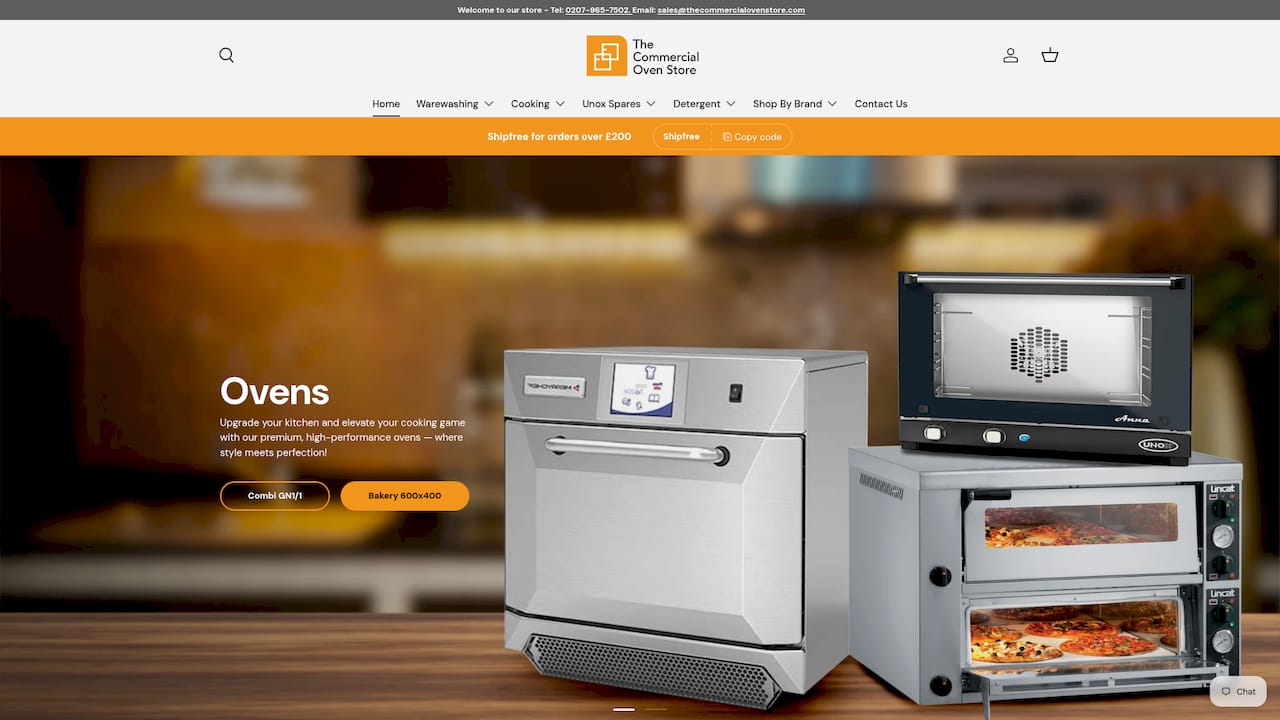
We supply the adjustable machine stand, the Unox Ultra High Stand and Unox lateral supports described above, along with the installation kits and fitting service to get them right first time. Rather than guessing at tray pitch or load rating from a product photo, you can ask our team for the exact measurements against your oven model before you order, and pair the stand with commercial ovens from the same range. If budget timing matters, iwocaPay lets you spread the cost of the stand and oven together instead of paying the full amount upfront. Visit The Commercial Oven Store to request a fit check, book an installation, or ask about finance on your next order.
FAQ
What load capacity should an oven stand have?
Load capacity depends on the oven’s fully loaded weight, not its empty weight, so check the stand’s stated kilogram rating against that figure before ordering. A reinforced mounting plate and thicker stainless gauge generally signal a higher safe load.
Are total-lock castors necessary for commercial oven stands?
Total-lock castors, which stop both wheel rotation and swivel at once, are the safer choice for full-size or heavy ovens because they prevent rocking during loading and cleaning. A manufacturer product page notes that this locking style holds the unit stationary where some swivel-only designs do not.
Can I retrofit castors onto an existing oven stand?
Many stand models have castor kits designed for retrofitting, and these list the dimensions and number of castors needed for a safe fit. It is worth checking the mounting plate size on your existing stand before buying a kit to confirm compatibility.
Does The Commercial Oven Store offer installation for oven stands?
Yes, installation support is available alongside the adjustable machine stand, Unox Ultra High Stand and lateral support ranges. You can also arrange flexible payment through iwocaPay when purchasing a stand and oven together.
What tray pitch do lateral supports need for GN trays?
Lateral support pitch should match the tray format you use, with common spacings suited to 1/1 GN or 18×26 inch trays. A 94 mm pitch option is built specifically for five-tray loading on compatible ovens.