

Combi ovens are a sound choice for pizza service in professional kitchens, provided the model offers strong steam and convection control and the site can meet ventilation and gas safety rules. The combination of precise heat and moisture management supports consistent crust and faster recovery between bakes, as Rational’s iCombi Pro documentation sets out, while HSE CAIS10 governs how the installation must be ventilated.
TL;DR:
- Use steam early for softer, chewier bases, then reduce humidity and raise fan speed for crisp crusts; perforated trays help moisture escape underneath.
- A cabinet with six racks, each holding two pizzas, and a bake time of seven minutes yields about 102 pizzas hourly before handling delays.
- Before ordering, check GN tray sizes against pizza diameters, then confirm temperature, power, water treatment, drainage, and electrical supply in a site survey.
- For gas models, provide adequate canopy extraction and replacement air; a Gas Safe registered engineer should test ventilation interlocks before operation.
- Save a programme for each pizza style, check door seals weekly, clean filters daily, and descale according to local water hardness.
Table of Contents
- How combi ovens bake pizza: heat, steam and crust control
- Key technical specifications to specify when buying for pizza service
- Capacity, throughput and kitchen layout: sizing the oven to your service level
- Ventilation, gas safety and installation essentials for pizza in a combi oven
- Operating tips and standardised settings to keep pizza quality consistent
- Author perspective: why our customers choose combi ovens for pizza service
- How The Commercial Oven Store can help specify, supply and install a combi oven for pizza
- FAQ
- Sources
How combi ovens bake pizza: heat, steam and crust control
A combi oven bakes pizza by blending convected heat with injected steam, and the balance between the two determines what comes out of the cabinet. More steam early in the bake keeps the surface moisture higher for longer, which delays crust set and tends to produce a softer, chewier base. Dry convection heat with the fan running hard pushes moisture out of the dough faster, which favours blistering and a crisper finish closer to a Neapolitan style.
Rational’s documentation describes automatic adjustment of heat and moisture alongside dehumidification and fan technology built to keep results uniform across every rack, which matters when several pizzas load and unload through a service period, as the iCombi Pro technical brochure explains.
For trays and inserts, match the format to the style you are baking:
- Perforated pizza trays suit a crisper base because they let steam escape from underneath.
- Solid trays or pizza stones hold heat and work well for thicker, pan-style bases.
- Standard GN trays can carry smaller or part-baked pizzas where tray uniformity matters more than base texture.
Pro Tip: Preheat the cabinet to your target temperature before loading, and let a stone or heavy tray come up to heat with it rather than placing cold trays on a hot deck.
Key technical specifications to specify when buying for pizza service
Getting pizza output right starts with the spec sheet, not the menu. A handful of figures decide whether an oven will keep pace with your service and fit your kitchen.
- Power (kW) and fuel type: higher kW supports faster recovery between loads, which matters most during a lunch or dinner rush.
- Cabinet format and tray compatibility: check GN tray sizes against your actual pizza diameters rather than assuming a standard grid will fit.
- Dehumidification power and fan speed range: these govern how quickly moisture clears from the cabinet, a key factor in crust texture.
- Maximum cabinet temperature: confirm it covers the top end of your intended pizza settings with margin to spare.
- Water quality and softener requirements: steam generation is sensitive to hard water, and scale build-up affects both performance and warranty terms.
- Drainage and electrical supply: confirm drain position and the supply phase and amperage before delivery, not after.
A model such as the Rational i-Combi Pro 6 GN1/1 shows how these specifications come together on a single cabinet, with defined tray capacity, power draw and footprint listed together. Confirming every line against your site survey before ordering avoids the most common and expensive installation surprises.
Capacity, throughput and kitchen layout: sizing the oven to your service level
Sizing an oven correctly means working backwards from your busiest service, not your average day. A simple method:
- Note your bake time per pizza and how many fit on one tray or rack level.
- Multiply trays per load by racks per oven to get pizzas per cycle.
- Divide 60 by your bake time in minutes to find cycles per hour, then multiply by pizzas per cycle.
Say an oven holds six racks, each taking two pizzas, with a seven-minute bake: that is roughly 8.5 cycles an hour, around 102 pizzas an hour at full loading, before accounting for loading and door-opening time.
Smaller counter-top combi models suit cafes and lower-volume kitchens, mid-sized floor-standing units cover most independent pizzerias, and larger multi-rack cabinets handle high-volume or multi-site production kitchens. Our capacity guide walks through matching covers to oven size in more detail.
Layout matters as much as capacity. Leave clear space in front of the door for loading trays safely, keep the oven on the path between prep and pass rather than tucked behind other equipment, and separate pizza production from plating wherever the kitchen footprint allows.

Ventilation, gas safety and installation essentials for pizza in a combi oven
Ventilation and gas safety are not optional extras on a combi oven installation, they are the conditions that let you operate it at all. HSE CAIS10 sets out ventilation design for commercial kitchens, covering canopy sizing, extract rates and the make-up air needed to replace what the canopy removes.
For gas-fired models, CAIS23 recommends flame supervision devices and interlocking between the gas supply and the ventilation system, so the gas cannot run without adequate extraction working. Installation must be carried out by a Gas Safe registered engineer, with interlock testing confirmed at handover.
Key points to confirm with your installer:
- Canopy dimensions should exceed the oven’s footprint on every open side, with local technical guidance recommending overhangs widen further in front of combination steaming ovens to capture escaping steam.
- Extract and make-up air rates need to be balanced, not just the extract side, or the kitchen will run under negative pressure.
- Grease and odour filtration should be specified for the appliance’s duty, particularly where pizza production runs long hours.
Local kitchen ventilation guidance recommends a canopy overhang that extends beyond the equipment on each free side by a few hundred millimetres, with a larger overhang in front of combination steaming ovens, which is a meaningful difference when you are placing a combi oven against a wall or run of equipment, as technical canopy guidance sets out. Our own ventilation guide and installation checklist cover the most common site failures we see before they become costly delays.
Operating tips and standardised settings to keep pizza quality consistent
Consistency comes from routine as much as from the oven itself, and using kitchen tested pizza topping combinations that keep crust crisp can enhance your baking results. A short daily and weekly checklist keeps performance stable:
- Drain and descale according to local water hardness, since scale affects steam output first.
- Check door seals weekly, as a worn seal lets steam and heat escape and extends bake times.
- Clean grease filters and the cabinet interior daily to stop residue affecting flavour and airflow.
Saving standardised programmes for your core pizza styles, with humidity, fan speed and time locked in, removes guesswork between shifts and keeps output the same whoever is running the pass. Rational’s planning functions and recipe storage are built around this kind of repeatable sequencing, according to the iCombi Pro product page.
Loading technique matters too: batch pizzas so the door opens as few times as possible during a busy spell, since every opening drops cabinet temperature and humidity and extends the next bake.
Pro Tip: Plan your bake sequence by style, running similar settings back to back, rather than switching programmes pizza by pizza.
Author perspective: why our customers choose combi ovens for pizza service
Most kitchens that come to us for a combi oven are chasing the same two things: faster recovery during service and a result that does not depend on who is working the pass that day. The specification mistakes we see most often are undersized dehumidification for the volume planned and ventilation left as an afterthought until the installer flags it on site.
Getting the ventilation spec agreed with your installer before the oven arrives saves more time than any setting on the control panel. If you are unsure whether your current extraction will support a combi oven, a site survey before ordering is the simplest way to find out.
— Simon
How The Commercial Oven Store can help specify, supply and install a combi oven for pizza
We supply combi ovens and work through the specification details above with every enquiry so the oven you choose fits your pizza volume and your site’s ventilation capacity.
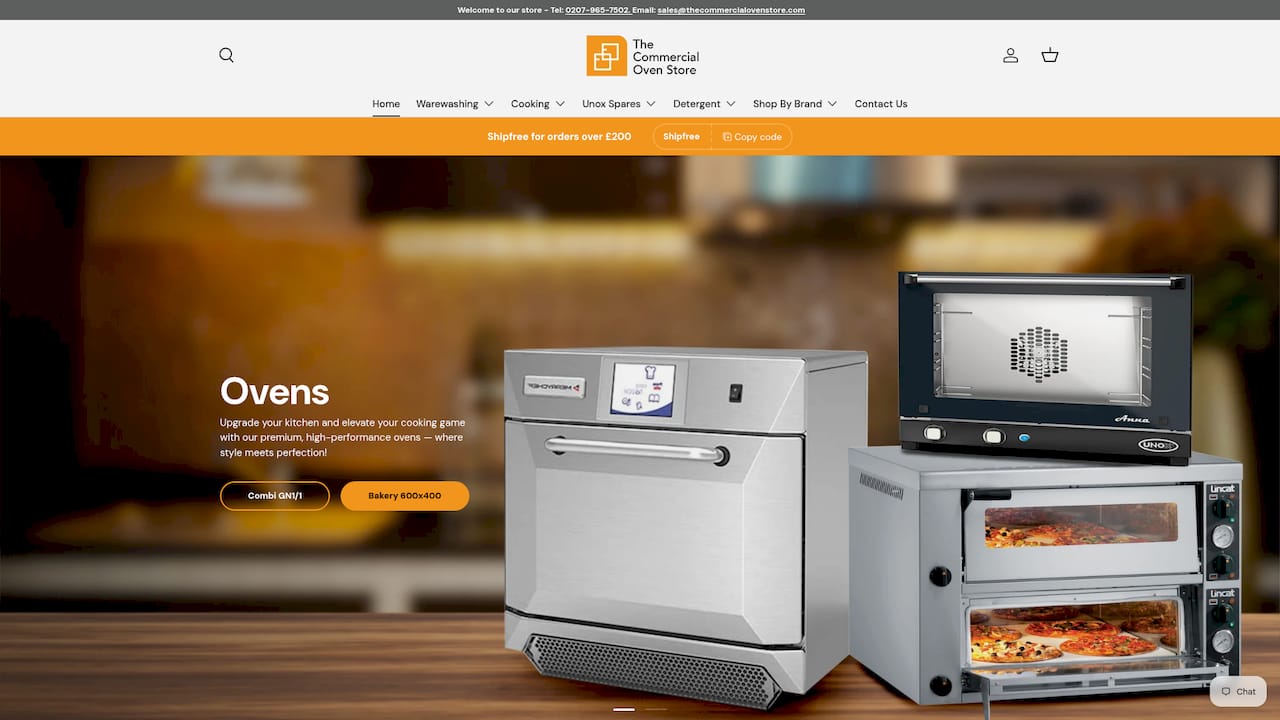
Beyond supply, we offer professional installation and flexible payment options, so a larger cabinet or a full kitchen refit does not have to be paid for in one go. Browse our commercial ovens collection or get in touch through our main site for a specification chat before you commit to a model.
FAQ
Can a combi oven replace a dedicated pizza oven?
Combi ovens can replace a dedicated pizza oven in many professional kitchens, particularly where the menu covers more than pizza, because steam and convection control lets one cabinet handle a wide range of cook tasks, as Rational’s brochure notes. For very high-volume, pizza-only operations, a dedicated deck or stone oven may still suit better, but a combi oven offers more flexibility across a mixed menu.
What temperature and humidity work best for pizza in a combi oven?
Settings vary by style: a drier, high-heat setting with strong fan speed suits a crisp, blistered crust, while adding steam early in the bake suits a softer, thicker base. Testing and saving a standardised programme for each pizza style on your menu is the most reliable way to repeat results.
What ventilation do I need for a combi oven baking pizza?
Ventilation needs to follow HSE CAIS10 guidance on canopy sizing, extract rates and make-up air, with the canopy sized to the oven’s footprint and overhang increased in front of combination steaming ovens. A Gas Safe registered installer should also confirm flame supervision and interlock requirements for gas-fired models under CAIS23.
Why is my pizza crust soggy or unevenly baked in a combi oven?
Soggy crust usually points to too much residual steam or a tray that traps moisture underneath the base, while uneven baking often comes from overcrowding racks or opening the door too often during service. Switching to a perforated tray, reducing humidity for that style, and batching loads to limit door openings are the usual first fixes.
How much does a commercial combi oven for pizza cost?
Pricing depends on the model, capacity and brand, so we quote this on request once we understand your throughput and site requirements. Get in touch through our main site for a specification and quote.
Sources
- iCombi Pro brochure (Rational)
- Ventilation of kitchens in catering establishments - HSE
- Gas safety in catering and hospitality CAIS23 (Rev 1)