

Yes: programmable Rational-class combi ovens can reliably run overnight using automated low-temperature and long-cook programmes, producing consistent results without a chef standing over them. This matters because it frees daytime labour, keeps proteins and braises ready for service, and removes the guesswork that comes with manual overnight shifts. The controller does the regulating; you do the planning.
TL;DR:
- Rational documents VDE approval for certain iCombi Pro configurations, so verify your exact unit before running it unattended overnight in your kitchen.
- For 6:30 AM service, start a ten hour joint by 8:30 PM, and group loads by finish temperature, moisture needs, and holding tolerance.
- Check probe placement, door seal, and drainage before leaving; afterward verify doneness, then safely hold or rapidly chill food not served within an hour.
- Pilot one or two forgiving dishes for a few weeks, logging probe readings, yield, and texture against daytime results before expanding overnight production.
- Keep fish and other delicate proteins out of full overnight runs; schedule them for a short, closely timed low temperature cook near service.
Table of Contents
- What overnight cooking means on combi and selfcooking equipment
- Planning loads and schedules for a reliable overnight run
- Typical settings and how to verify results after an unattended run
- Keeping overnight-capable equipment reliable: maintenance and setup
- What overnight automation actually changes about kitchen rostering
- How we can help you set up for overnight cooking
- FAQ
- Sources
What overnight cooking means on combi and selfcooking equipment
Overnight cooking on commercial combi equipment is not a kitchen hack. It is a built-in capability where the oven’s controller manages temperature, humidity and time against a target, usually a core probe reading, for several hours without intervention. Rather than you setting a static heat and walking away, the appliance adjusts its own curve as the food responds, which is what makes unattended running safe to plan around rather than something you hope works.
Rational’s iCombi Pro documentation sets out how planned kitchen processes let a single cabinet run mixed loads to a standardised result, including overnight workflows where different trays finish at different points through the night. The planning happens before the door closes: you are choosing programme logic, not just a dial setting.
The function most associated with unattended low-temperature cooking is iCookingSuite on the iVario Pro, which regulates an entire low-temperature process automatically once it is started. Rather than holding one fixed number for hours, the system adapts to reach and maintain the core temperature a recipe calls for, which is the mechanism that makes long, unattended low-temperature or overnight runs consistent from one night to the next.
Several programme types suit overnight scheduling particularly well:
- Low-temperature long-cook profiles for roasts and joints that need gentle, extended heat to reach a target core temperature without drying the exterior.
- Braise and stew profiles that combine moisture and lower heat over several hours, suited to tougher cuts and batch sauces.
- Hold or finish modes that taper the programme into a holding temperature once the main cook completes, so food is ready rather than overcooked by the time staff arrive.
Before relying on any programme for unattended operation overnight, check the manufacturer’s own safety documentation for your specific model. Some Rational iCombi Pro listings explicitly reference VDE-approved unattended-cooking capability, which is the kind of signal worth confirming for your exact unit rather than assuming it applies across every model in a range.
Planning loads and schedules for a reliable overnight run
A single tray roasting gently is easy to plan. A cabinet carrying six different items that all need to be correct by 6am is a different job, and it is where most overnight programmes go wrong if the load is not planned properly.
- Group by finish target, not by recipe name. Two different stews with the same final core temperature and similar moisture needs can share a run; a delicate fish dish and a twelve-hour brisket cannot, even if your schedule would prefer they did.
- Map thermal tolerance before you load. Items that can sit safely in hold mode for an extra hour go toward the back or lower shelves; anything with a narrow window for doneness goes where the probe reading is most reliable and closest to service time.
- Space trays to avoid hot and cold spots. Dense joints need airflow around them to cook evenly; packing a cabinet tightly defeats the humidity and heat regulation the programme is designed to deliver.
- Separate strong aromatics from delicate items. Curries, smoked proteins and heavily spiced batches can transfer flavour to milder dishes in a shared overnight run unless you use appropriate covering or separate zones.
- Build a start-time template that works backward from service. If breakfast service opens at 6:30am and a joint needs ten hours at low temperature, the load goes in no later than 8:30pm, with a buffer for the hold phase.
Before you leave the kitchen for the night, run through a short pre-run check: confirm each probe is seated in the thickest part of the muscle, away from bone and fat pockets, since a poorly placed probe gives a false early read and can trigger the hold phase hours too soon. Check the door seal closes fully, since a compromised seal lets humidity escape and flattens the whole process. Confirm the drain is clear, because long unattended runs generate substantial condensate, and a blocked drain can leave pooled water that affects both texture and the cabinet itself over time.
Pro Tip: Keep a simple logbook of load, probe placement and finish time for each overnight run. After a handful of nights, the pattern tells you more about your specific cabinet than any generic programme guide will.
For sizing a load correctly before you even plan the night, it helps to understand how combi oven capacity scales against trays, weight and expected covers, since an overloaded cabinet undermines even the best programme logic.

Typical settings and how to verify results after an unattended run
Overnight programmes vary by dish, but a few patterns hold across most commercial combi and selfcooking applications.
- Large roasts and whole joints typically run on low-temperature profiles for extended periods, with the core temperature target, rather than the clock, deciding when the hold phase begins.
- Pulled meats (shoulder, brisket) need longer low-temperature exposure to break down connective tissue, usually finishing in a hold or rest mode so the texture sets before service.
- Braises and stews rely on moisture retention as much as heat, and benefit from programmes that maintain humidity rather than drying the cabinet air over a long run.
- Fish and delicate proteins are generally unsuited to a full overnight run and are better scheduled for a short, closely timed low-temperature cook nearer to service.
BBC Good Food’s slow cooker recipe collection is a useful exemplar for the kind of dish, stews, chillies, curries, that translates well to a commercial low-temperature overnight programme, though converting a domestic recipe means paying close attention to moisture retention and packaging rather than copying times directly.
That adaptive behaviour is the main reason probe placement matters more than the dial number you set.
Verification after an overnight run has two layers. The first is doneness: confirm the probe reading against your recipe’s target, then check texture by feel, a properly rested pulled shoulder should separate with light pressure rather than resistance. The second is food safety. Once the cook finishes, decide immediately whether the dish goes to hot-holding at a safe serving temperature or into rapid chilling if it will not be served within the hour, and log both the cook result and the post-cook handling as a HACCP checkpoint. Reviewing practical fine-tuning adjustments to your programme settings after a few runs helps close the gap between a textbook time and what your specific cabinet and load actually need.
Keeping overnight-capable equipment reliable: maintenance and setup
Running a combi oven overnight several nights a week puts different demands on the cabinet than daytime service does, and a few habits protect both the equipment and the consistency of your results.
- Leave the door slightly open when the cabinet is idle for long stretches. This simple habit reduces the risk of internal corrosion building up in a sealed, humid cabinet between runs.
- Run clean cycles on a schedule that fits around overnight production, rather than squeezing them in whenever there is a gap, so residue from long braises does not sit in the cabinet for days.
- Check drainage weekly, since overnight low-temperature and braise programmes produce more condensate than typical daytime service cooking.
- Confirm ventilation is adequate for continuous or near-continuous running, which matters more for a cabinet doing eight-hour overnight cycles than one used for short service bursts.
- Keep servicing on a fixed schedule rather than a reactive one, since a cabinet relied on overnight has less tolerance for an unexpected fault discovered at 5am.
The right programme capability depends on the model, not just the brand. It is important to access genuine ovens from established manufacturers, alongside professional installation and expert advice to match a cabinet’s unattended-cooking capability to actual production needs. For deeper detail on keeping a cabinet in good condition through heavy overnight use, our guide to combi oven cleaning for professional kitchens covers the routine that protects both performance and warranty terms.
What overnight automation actually changes about kitchen rostering

The honest trade-off with overnight cooking is not whether the technology works. It is whether your kitchen trusts it enough to change how people are rostered. Moving volume to an unattended overnight run frees a chef’s time during service, but it also means the first person to open the kitchen in the morning is the one who discovers whether the run went to plan.
That is why I think the sensible path is a pilot, not a rollout. Pick one or two dishes with forgiving thermal tolerance, run them overnight for a few weeks, and log probe readings, yield and texture against what your daytime version produces. The data tells you faster than any manufacturer brochure whether a given dish, load size and programme combination holds up in your kitchen specifically. Once that pattern is proven, expanding to a full overnight production schedule is a much smaller risk than skipping straight there. If you are weighing this for your own kitchen, our team is happy to talk through what a sensible pilot looks like for your equipment and menu.
— Simon
How we can help you set up for overnight cooking
Choosing equipment for reliable overnight production starts with matching the cabinet to your actual load, not just picking the biggest model available. We offer direct access to genuine commercial ovens from Rational, Unox and other established manufacturers, backed by professional installation and expert advice so you choose a cabinet with the right unattended-cooking capability for your kitchen rather than guessing from a spec sheet.
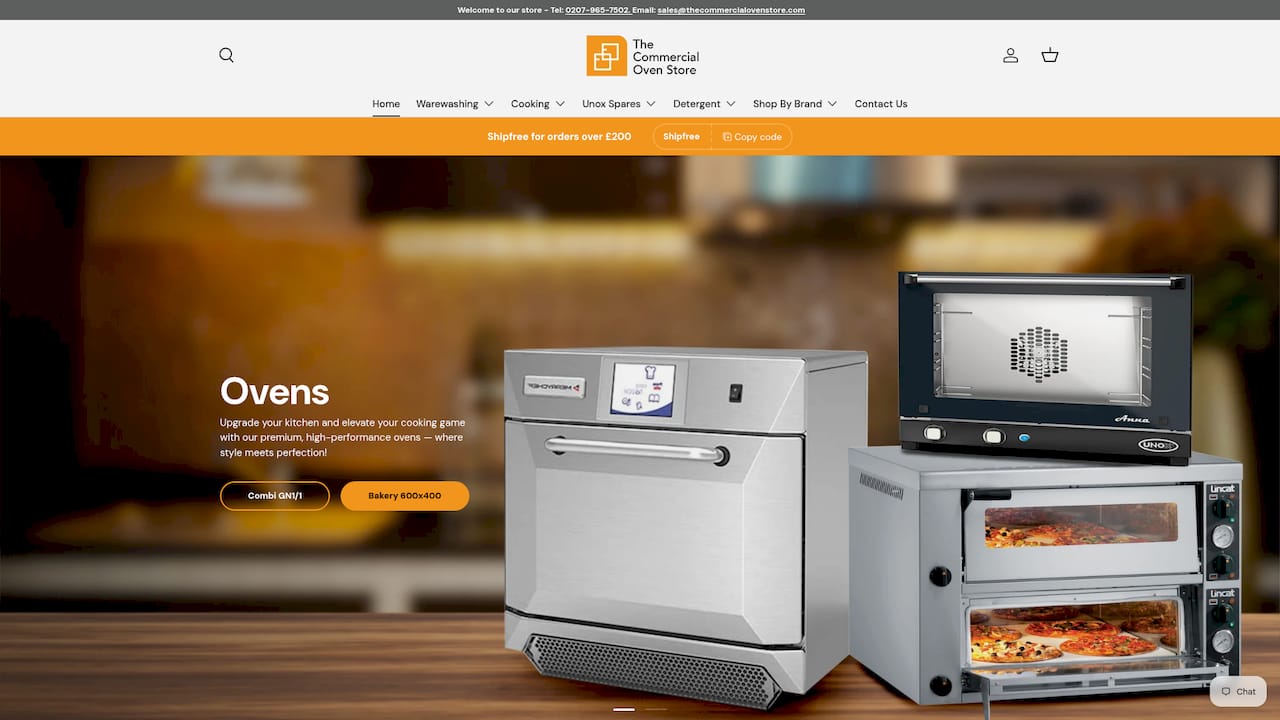
If a combi route is not the right fit for every overnight bake, our convection ovens range covers a different production style worth comparing against your menu. For bakery-specific overnight production, our bakery ovens category is worth a look too.
- Request a site survey before you buy, so ventilation and drainage needs for overnight running are checked against your actual kitchen layout.
- Use a specification checklist covering probe count, mixed-load capacity and unattended-cooking approval before comparing models.
- Ask about flexible payment, since we support purchases with iwocaPay financing so equipment upgrades do not have to wait for a lump sum.
Start by browsing our full range or speaking with our team about which model suits your overnight production plan.
FAQ
Can I cook overnight in my Rational iCombi Pro?
Yes, provided your specific model supports the relevant unattended-cooking programmes; Rational’s product documentation describes VDE-approved unattended operation on certain iCombi Pro configurations. Always confirm the approval applies to your exact model before relying on it for unsupervised overnight runs.
Which is better for overnight cooking, Unox or Rational?
Both manufacturers produce combi ovens with automated long-cook programmes suited to overnight production, and the right choice depends on your kitchen’s specific load, menu and budget rather than the brand alone. Equipment from both ranges is available, and it is helpful to consult on which model’s programme logic fits your overnight needs.
What is the average lifespan of a Rational oven?
Lifespan depends heavily on usage intensity, maintenance routine and servicing schedule rather than a single fixed figure, and we do not have a published average to cite. Regular clean cycles, clear drainage and scheduled servicing are the biggest factors in getting the longest reliable service from a cabinet used for frequent overnight runs.
Can you bake in a Rational oven?
Yes, combi ovens with humidity and temperature control can bake a wide range of products alongside their roasting and braising functions, making them suited to kitchens that need both savoury overnight production and daytime baking from the same cabinet. The right baking programme depends on the specific model and product range, so checking the manufacturer’s function documentation for your cabinet is worthwhile before relying on it for a new product line.