

Ovens, mixers and dough handling, refrigeration, worktops and racking, smallwares, and a basic display or point-of-sale kit: these are the six categories every UK bakery startup needs to budget for before opening day. This checklist walks through realistic cost bands, the GOV.UK registration and hygiene points that affect equipment choice, and sizing rules that stop you buying the wrong capacity twice. Oven sizing advice draws on practical rules used across the trade, including guidance published by The Commercial Oven Store.
TL;DR:
- Ovens should be chosen based on capacity, power supply type, and tray size, with convection for speed and rack ovens for high-volume production.
- Mixers’ bowl size must match batch volume, and additional equipment like dividers or sheeters become essential as production scales up.
- Cold storage capacity depends on daily dough output, with a walk-in cold room recommended for over 50kg daily production.
- Equipment costs range widely, with ovens from £1,500 to over £15,000, and staging purchases helps manage cash flow effectively.
- Complying with UK hygiene rules requires stainless steel surfaces, visible temperature controls, PAT testing, and pre-installation site assessments.
Table of Contents
- The bakery equipment checklist UK founders actually need
- Bakery equipment costs in the UK: realistic budget bands
- UK food hygiene rules that shape your equipment choices
- Sizing ovens and mixers so you don’t outgrow them in a year
- New vs used equipment: where to buy in the UK
- A maintenance and cleaning schedule that protects uptime
- Why oven choice makes or breaks your first year
- Get your oven sizing and site survey right the first time
- Sources
- FAQ
The bakery equipment checklist UK founders actually need
Most equipment lists you find online read like a shopping catalogue with no sense of order. A better way to think about it: what has to work on day one, what can wait six months, and what actually determines whether your kitchen can hit its production targets. Here’s the breakdown by category, with the specifications that matter more than the marketing copy on the box.
Ovens
Three oven types cover almost every UK bakery: deck ovens, convection ovens, and rack ovens. Deck ovens give you stone-hearth results for artisan bread and give even heat from the bottom up, which most sourdough and crusty loaf producers prefer. Convection ovens circulate hot air with fans, so they bake faster and more evenly across multiple trays, making them the default choice for pastries, traybakes, and mixed product ranges. Rack ovens take entire trolleys of trays at once and suit higher-volume operations that can’t afford to load shelves by hand all day.
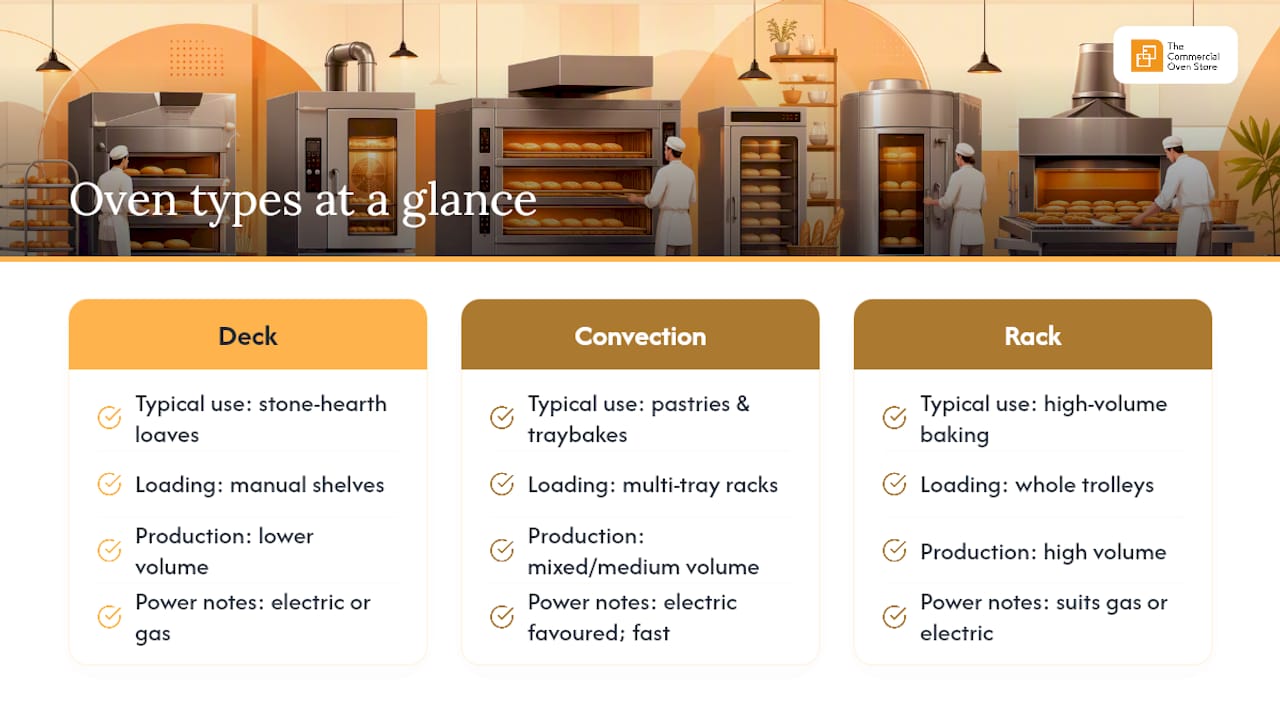
Power supply shapes the decision as much as capacity does. Electric ovens are simpler to install, need no gas safety certification, and suit most retail units, but they demand solid three-phase power. Gas ovens run cheaper per bake in areas with high electricity tariffs, though they need a Gas Safe registered engineer for installation and ongoing checks. When you’re comparing models, grid count and tray size (usually 400mm x 600mm or 460mm x 660mm in UK commercial kitchens) tell you more about real capacity than the headline “litres” figure many suppliers quote. Guides on commercial bakery machinery consistently tie equipment choice back to what’s actually on the menu, and a convection oven buyer’s guide is worth reading before you commit to a grid count.
Mixers and dough handling
Spiral mixers handle bread dough without overheating it, thanks to a bowl that rotates against a fixed spiral hook. That gentle mixing action develops gluten without the friction damage a planetary mixer can cause on high-hydration doughs. Planetary mixers, by contrast, are the versatile workhorse: cakes, buttercream, meringues, and lighter doughs all suit the whisk, beater, and hook attachments that come standard.
Bowl size should map to your batch sizes, not the other way round. A 20 litre bowl suits a small artisan operation baking two or three times a day; anything doing wholesale volumes should be looking at 40 to 60 litres minimum. Beyond the mixer itself, most bakeries producing more than a handful of bread lines eventually need a dough divider to portion consistently and a sheeter to roll pastry and croissant dough to uniform thickness without manual rolling pins eating up staff time.
Proofing, chilling and cold storage
Proofers control temperature and humidity to let dough rise consistently, which matters more than most new operators expect. A cheap proofer with poor humidity control gives you a dry skin on the dough surface and inconsistent oven spring. Retarder-provers, which chill dough overnight and then proof it on a timer, let a small team produce fresh bread each morning without a 4am start.
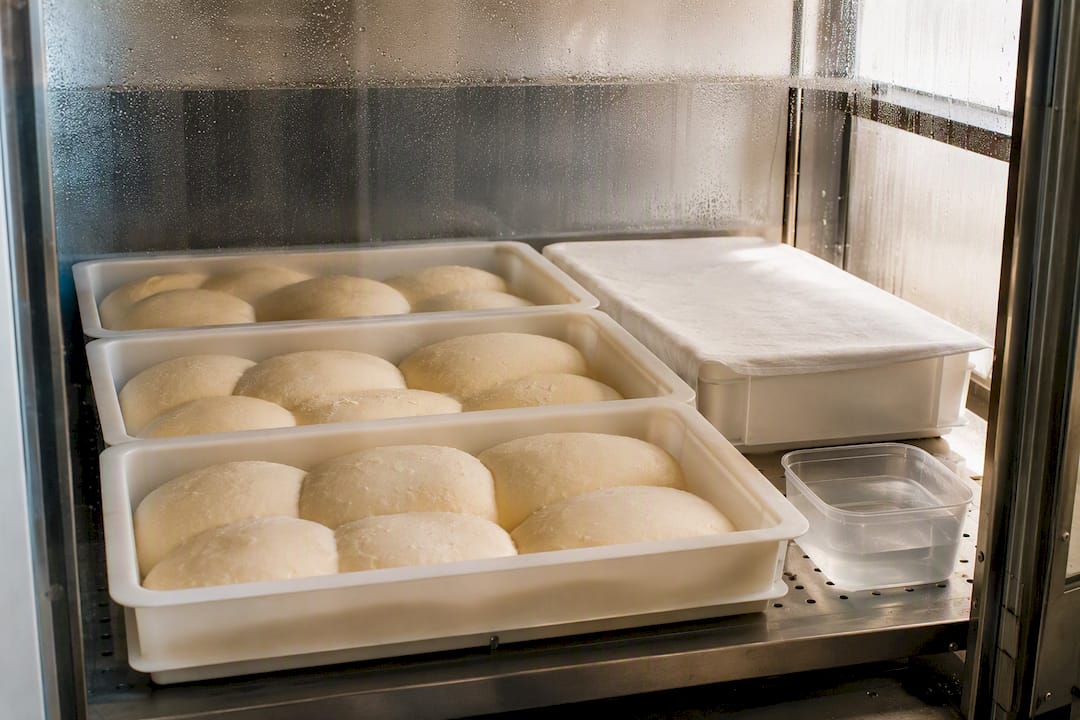
Fridge and freezer sizing depends on your daily production volume rather than your shop’s floor space. As a rough guide, a bakery producing under 50kg of dough daily can usually run on a single upright fridge and chest freezer; anything above that benefits from a walk-in cold room. Keep chilled storage between 1°C and 4°C and frozen storage at minus 18°C or below, and build in enough capacity that a delivery day doesn’t leave you stacking boxes on the floor.
Worktops, racks and pans
Stainless steel worktops aren’t a luxury choice. They’re required practically everywhere because they’re the only common surface that survives repeated hot pan contact, acidic fruit fillings, and the daily sanitising a food business needs. Standard UK loaf tins run 1lb (450g) and 2lb (900g), and most wholesale bread suppliers work to those sizes, so match your tin stock before you finalise oven grid dimensions.
Sheet pan racks need enough clearance for your tray size plus a margin for airflow when cooling, and mobile racks on castors make cleaning underneath far easier than fixed shelving. It sounds like a minor detail until your first environmental health inspection flags a rack you can’t move to clean behind.
Display and service kit
If you’re selling directly to customers, a refrigerated display case keeps filled products, cakes, and anything cream-based within safe temperature bands while looking appealing on the counter. Ambient display units suit bread and pastries that don’t need chilling. For point-of-sale, the minimal kit is a till or tablet-based EPOS system and a card reader, since cash-only bakeries are now the exception rather than the rule on any UK high street.
Smallwares and hygiene essentials
The small stuff adds up fast on an invoice, but skipping it causes more day-to-day friction than a missing oven grid ever would. A practical smallwares list, similar to the professional kit outlined in BBC Good Food’s baking essentials guide, should include:
- Digital scales accurate to 1g for ingredient weighing and portion control
- Probe thermometers for checking core temperatures on baked and chilled products
- Silicone spatulas, dough scrapers, and offset palette knives
- Piping bags, nozzles, and a stock of tins in your standard sizes
- Food-grade cling film, storage containers, and colour-coded chopping boards to prevent cross-contamination
Health and safety kit belongs on the same purchase order as your oven, not on a to-do list for “later.” A bakery health and safety checklist highlights the basics that inspectors actually look for:
- A dedicated cleaning station with hot water, detergent, and sanitiser separate from food prep areas
- PPE including oven gloves rated for high temperatures, cut-resistant gloves for slicing, and aprons
- Lockable COSHH-compliant storage for cleaning chemicals, away from food and packaging
- A fire blanket and an appropriate fire extinguisher rated for electrical and fat fires
- First aid kit stocked and checked against a standard schedule
Pro Tip: Buy your smallwares list before your oven arrives, not after. Bakeries that order the big machinery first often find themselves baking their first batches with borrowed tins and a kitchen thermometer from home because nobody budgeted for the £300 to £500 of scales, tins, and cleaning kit that ties the whole operation together.
Bakery equipment costs in the UK: realistic budget bands
Industry cost guides put commercial oven prices anywhere from around £1,500 for a compact countertop convection oven to £15,000 or more for a multi-deck or rack oven suited to wholesale volumes. Spiral and planetary mixers have a wide price range depending on size and capability, from several hundred to several thousand pounds. Refrigeration equipment costs vary considerably, from several hundred pounds for a single fridge to several thousands for walk-in cold rooms.
Here’s roughly how the budget bands break down by category:
- Ovens: £1,500 (entry convection) to £15,000+ (multi-deck or rack)
- Mixers: £800 (entry planetary) to £6,000+ (heavy-duty spiral)
- Refrigeration: £700 (single fridge) to £5,000+ (walk-in cold room)
- Worktops, racks and pans: £500 to £2,500 depending on kitchen size
- Smallwares: £300 to £800 for a properly stocked starter kit
- Display and POS: £1,000 to £3,500 for a refrigerated case plus till and card reader
Add installation on top of every major purchase. Gas ovens need a certified engineer, electrical ovens need adequate three-phase supply checked before delivery, and both typically add several hundred pounds to the final bill once you include site preparation.
The smarter approach is staging your purchases rather than buying everything at once. Buy the oven, one mixer, basic refrigeration, and your core smallwares before opening. That’s the equipment you cannot trade without. Hold off on the second oven, a bigger dough divider, or an automated sheeter until sales data tells you where the bottleneck actually sits, because guessing at expansion equipment before you have footfall numbers is the fastest way to tie up cash in machinery gathering dust in a corner.
Finance options are worth investigating before you commit to paying upfront. Leasing spreads the cost of major equipment over a fixed term and keeps cash free for stock and staff wages in the early months. Flexible payment plans, including options like iwocaPay that some UK suppliers now offer at checkout, let you split a large oven purchase into manageable instalments rather than draining your opening capital in one transaction.
UK food hygiene rules that shape your equipment choices
You cannot legally trade before registering. GOV.UK requires anyone starting a food business to register with their local authority at least 28 days before opening, and that registration process expects you to demonstrate adequate facilities for cleaning and storing utensils and equipment. In practice, that means your kitchen layout and equipment specification get assessed as part of getting trading rights, not as an afterthought once you’re already selling.
That regulatory reality has direct, practical consequences for what you buy:
- Worktops and prep surfaces need to be easy-clean, non-porous, and resistant to the acids and oils bakery work involves, which is why stainless steel dominates commercial kitchens
- Chilled and frozen storage must hold consistent temperatures, and inspectors expect visible thermometers or digital displays on every unit
- Cleaning chemicals require lockable, ventilated storage away from food, ingredients, and packaging
- Any portable electrical appliance, from stand mixers to hand blenders, needs PAT testing on a recurring schedule
A bakery health and safety checklist puts working ovens and chillers, safe machinery operation, PAT testing, and secure chemical storage at the centre of equipment planning, not as items bolted on after the kitchen is built.
Before you finalise an equipment order, have a conversation with your installer and your local authority’s environmental health team. Ask the installer to confirm your site’s power supply matches the oven’s actual draw, not just its nameplate rating, and ask environmental health what specific layout or surface requirements apply to your premises class. Some local authorities run pre-opening advice visits free of charge, and using one before you sign equipment contracts is far cheaper than redesigning a kitchen layout after a failed inspection.
Sizing ovens and mixers so you don’t outgrow them in a year
Size your equipment to roughly 1.25 to 1.5 times your expected peak daily demand, not your average day. That buffer accounts for a busy Saturday, a wholesale order that lands unexpectedly, and the natural growth that happens if your bakery does well. A menu-led sizing rule like this is standard guidance among UK oven suppliers precisely because underestimating capacity is the single most common regret founders report a year into trading.
Test that estimate before you buy. Map out your busiest realistic day, count the trays or dough batches that day would require, and check the oven’s grid count and mixer bowl size against that number, not against a quiet Tuesday.
Electrical and gas requirements need checking well before delivery day, not on it. Follow this rough sequence:
- Confirm whether your site has three-phase power or single-phase only, since most mid-sized and large ovens need three-phase supply
- If specifying a gas oven, arrange a Gas Safe registered engineer to check the existing supply capacity
- Check extraction requirements with your landlord and local authority, since commercial ovens typically need ducted extraction that a retail unit may not already have
- Get written landlord permission for any structural changes, including new extraction ductwork or electrical upgrades
A practical guide to commercial oven power requirements is worth reading in full before you sign a lease, since discovering a power shortfall after signing costs far more to fix than checking it beforehand.
On delivery day, run a formal commissioning checklist: a site survey confirming power and space match the order, a PAT test on arrival, a signed engineer sign-off confirming safe installation, and copies of all documentation filed somewhere you can find them at your next inspection.
Pro Tip: Ask your supplier for the oven’s actual amp draw under full load, not just its kW rating. Two ovens with identical kW ratings can need different fuse sizes depending on efficiency, and that’s the detail that catches out first-time buyers when the electrician turns up.
New vs used equipment: where to buy in the UK
New equipment comes with a full manufacturer warranty, known energy efficiency ratings, and predictable running costs from day one. That predictability carries a price premium, though, and for a startup watching every pound, it’s worth weighing against used alternatives.
Used equipment bought through a reputable route can be a genuinely sound choice, but the difference between a bargain and a liability comes down to how you buy it. Specialist dealers and certified refurbishers who PAT test equipment, provide service history, and offer some form of warranty are worth the extra cost over an unverified auction listing. VAT treatment also differs between new purchases and some used or auction sales, so check that detail with your accountant before comparing prices.
- Ask any seller for the equipment’s service history and the date of its last PAT test
- Ask whether spare parts are still available for the model, since discontinued lines can leave you stranded on a repair
- Request a working demonstration before payment, not just photographs
- Confirm what installation support, if any, is included in the sale price
Whichever route you choose, sign off an acceptance checklist on delivery: run the equipment through a working test on-site, confirm all listed spare parts and accessories are present, and get the installation plan and any warranty paperwork in writing before the seller leaves.
Pro Tip: If buying used, insist on seeing the equipment running under load, not just switched on. A mixer that starts fine but strains under a full bowl, or an oven that heats slowly to temperature, tells you far more about its real condition than a static viewing ever will.
A maintenance and cleaning schedule that protects uptime
A missed cleaning task rarely causes a breakdown by itself, but a pattern of missed tasks compounds fast, and bakery ovens running daily double shifts feel that compounding faster than almost any other commercial kitchen equipment. Build a schedule your team can actually follow, not an aspirational one that gets ignored by week three.
- Daily: Wipe down oven interiors once cooled, clean worktops and benches after each use, and sanitise smallwares and cutting boards between tasks
- Weekly: Deep clean oven door seals and vents, check refrigeration door seals for wear, and descale kettles or steam-injection ovens if fitted
- Monthly: Book a professional service check on major machinery, inspect belts and moving parts on mixers, and review chemical stock against COSHH storage limits
- Annually: Schedule PAT testing for all portable electrical equipment and a full engineer service on ovens and refrigeration units
Keep a simple written or digital log of every cleaning task and service visit. Environmental health officers ask to see these records during inspections, and a paper trail also helps you spot a pattern (a fridge needing repeated call-outs, say) before it becomes a full breakdown on your busiest trading day.
| Task type | Frequency | Who typically does it |
|---|---|---|
| Wipe-downs and sanitising | Daily | In-house team |
| Seal and vent cleaning | Weekly | In-house team |
| Professional servicing | Monthly | Qualified engineer |
| PAT testing and full service | Annually | Certified engineer |
Know the line between what your team can fix and what needs an engineer. A commercial oven maintenance schedule can help you set that line clearly, so staff aren’t guessing whether a strange noise is a five-minute fix or a call-out.
Why oven choice makes or breaks your first year
Most first-time bakery owners spend weeks agonising over shopfitting and branding, then buy their oven in an afternoon because a supplier had one in stock. That order of priorities is backwards. The oven decides your ceiling on daily output, your energy bill, and how consistently your bread turns out on a Tuesday morning versus a rushed Saturday. Get that one purchase wrong and no amount of good coffee or nice signage fixes it.
The bakeries that get it right tend to buy slightly bigger than their opening-day volume justifies, then use flexible payment plans like iwocaPay to spread that extra capacity cost rather than underbuying and hitting a wall within six months. Staging purchases isn’t a compromise; it’s a discipline that separates founders who scale smoothly from those firefighting equipment shortfalls during their busiest month. Precision matters just as much on the small stuff. An accurate set of scales sounds like a minor line item next to a £10,000 oven, but inconsistent weighing is one of the most common reasons product quality drifts as a bakery scales past its founder’s own hands-on batches.
— Simon
Get your oven sizing and site survey right the first time
Get your oven capacity and site power assessed before you order, not after. Specialising in commercial ovens from manufacturers including Unox, Rational, and Merrychef, a supplier offering personalised sizing and installation advice specific to your menu and site makes a difference compared to buying from a generic listing.
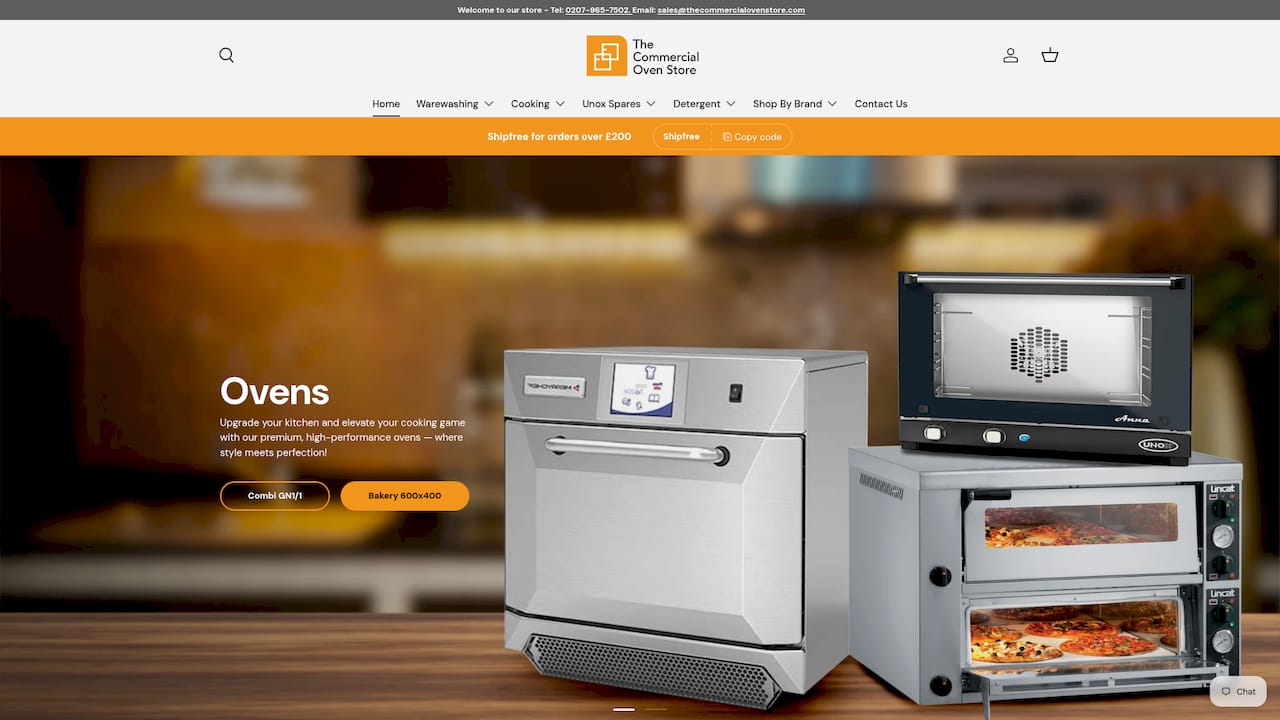
If you’re weighing up capacity against your projected daily volumes, a model like the Unox Bakerlux SHOP.Pro™ Master Arianna.Matic 4 Grid suits growing independent bakeries needing consistent multi-tray output. Before requesting a quote, have your peak daily tray count, your site’s power supply type, and your available floor space ready, since that’s exactly what a site survey needs to confirm capacity and installation costs. Flexible payment options can help spread the cost so you don’t need to find the full amount upfront. Visit Thecommercialovenstore to browse current oven ranges and request a quote tailored to your kitchen.
Sources
- Starting a food business
- Health and Safety Checklist for Bakeries (PDF)
- Bakery Equipment Cost Guide: How Much Does it Cost?
FAQ
Do I need to register my bakery before buying equipment?
Register with your local authority before trading, allowing time for processing and compliance checks, as required by GOV.UK’s food business guidance, and factor its facility requirements into your equipment layout before you order.
How often does bakery equipment need PAT testing?
Portable electrical equipment such as mixers and hand tools typically needs annual PAT testing, with more frequent checks recommended for heavily used machinery in a commercial kitchen.
What size oven does a small UK bakery need?
Size your oven to around 1.25 to 1.5 times your expected peak daily demand rather than your average day, and Thecommercialovenstore’s site survey process can confirm the right grid count against your actual menu.
Is it better to buy new or used bakery equipment?
New equipment carries a manufacturer warranty and known efficiency ratings, while used equipment from a reputable refurbisher with PAT testing and service history can offer real savings for a tight startup budget.
What should I buy first when opening a bakery?
Prioritise your oven, one mixer, basic refrigeration, and core smallwares before opening, and delay a second oven or additional dough handling equipment until sales data confirms where demand actually sits.