

Most commercial combi ovens need a permanent cold-water inlet, an accessible shut-off valve, and a heat-resistant drain rated to at least DN50 or 1 inch. A site water test and, in most cases, filtration or softening are required before commissioning. Everything else, exact pressure figures, thread sizes, connection counts, comes from the model’s own connection data, not a generic spec sheet.
TL;DR:
- Most combi ovens require a permanent cold-water inlet with specific fittings, pressure ranges, and a shut-off valve within 2 meters, verified by site measurement.
- Drainage must have a minimum diameter of DN50, a 5% fall, and materials rated for repeated hot discharges to prevent blockages and ensure proper discharge.
- Plumbing routes should account for door swing, access, and surface conditions, with water, drain, and power connections kept within 2 meters and clear for future servicing.
- Electrical, gas, and ventilation connections must be performed by licensed professionals, ensuring routing avoids shut-offs and includes correct hood sizing for condensate capture.
- Water quality heavily influences performance, requiring testing for hardness, TDS, and chlorine, with dual-stage filtration or softening needed if thresholds are exceeded.
Table of Contents
- What are the water supply requirements for a combi oven?
- How should the drain be sized and installed?
- What clearances and site conditions affect the plumbing route?
- Who handles the electrical, gas and ventilation connections?
- Why does water quality matter for combi oven performance?
- What should be checked at commissioning?
- What ongoing maintenance keeps the plumbing reliable?
- What installers get wrong most often on site
- Get your combi oven installed right the first time
- Sources
- FAQ
What are the water supply requirements for a combi oven?
Every combi oven needs a cold-water feed, but the fittings vary enough between manufacturers that guessing gets installers into trouble. Most units take a G¾ or G½ union, though some specify separate soft and hard water connections on the same appliance, and the only reliable way to confirm which applies is to check the type plate before you order fittings. RATIONAL’s iCombi Pro product data is a useful example of how granular this gets: pressure, connection type and flow rate are all listed per model, not per range.
Inlet pressure typically sits within a band the manufacturer states explicitly, and installers should measure static pressure on site rather than assume it. Where pressure runs outside the stated range, fit a pressure-reducing valve rather than hoping the oven copes.
A few points hold across nearly every brand:
- Cold water only. Never feed a combi oven from a hot supply, even where a dual inlet exists for other reasons.
- Fit an accessible shut-off valve within roughly 1 to 2 metres of the appliance, and don’t bury it behind cabinetry.
- Use rigid pipework or a manufacturer-approved flexible hose. Cheap flex-hoses degrade faster under kitchen heat cycling than most installers expect.
- Fit a strainer or non-return valve at the inlet where the manual specifies one; some models include this as standard, others leave it to the installer.
Manufacturer manuals frequently place a permanent cold inlet within about 2 metres of the oven, with thread sizes and connection counts varying by model. Treat that distance as a planning guide, then confirm it against the specific unit’s installation sheet.
How should the drain be sized and installed?
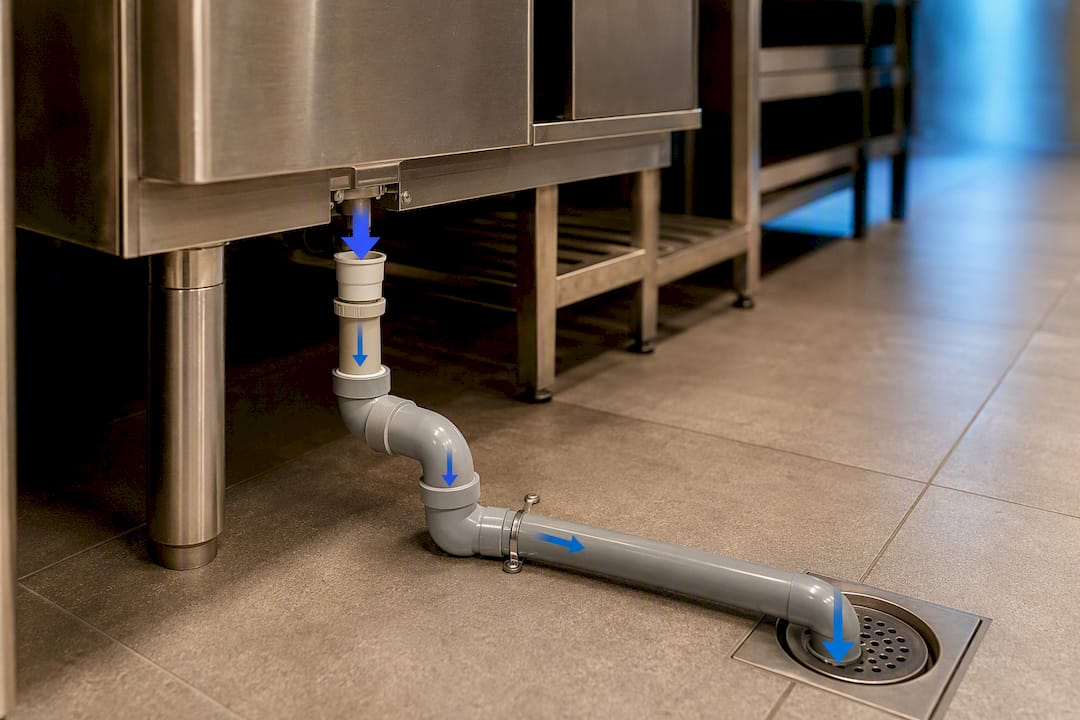
Drainage is where installers most often cut corners, and it’s the fastest route to a failed commissioning check. A minimum diameter of DN50 (roughly 2 inches) with a fall of around 5%, sometimes expressed as ¼ inch per foot, is the baseline most manufacturers specify, and the combi oven installation checklist sets this out clearly alongside minimum waste diameters.
Follow these steps when specifying the run:
- Confirm the model’s minimum drain diameter on the type plate; larger ovens or multi-unit banks often need a bigger waste than the DN50 baseline.
- Set the fall at 5% (1:20) for the full run and secure the pipework so it can’t sag and trap condensate.
- Choose a material rated for repeated cleaning-cycle temperatures. Standard PVC is a poor choice for direct hot discharge; use heat-tolerant waste pipe or an indirect drain with a tundish.
- Keep the run as short as practical. Long horizontal runs increase the risk of blockage and slow drainage under load.
- Fit an air gap or indirect waste connection so the drain can’t siphon back into the oven, and add a drain tempering kit where local discharge temperature limits apply.
Pro Tip: If you’re retrofitting a combi oven into an older kitchen, check the existing waste run before you commit to a position. A drain that worked fine for a dishwasher often falls short of the fall and temperature tolerance a combi oven needs. Full specification detail, including material comparisons, sits in Thecommercialovenstore’s combi oven drain requirements guide.
What clearances and site conditions affect the plumbing route?
Plumbing decisions don’t happen in isolation from the rest of the site survey. Door swing, side clearance for service access, and spacing from combustible surfaces all shape where pipework and drains can physically run, and getting this wrong after the oven arrives means expensive rework.
- Check door widths and corridor turns before delivery; a combi oven that won’t fit through a doorway forces a route change nobody planned for.
- Confirm floor loading and levelness, since an uneven base shifts trap positioning and can leave a drain fighting gravity.
- Keep water, drain and power connections within close proximity, commonly around 2 metres by manufacturer guidance, to avoid long, vulnerable runs.
- Leave rear and side access clear for future service work, not just for the initial install.
Coordinating this properly is closer to a construction planning exercise than a plumbing job on its own. If you’re managing a wider kitchen fit-out around the installation, Axenia Construction’s guide to commercial kitchen construction covers the site-preparation groundwork that determines whether these clearances are even achievable.
Who handles the electrical, gas and ventilation connections?
Plumbing rarely sits in isolation on a combi oven install. Electrical and gas connections must be completed by a licensed electrician or gas fitter, and the routing of pipework needs to stay well clear of isolators and shut-offs so nobody’s tracing a leak next to a live panel.
- A licensed electrician or gas fitter must complete final connections; record startup amperage and voltage in the commissioning report.
- Route water and drain lines away from electrical isolators and gas shut-off points, and keep both accessible without moving the oven.
- Confirm hood or extractor sizing and position before finalising drain routing, since condensate and vent stacks often need to sit clear of the hood’s capture zone.
- Check the hood overhang genuinely captures steam output for the model in question; undersized hoods are a recurring complaint on sites that skipped this check.
- Apply earthing and bonding where the manufacturer or local wiring regulations require it.
Running multiple trades through the same site window is where scheduling tools earn their keep. Teams managing several trades on one job sometimes use platforms like BRCKS’s commercial fit-out site management tools to keep deliveries and trade windows from colliding.
Why does water quality matter for combi oven performance?
Water quality causes more service calls than any mechanical fault on a combi oven. Service teams consistently report that scale and water-related faults dominate callouts, and neglected filtration is usually the root cause.
Manufacturers publish guideline ranges for hardness, total dissolved solids and chlorine that the site water should be tested against before installation, not assumed. Where hardness exceeds the stated threshold, a two-stage filtration system, sediment plus softening, protects the steam generator and sensors far more reliably than a single inline filter.
- Test site water for hardness, TDS and chlorine before ordering any filtration equipment.
- Fit two-stage filtration or softening where hardness sits above the manufacturer’s threshold.
- Avoid sodium-exchange softeners on models where the manual explicitly forbids them; Eloma’s installation manual is one example that labels acceptable and unacceptable treatment types directly on the connection diagram.
- Reverse osmosis suits sites with persistently poor water quality, but check the oven’s steam generator is rated for RO-treated water first.
- Replace cartridges on a schedule tied to throughput, not a calendar guess, and watch for flow drop or visible scale as early warning signs.
Repeat service calls are usually tied to water quality or drain installation faults rather than core mechanical failure, which makes the filtration decision one of the highest-value calls an installer makes on site. Thecommercialovenstore’s combi oven water filter guide covers UK-specific hardness zones and filter sizing in more depth.
What should be checked at commissioning?
Commissioning is where paperwork either proves the install is sound or exposes a shortcut. A model’s installation data shouldn’t be applied generically, since pressure and connection requirements vary between models and the site measurement is what actually confirms readiness.
- Record inlet pressure and flow rate, confirm the isolation valve operates correctly, and check for leaks under load.
- Run a full auto-clean cycle and verify drain flow and discharge temperature; watch for backflow or siphoning during the cycle.
- Record electrical startup amperage and voltage, and confirm breaker sizing and fusing match the manufacturer’s rating.
- Document the filter or softener installed, cartridge type, and the date the next change is due, so the operator has a clear maintenance trail from day one.
What ongoing maintenance keeps the plumbing reliable?
Most plumbing-related failures on a combi oven are preventable with a handful of routine checks rather than a full service call.
- Check the drain runs clear and observe the auto-clean cycle weekly for slow drainage or pooling.
- Inspect filters visually for discolouration or reduced flow, and don’t wait for a fault code to prompt a change.
- Watch for white deposits around door seals or repeated sensor errors; both point to water quality slipping past the current filtration.
- Escalate to a service engineer if descaling doesn’t resolve recurring sensor faults, rather than repeating the same fix.
Pro Tip: Log every filter change against the oven’s operating hours, not the calendar. A site running double covers on weekends burns through cartridge life faster than a quiet weekday kitchen, and hours-based tracking catches that. Thecommercialovenstore’s UK installation failure guide covers the four most common on-site failure patterns in more detail.
What installers get wrong most often on site
The same three mistakes show up repeatedly: no accessible shut-off, an undersized drain run, and filtration treated as optional rather than specified. Each one is cheap to fix during the site survey and expensive to fix after handover. A documented commissioning report, pressure readings, drain checks and filter details is what actually prevents the callback six months later, not a verbal assurance that everything’s “probably fine.”
— Simon
Get your combi oven installed right the first time
You can get direct access to genuine ovens from manufacturers including Rational and Unox, backed by installation support and expert advice that goes beyond a spec sheet handed over at delivery. Rather than piecing together connection data from separate manuals, buyers can get guidance matched to the specific model, plus flexible payment options to help spread the cost of a new oven and its installation.
If you’re planning a combi oven install and want the plumbing right before delivery day, browse the current range of combi ovens or get in touch to arrange a site survey and expert advice on the right model and installation approach for your kitchen.
Sources
- Combi oven installation checklist guide (WebstaurantStore PDF)
- Dialing in uptime: preventive maintenance for commercial combi ovens (TotalFood)
- RATIONAL iCombi Pro (Rational product page)
FAQ
What Are the Wiring Requirements for an Electric Combi Oven?
Wiring must be completed by a licensed electrician, who confirms voltage, amperage and breaker sizing against the specific model’s rating plate. These figures vary significantly between countertop and floor-standing units, so always check the manufacturer’s installation manual rather than assuming a standard circuit will do.
What Are the Downsides of a Combi Oven?
Combi ovens demand more from site infrastructure than a standard convection oven, requiring a dedicated water supply, a heat-resistant drain, and often filtration to protect the steam generator. Neglected water treatment is the most common cause of service callouts, so the running cost of maintenance needs factoring in alongside the purchase price.
Does a Combi Oven Have to Be Under a Hood?
Most commercial kitchens fit combi ovens under an extraction hood to capture steam and heat, and local building or health codes often require it for larger units. Hood sizing and overhang should be checked against the specific model’s steam output before installation, since an undersized hood fails to capture condensate properly.
What Are the Electrical Requirements for a Rational Combi Oven?
Rational publishes model-specific voltage, phase and amperage data on its product pages, and these figures should always be checked against the exact model rather than assumed from a similar unit. A licensed electrician confirms these details and records startup amperage as part of the commissioning report.
How Much Water Pressure Does a Combi Oven Need?
Inlet pressure requirements are set per model by the manufacturer, and installers should measure static site pressure rather than assume it falls within range. Where pressure sits outside the stated band, fitting a pressure-reducing valve before the oven’s inlet resolves most compliance issues.