

Steam leaking from a combi oven almost always comes from one of four places: the door seal, the drain and quench path, a hose or clamp, or an inlet valve that no longer closes fully. Some steam at the door when you open it mid-cycle is normal. Steam pushing past a closed door during a steam programme, or water on the floor or in an idle cavity, is not. This guide shows you how to tell the difference, what your team can check safely, and when to stop and call an engineer.
TL;DR
- Steam escaping around a closed door during a steam programme usually points to a worn, torn, hardened or badly seated door gasket, or to a drip collector that has clogged.
- Water under the oven usually means a cracked hose, a loose clamp, or a blocked or poorly installed drain.
- Water sitting in an oven that is switched off suggests an inlet solenoid valve that is not closing, often because of scale or debris.
- Staff can check the isolation valve, visible hoses, the gasket and the error message. They should never open live electrical covers or pressurised water parts.
- Stop using the oven if the leak is uncontrolled, water reaches electrical areas, or the steam and cleaning functions cannot finish safely.
Table of Contents
- First, work out which kind of leak you have
- Steam leaking at the door
- Water under or around the oven
- Water inside the cavity when the oven is off
- Safe checks your team can make in 15 minutes
- Can you keep cooking with a leak?
- How to prevent steam and water leaks
- What to tell the engineer when you call
- Our perspective
- Choosing or replacing a combi oven
- FAQ
- Sources
First, work out which kind of leak you have
A combi oven makes a lot of steam on purpose, and a good one is built to manage it. A working quench system is designed to create a slight negative pressure that draws steam towards the drain box instead of letting it out of the door. So the first question is not “is there steam?” but “is the steam going where the oven was designed to send it?”
Sort what you see into three groups:
| What you see | Where it is probably coming from | How urgent |
|---|---|---|
| Steam puffing round the edges of a closed door during a steam programme | Door gasket, door adjustment, drip collector, or a quench fault | Fix soon; stop if it is heavy or scalding staff |
| Puddle or drips under or in front of the unit | Drain, hose, clamp or water inlet connection | Fix soon; stop if water spreads towards electrics |
| Water inside the cavity when the oven is off | Inlet solenoid valve not closing fully | Close the isolation valve and call an engineer |
| Steam from the drain or tailpipe | Condensate or quench path fault | Book a service visit |
Note what the oven was doing when it happened: which programme, how long into the cycle, whether it was a cleaning cycle, and whether any error code showed. That detail saves an engineer time and, as you will see below, it is what they will ask for.
Steam leaking at the door
The door is the most common culprit, and the most visible one. According to a service company’s guide to Rational leaks, door leaks come from damaged gaskets, clogged drip collectors or poor door adjustment. The same guide describes steam escaping from the door during a steam programme as a sign the gasket is failing, through tears, flattened sections, hardening or gaps at the corners.
What to look at on the gasket
With the oven cold and switched off, run a clean finger along the whole seal and look closely at it:
- Tears or nicks, especially at the corners where the seal bends most.
- Flattened sections where the profile has lost its shape and no longer springs back.
- Hard, shiny or brittle patches from years of heat and detergent.
- Grease or baked-on residue that stops the seal sitting evenly against the cavity frame.
- Gaps at the corners that you can see light through, or feel steam through on a hot cycle.
If the seal is simply dirty, a gentle wipe will often restore it. If it is torn, flattened or hardened, it needs replacing. Fitting the correct gasket for your exact model is a quick job for an engineer, and it is far cheaper than the knock-on costs of an oven that cannot hold steam: slower cooking, uneven results and wasted energy.
The drip collector and door adjustment
The door also has a channel that catches condensation. If it clogs, water finds another route, usually over the edge and onto the floor. Check it is clear and that nothing has been wedged into it during cleaning.

Door adjustment matters too. A door that has been knocked by a trolley, or that has dropped slightly on its hinges, will not compress the seal evenly. If the gasket looks healthy but steam still escapes in one particular spot, adjustment is the likely cause. That is a job for a trained engineer rather than something to attempt with a spanner between services.
When the door leak is really a drain problem
A gasket in good condition can still be blamed for a leak it did not cause. If the quench or drain path is not pulling steam away properly, pressure builds and steam looks for the easiest exit, which is the door. Steam coming from the tailpipe or drain outlet points the same way: a condensate or quench-system fault, according to an HVAC engineers’ discussion of combi condensation. That is why a new gasket that does not cure the problem should lead you to check the drain next, not to a second gasket.

Water under or around the oven
Puddles are a different problem from steam. They point to the oven’s plumbing, not its door.
The same service guide lists the usual causes of water beneath the unit: cracked drain or steam hoses, loose clamps, a blocked or poorly installed drain, and a leaking water inlet valve.
Look for the following without removing any panel:
- Visible hoses. Are any kinked, crushed against the wall, or sitting at an odd angle because the oven was pushed back after cleaning?
- Clamps and connections you can see. Is there a wet trail, or limescale crusting, around a joint?
- The floor drain. Is it blocked with food waste, fat or scale, so that oven waste water backs up?
- The pattern. Does water appear only after steam programmes, only after cleaning, or all the time? Only after steam suggests the drain. All the time suggests an inlet or hose fault.
If you suspect the drain, it helps to understand what kitchens commonly get wrong with their drainage. This overview of restaurant kitchen plumbing issues covers the sort of blockages that make trade appliances back up. UK installers will also work to local water regulations, so ask for a plumber who knows commercial kitchens.
Installation is often the hidden cause. A drain run with too little fall, a hose that is too long or too tight, or an air gap done badly can all cause leaks from the first week. Our own pages on what installers should prepare on combi oven plumbing and four common on-site failures in UK combi installations go through these in detail.
Water inside the cavity when the oven is off
This one catches people out. You close up at night, the oven is off, and in the morning there is water in the cavity.
Water collecting in an idle oven indicates that the water inlet solenoid valve is not closing fully, often because of mineral scale or debris sitting on the valve seat, according to the service company’s technical guide. The valve is meant to shut hard. When scale stops it seating, mains water creeps in slowly.
What to do:
- Close the external water isolation valve at the end of the day until an engineer has looked at it.
- Note the error messages and how much water you found.
- Do not attempt to strip the valve. It is a pressurised water component that sits next to electrics.
A valve that has been fouled by scale is a warning about your water quality. If you are in a hard water area, which covers much of the south and east of England, the cure is not just a new valve. It is water treatment and regular descaling. See our guides to monthly descaling of a combi oven and what to do about limescale right now.
Safe checks your team can make in 15 minutes
You do not need tools for most of this. In line with the advice from a UK catering repair firm, operators can safely check whether the external water isolation valve is open, look for kinked visible hoses and record any error messages.
A sensible routine:
- Switch the oven off at the control and let it cool.
- Check the isolation valve on the water supply is fully open (or closed, if you suspect an idle-oven leak).
- Look at all the hoses you can see without removing panels for kinks, crushing or wet marks.
- Inspect the door gasket along its full length, and clear the drip collector.
- Check the floor drain is flowing freely.
- Photograph any error code and write down the programme that was running.
- Run a short steam cycle with the door closed and watch where the steam goes. Stop if you see water near the electrics.
What staff must not do: dismantle pressurised water components, take off live electrical covers, or work on anything that involves gas or high voltage. Those jobs belong to a qualified engineer.
Our wider combi oven troubleshooting guide for chefs walks through more of the quick checks, and the articles tagged combi oven troubleshooting collect the rest.
Can you keep cooking with a leak?
Sometimes, briefly. Not always.
Stop using the oven if any of these apply:
- The leak is uncontrolled or getting worse during service.
- Water is getting into electrical areas, or onto the floor where staff walk.
- The oven can no longer complete its steam or cleaning functions safely.
- The steam at the door is hot enough to scald someone loading trays.
These limits follow the guidance from the UK repair firm’s technical page, which also tells staff not to remove live electrical covers. A minor gasket weep on a dry-heat programme is a booking for next week. Water pooling around a plug socket is a stop-now situation. Put a wet-floor sign down, isolate the water, and make a note of what happened.
A slipped tray of hot food on a wet floor costs far more than a day of reduced menu. If the oven is central to your service, ask your supplier whether a loan or replacement option exists while it is repaired.
How to prevent steam and water leaks
Most leaks are slow-burn problems that daily habits would have prevented. The service guide recommends water treatment, scheduled cleaning programmes and gentle daily wiping of the gasket. In practice:
- Wipe the gasket daily with a soft cloth and warm water. Avoid scrapers and abrasive pads.
- Run the cleaning programme on schedule, using the detergent the manufacturer specifies. Skipping it lets grease harden on seals and block drain paths. Our combi oven cleaning guide for professional kitchens covers this.
- Treat your water. Scale is the enemy of valves, steam generators and drains. Fit the filtration or softening your model and your local water hardness call for.
- Keep the door in good order. Do not slam it, hang things on the handle or lean trolleys against it.
- Do not push the oven back hard after moving it for cleaning, as this kinks hoses.
- Keep the door glass in good condition, since a damaged door can affect how it seals. See our notes on safe oven door glass for commercial kitchens.
A worked example makes the cost clear. A café runs steam programmes twice a day and wipes the gasket only when it looks grubby. After a few months the seal hardens at the lower corners, steam starts to weep, the drip collector clogs with grease and water runs onto the floor at the front. One fortnightly check and a daily wipe would have flagged it early.
What to tell the engineer when you call
You will get a faster, cheaper visit if you have these ready, as the UK repair firm suggests: the appliance model, the serial number, the site postcode and a photo of any error code. Add:
- When the leak started and what the oven was doing.
- Whether it happens only on steam, only on cleaning, or when idle.
- What you have already checked, including whether the isolation valve was shut.
- Whether the oven is under warranty.
Call an engineer straight away if quick checks fail, or if the repair involves gas, high voltage or opening sealed components.
Our perspective
Most of the leak calls we hear about are not bad ovens. They are good ovens with a tired seal, a scaled valve or a drain that was never quite right at installation.
That is why we put so much weight on the front end of a purchase. We supply genuine ovens from manufacturers such as Rational and Unox, and we help you match the model to your kitchen, your water supply and your drainage before anything is delivered. A well-specified, properly installed combi oven is far less likely to leak in the first place.
Our advice is simple. Look after the gasket, treat the water, keep the cleaning programme running, and do not let staff open anything pressurised or live. When something does go wrong, record it carefully and get a qualified engineer in early.
Simon
Choosing or replacing a combi oven
If your oven is old, leaks recur, or repairs are starting to outweigh the value of the unit, replacement may be the sensible answer. We sell combi ovens and offer expert advice and installation for bakeries, cafés, restaurants and caterers, and our team can help you choose the right size and specification for your menu and covers.
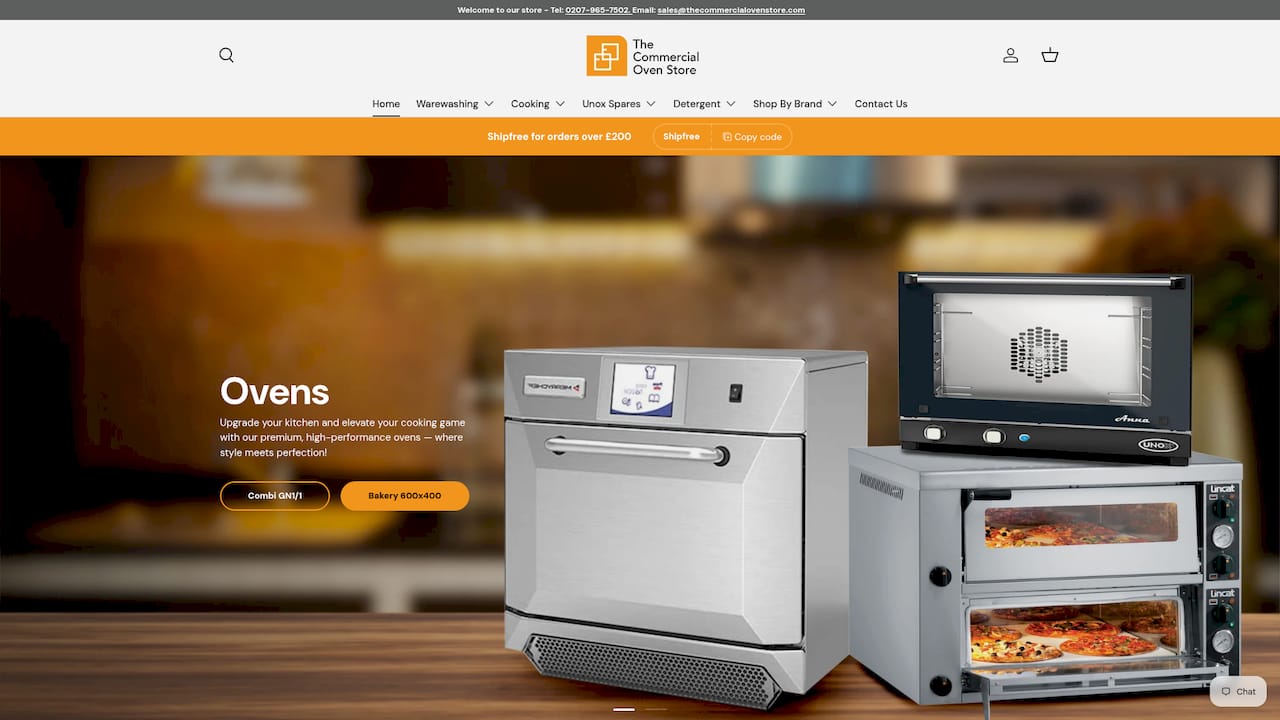
Popular choices include the Rational iCombi Pro 10-1/1 for smaller kitchens and the Rational iCombi Pro 20-1/1 for high-volume service. Flexible payment is available through iwocaPay, and we also offer lease finance, so the cost can be spread. Before you order, our guide on three site checks for catering oven fit will help you avoid problems with space, services and ventilation.
FAQ
Is a little steam at the door normal on a combi oven?
Some steam escapes when you open the door, and that is normal. Steam pushing past a closed door during a steam programme is not, and usually points to a worn gasket, a clogged drip collector or poor door adjustment. If it keeps happening, have an engineer check the seal and the drain path.
Why is there water in my combi oven when it is switched off?
The water inlet solenoid valve is most likely not closing fully, often because of scale or debris on the valve seat. Shut the external isolation valve and record any error message. Then ask an engineer to inspect or replace the valve and review your water treatment.
Can I replace the door gasket myself?
Wiping and inspecting the gasket is a job for staff. Replacement depends on your model and your company’s maintenance policy, and any work near live electrics, gas or pressurised water should be left to a qualified engineer. Use the correct manufacturer part for your exact model.
Should I keep using a leaking combi oven during service?
Only if the leak is minor and controlled. Stop if water reaches electrical areas, if the leak is getting worse, or if the oven cannot complete steam or cleaning functions safely. Isolate the water supply and call an engineer.
Sources
- Rational combi oven leaking water: gasket, drain and valve causes
- Combi oven water inlet fault technical page
- Condensation from combi ovens, HVAC-Talk
- Common restaurant kitchen plumbing issues