

Yes, descaling is essential. Run the oven’s built-in descaling programme where one exists; otherwise follow an OEM-approved manual routine with the correct chemical, a dedicated pump and proper PPE. Skipping it degrades steam output, trips sensor faults and shortens the boiler’s working life. Rinse thoroughly, verify steam performance afterwards, and call an authorised technician if fault codes persist or the manual restricts the procedure to trained engineers.
TL;DR:
- Using the built-in descaling programme is recommended, but manual routines require correct chemicals, proper PPE, and thorough rinsing.
- Different brands like Rational, Neff, Electrolux, and Lincat have specific descaling methods and chemicals; always consult the manual before deviating.
- Frequent descaling is vital for hard water areas, with monthly checks and filters replaced every three to six months, to prevent scale buildup and faults.
- Prioritize fixing water filtration and routine cleaning over reactive descaling, as untreated water causes most scale-related problems.
- Always follow safety protocols, including PPE and spill containment, and consider professional servicing when in doubt or if warranty restrictions apply.
Table of Contents
- How do you descale a combi oven step by step?
- Does the descaling process differ by brand?
- What PPE and chemical safety rules apply?
- How often should you descale a combi oven?
- What prevents limescale building up in the first place?
- What if something goes wrong during descaling?
- Where The Commercial Oven Store fits into your maintenance routine
- What the maintenance data actually tells you to prioritise
- Get your descaling supplies and service sorted
- Sources
- FAQ
How do you descale a combi oven step by step?
The exact sequence varies slightly by brand, but the underlying logic holds for nearly every commercial combi or steam oven on the market. Get the preparation right and the rest is largely mechanical.
Preparation
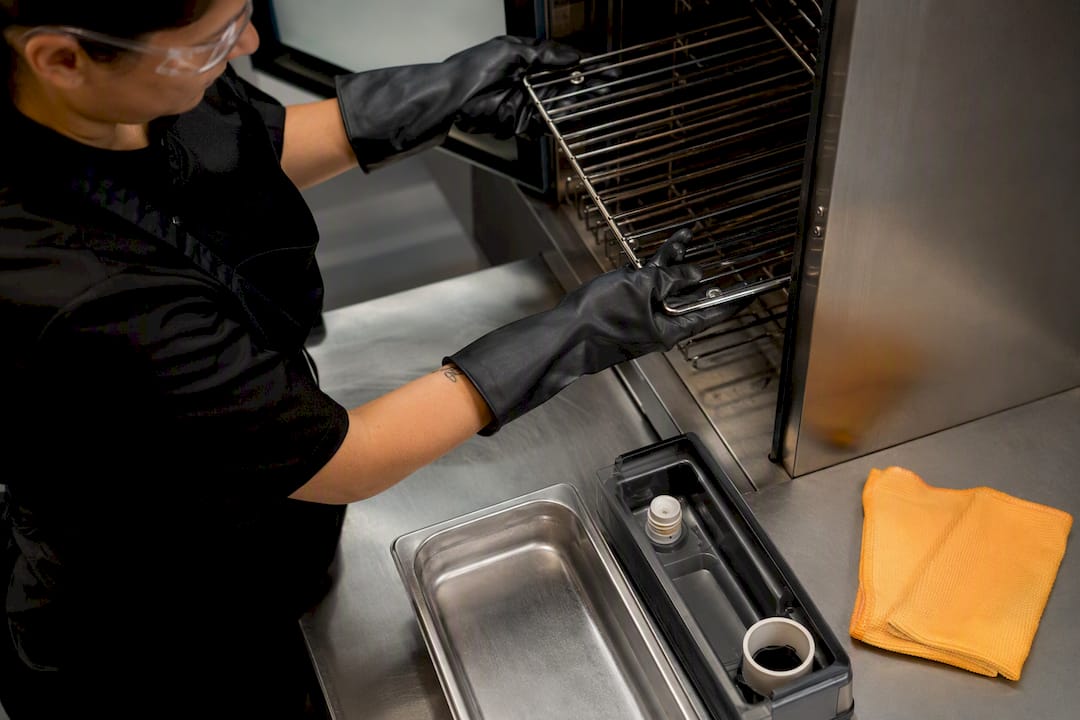
Put on chemical-resistant gloves and eye protection before opening the chemical container. Remove racks, trays and any loose accessories, empty water reservoirs where fitted, and check the oven manual to see whether the unit needs isolating from the power supply during a manual descale. Some models run descaling programmes live; others explicitly require isolation first, so this step is not optional guesswork.
Choosing your method
If the oven has an automatic descaling programme, use it. It doses chemical volumes correctly and manages timing and rinsing far more reliably than a manual sequence. Where no programme exists, or the unit needs a boosted clean, you will be running a manual pump-and-descaler routine instead.
- Connect the descaling pump or dosing hose to the designated inlet, following the model manual’s placement instructions exactly.
- Measure the descaling chemical to the volume specified for your oven’s boiler capacity. Never estimate this by eye.
- Start the circulation cycle and expect visible foaming as the solution reacts with scale deposits. This is normal, but overflow is not.
- Let the cycle run its full duration. Cutting it short leaves partially dissolved scale that can redeposit.
- Drain the system fully before beginning the rinse phase.
Rinse and verify
Run at least two full rinse cycles with clean water; one is rarely enough to clear residual chemical from the boiler and pipework. Check the drain for correct flow and no blockages, then run a short steam cycle to confirm output has returned to normal before clearing any lingering error codes on the control panel.
Pro Tip: Log the chemical volume and cycle time you actually used, not just the date. When steam output drifts again, that log tells you whether the last descale was too light, not just when it happened.
Does the descaling process differ by brand?
It does, and the differences matter more than most operators assume. Treat the generic workflow above as a starting point, not a substitute for the manual.
- Rational: Larger commercial units typically require an authorised descaling pump and Rational’s own descaling chemical. Rational’s published procedure sets precise volumes and, on several models, states the process is for authorised technicians only rather than general kitchen staff.
- Neff: Consumer-style steam ovens generally run a simplified in-unit programme. Neff’s own guidance recommends its liquid descaler and walks through the on-screen prompts, which makes this one of the more straightforward routines in this list.
- Electrolux: Similar to Neff, most Electrolux steam ovens use an automated descaling cycle triggered from the control panel, with an OEM descaler liquid rather than a manual pump setup.
- Lincat: Smaller commercial counter-top units vary by model in chemical volume and drainage arrangement, so check the specific manual rather than assuming parity with larger combi ovens.
Whatever the brand, confirm any deviation from the generic method against the model manual before you adapt a routine designed for a different unit.
What PPE and chemical safety rules apply?
Descaling chemicals are typically acidic and corrosive at working strength, so treat them with the same caution as any industrial cleaning agent.
- Wear chemical-resistant gloves, eye protection and an apron, and work with good ventilation running.
- Read the safety data sheet and product label for dilution ratios, first-aid measures and spill response before opening the container.
- Contain and neutralise spills rather than letting concentrated chemical run to drain; dilute thoroughly first.
- Dispose of used solution according to local waste rules, and never mix descaling chemicals with other cleaning agents.
Pro Tip: Keep the SDS for whatever descaler you stock next to the oven, not filed away in an office. When something splashes, nobody has time to search a shared drive.
How often should you descale a combi oven?
Frequency depends on usage intensity and water hardness, but there are workable defaults. Parts Town recommends descaling steam generators monthly, checking drain lines every one to two months, and replacing water and air filters every three to six months.
- Heavy commercial sites often require more frequent full descales, with basic checks regularly.
- Watch for reduced steam output, longer cook cycles, scale-related fault codes and visible white deposits around door seals and injection points.
- Harder water accelerates scale build-up; point-of-use filtration reduces how often you need to intervene.
Service data consistently points to water and drainage issues as the leading cause of scale-related service calls, which makes water quality the variable worth fixing first, not just descaling more often.
What prevents limescale building up in the first place?
Descaling manages scale after it forms. Prevention stops it forming in the first place, and it is the cheaper problem to solve.
- Point-of-use water filters reduce scale at source and often pay for themselves through fewer descaling call-outs and fewer failed components, an ROI Mattys models directly against ongoing repair costs.
- Daily auto-clean cycles using OEM-approved detergents cut the residue that otherwise combines with mineral deposits to accelerate scaling.
- Keep a maintenance log recording cartridge changes, descale dates and service visits. Patterns show up in the log long before they show up as a breakdown.
For sites on hard mains water, our guide to water hardness for combi ovens covers how to measure hardness and size a filtration cartridge correctly.
What if something goes wrong during descaling?
Most issues during a manual descale are recoverable without calling a technician, provided you catch them early.
- If foaming overflows the boiler, stop the cycle immediately, contain the spill, dilute with water and re-run with a lower chemical volume per the manual’s guidance.
- If steam output stays low after a full descale, inspect nozzles, sensors and drain lines for blockages, then run repeated rinse cycles before assuming the descale failed.
- Escalate to a qualified technician if you see visible corrosion, fault codes that persist after rinsing, or if the manual restricts descaling to authorised service engineers, as several Rational models do.
Where The Commercial Oven Store fits into your maintenance routine
Suppliers stock OEM-compatible detergents, filtration components and spare parts alongside expert advice on matching them to your model. For units under warranty, or larger commercial combi ovens where the manual calls for an authorised pump, booking an installation or service visit through official channels avoids the risk of voiding cover with the wrong chemical or equipment.
If you want the fuller routine cleaning picture rather than just the descaling step, our combi oven cleaning guide and our piece on dealing with limescale cover the daily and weekly habits that reduce how often you need to descale at all.
What the maintenance data actually tells you to prioritise
Most advice on combi oven care treats descaling as the headline task and water quality as an afterthought. That gets the priority backwards. Scale is a symptom of untreated water and inconsistent cleaning, not an independent problem you solve by descaling harder or more often.
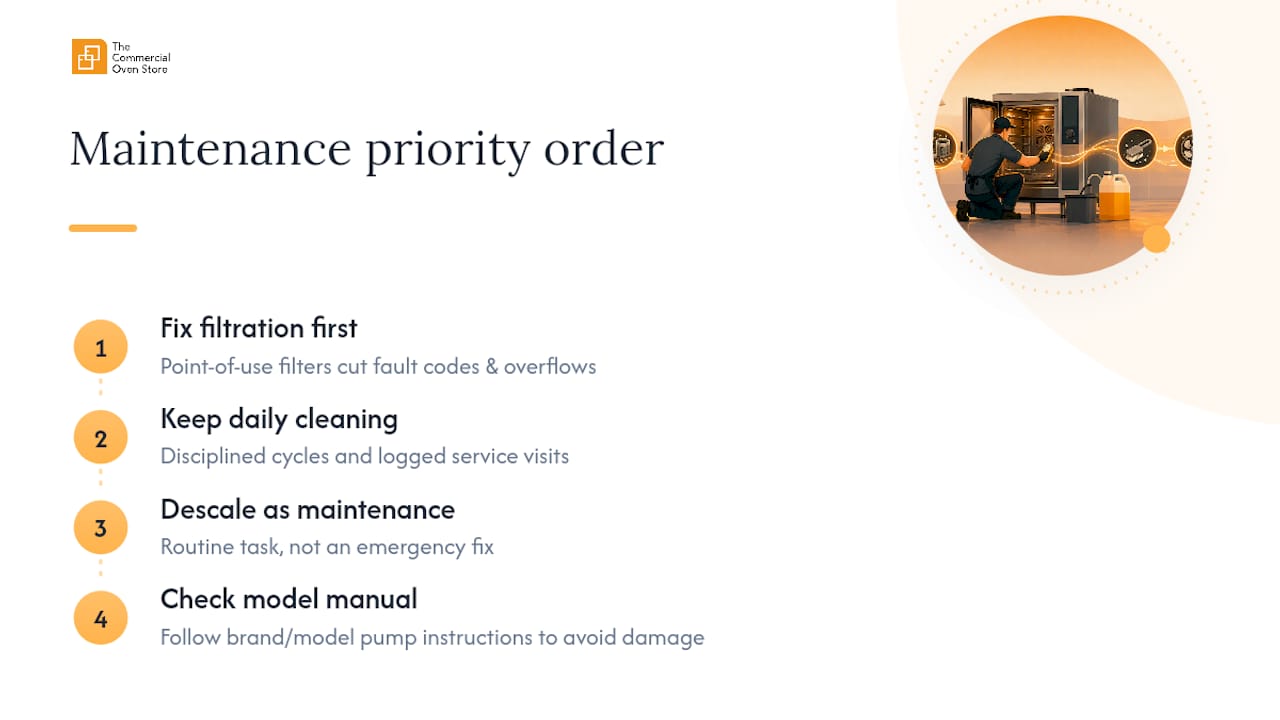
The evidence backs a different order of operations: fix filtration first, keep the daily clean cycle disciplined, and treat descaling as maintenance rather than a rescue mission. Sites that filter at point of use and log every service visit rarely hit the fault codes and overflow problems that make descaling stressful in the first place. Sites that skip filtration and only react to visible white crust are the ones booking emergency technician visits.
The other place conventional advice falls short is brand generality. Treating Rational, Neff, Electrolux and Lincat as interchangeable for descaling purposes is how warranties get voided and coatings get damaged. Read the model manual before you touch the pump.
— Simon
Get your descaling supplies and service sorted
There is direct access to OEM-compatible detergents, filtration cartridges and spare parts for combi ovens from leading manufacturers, backed by expert advice on which product fits your model rather than a generic best guess.
If your oven’s manual calls for an authorised pump or you would rather not risk a warranty on a manual descale, book a professional installation or service visit through Thecommercialovenstore. Browse the current range of commercial ovens if persistent scale damage means replacement makes more sense than repair, or get in touch for a quick quote on parts, filtration or a service call.
Sources
- Dialing in Uptime: A Practical Guide to Preventive Maintenance for Commercial Combi Ovens
- How to Clean a Combi Oven | Parts Town
- How to Descale a Rational Combi Oven - techtown
Always check your own oven’s manual before adapting any generic routine.
FAQ
How do I clean my combi oven?
Run the daily auto-clean cycle with an OEM-approved detergent, wipe down seals and trays by hand, and check filters weekly; this keeps residue from combining with minerals to accelerate scale.
Is descaling solution better than vinegar?
Yes. OEM descaling solutions are formulated for the specific metals and seals in your oven, while vinegar is widely discouraged by operators on modern combi ovens because it can damage components and is not manufacturer-approved.
How do I descale a Rational combi oven?
Use Rational’s own descaling chemical with the authorised pump and measured volumes specified in the manual; several models restrict this procedure to trained technicians.
How often should a combi oven be descaled?
Most operators should descale monthly for heavy use, check drain lines every one to two months, and replace filters every three to six months, adjusting upward for harder water.
What services are available for combi oven maintenance?
There are suppliers of OEM-compatible detergents, filtration parts and spares, plus expert advice and installation or service booking for combi, convection and speed ovens.