

A speed oven cooks fast by pairing microwave energy with forced hot air, often adding impingement jets or infrared elements, so food heats internally and browns on the surface at the same time. That combination, run through staged power settings, is what lets a speed oven finish a dish in a fraction of the time a conventional oven needs, while still delivering a crisp or browned finish at the end of the cycle.
TL;DR:
- Speed ovens have high microwave power ratios that can lead to uneven browning if not carefully programmed, especially during early heating stages.
- Dense, frozen, or large items require more airflow and infrared time, reducing microwave reliance for even cooking.
- Maintenance issues such as blocked jets and dirty filters significantly affect performance, but regular cleaning prevents most problems.
- The typical reduction in cooking time varies by dish, with snacks and rethermalization seeing the most benefit compared to larger, slower-cooking items.
- Best suited for high-volume, quick-turnaround kitchens, speed ovens are less effective for slow-baked or delicate pastries and come at a higher purchase price than conventional models.
Table of Contents
- The heating methods that make up a speed oven
- How power balance and staging are controlled
- Common speed oven types and what they suit
- Realistic speed and throughput expectations
- Pros, cons and where a speed oven fits best
- Common faults and a practical maintenance checklist
- Loading, programming and ventilation basics
- Practical notes and resources from our team
- Who actually benefits most from a speed oven
- Get the right oven and support from our team
- FAQ
The heating methods that make up a speed oven
Each technology inside a speed oven does a different job, and understanding what each one contributes explains why the combination works so well.
- Microwave energy agitates water molecules throughout the food, heating it from the inside out, but it cannot brown or crisp a surface on its own.
- Convection circulates heated air around the cavity, cooking the exterior and helping set texture, though it works more slowly than the next method.
- Impingement forces that hot air through nozzles at high velocity, stripping away the cooler boundary layer around food so heat transfers to the surface far faster than standard convection.
- Infrared or radiant elements add direct, intense surface heat for searing and colour, useful in the closing seconds of a cycle.
A typical sequence might open with a microwave-heavy stage to drive heat into the centre of the food, then shift towards air and finish with a short infrared or high-impingement burst to set colour and crust.
Pro Tip: If a dish comes out hot but pale, the programme likely needs a longer finishing stage on air or infrared rather than more microwave time.
How power balance and staging are controlled
Most speed ovens display power splits as a ratio, such as 90/10 or 70/30, showing the proportion of microwave to air or infrared energy applied during a stage. A higher microwave share cooks faster but risks a soggy or uneven surface, while a higher air or infrared share slows the cycle but improves browning and crisping.
- Early-stage heating usually leans on microwave energy to bring the centre of the food up to temperature quickly.
- Finishing stages shift towards air or infrared to colour the surface without overcooking the interior.
- Humidity controls, where fitted, add moisture to protect delicate items from drying out during longer air-heavy stages.
- Temperature probes let the oven switch stages automatically once the food reaches a set internal temperature, rather than relying on fixed timings.
Dense or frozen items generally need more air and infrared time to cook through evenly, while thin or pre-cooked items can run with a higher microwave share.
Common speed oven types and what they suit
Speed ovens come in a few distinct formats, and the format largely dictates where and how an oven gets used.
- Benchtop or compact units suit cafes and small kitchens needing quick rethermalisation or single-item cooking without a full extraction system.
- Built-in or underbench models integrate into existing kitchen lines, offering more capacity while fitting standard worktop heights.
- Commercial floor-standing or multi-grid ovens handle higher throughput for busy kitchens, often at the cost of a larger footprint and more demanding ventilation needs.
Capacity, placement and extraction requirements all scale with the format, so the right choice depends on covers served per hour rather than kitchen size alone.
Realistic speed and throughput expectations
Reductions in cooking time against a conventional oven vary by dish, load and model, so it helps to think in ranges rather than fixed numbers. A frozen portion of chips or a pre-made panini will cook markedly faster in a speed oven than in a standard convection oven, while a large dense roast sees a smaller relative benefit because its core still needs time to come up to temperature.
Manufacturer and trade explainers describe high-speed ovens as combining microwave, convection and impingement specifically to cut cooking times for common prep items, which is why they suit high-turnover service more than slow-roasted dishes.

Throughput in a commercial setting also depends on recovery time between loads and how well the programme matches the item, not just the headline cooking time.
Pros, cons and where a speed oven fits best
Speed ovens earn their place in a kitchen when turnaround time matters more than capacity for very large batches.
- Advantages include faster service times, programmable consistency across staff and shifts, and a smaller footprint than a full combi or deck oven.
- Limitations show up with delicate pastries, very large roasting joints or anything needing slow, even heat over a long period.
- Best-fit operations include high-volume cafes, quick-service kitchens doing rethermalisation, and small-batch bakeries needing fast turnaround on individual items.
- A conventional oven, combi oven or fryer remains the better tool for large-format baking, delicate proving work or anything needing deep-fried texture.
Cost is a real factor too: a speed oven typically sits at a higher price point than a basic convection model, so the extra speed needs to translate into covers served or labour saved.
Common faults and a practical maintenance checklist
Most performance problems in speed ovens trace back to airflow or heating element issues rather than faults in the control electronics.
- Blocked impingement jets cause uneven browning and longer cook times, usually from grease build-up around the nozzles.
- Magnetron wear shows up as slower internal heating even when the display shows a normal cycle running.
- Uneven colour across a load often points to a dirty catalytic converter or filter restricting airflow rather than a programming fault.
- Daily cleaning of interior surfaces and door seals prevents grease from reaching the jets and sensors.
- Weekly checks on filters catch build-up before it affects airflow.
- Annual inspection of the catalytic converter or filter assembly, carried out as part of a scheduled service, keeps performance consistent and avoids costly element replacement.
Pro Tip: Never clean a catalytic converter mesh with harsh chemical degreasers: they can strip the catalytic coating permanently and the part cannot be restored.
Loading, programming and ventilation basics
Getting consistent results from a speed oven comes down to how food is loaded and which programme is matched to it.
- Stagger trays and leave gaps between items so air jets and microwave energy can reach every surface evenly.
- Switch programmes for frozen versus fresh items, since frozen food needs a longer initial stage to avoid a cold centre.
- Add a short finishing stage on air or infrared whenever a crisp top is wanted, rather than extending the main cycle.
- Use only cleaning agents approved for the oven’s interior coating, since the wrong product can damage sensors or catalytic surfaces over time.
UK ventilation rules set specific extraction requirements depending on oven output and kitchen layout, and ventless models rely on internal filters or catalytic converters instead of ducted extraction, so checking which category an oven falls into before installation avoids compliance problems later.
Practical notes and resources from our team
We put together detailed guides on speed ovens versus microwaves and on day-to-day maintenance for kitchens weighing up which format suits their service. Our guide to the Unox range covers model-level detail for anyone narrowing down a specific oven, and we offer professional installation alongside flexible payment through iwocaPay for kitchens planning a purchase.

Who actually benefits most from a speed oven
In our experience, the kitchens that gain the most are those running high covers with repetitive, time-pressured items such as toasted sandwiches or reheated portions. The most common mistake is buying one expecting it to replace a combi oven for large roasts or slow bakes.
— Simon
Get the right oven and support from our team
Choosing between a benchtop speed oven and a full commercial unit is easier with a conversation first, which is why we offer expert advice alongside every purchase. We also provide professional installation and flexible payment options, so the upfront cost does not have to hold back a kitchen that needs faster service now.
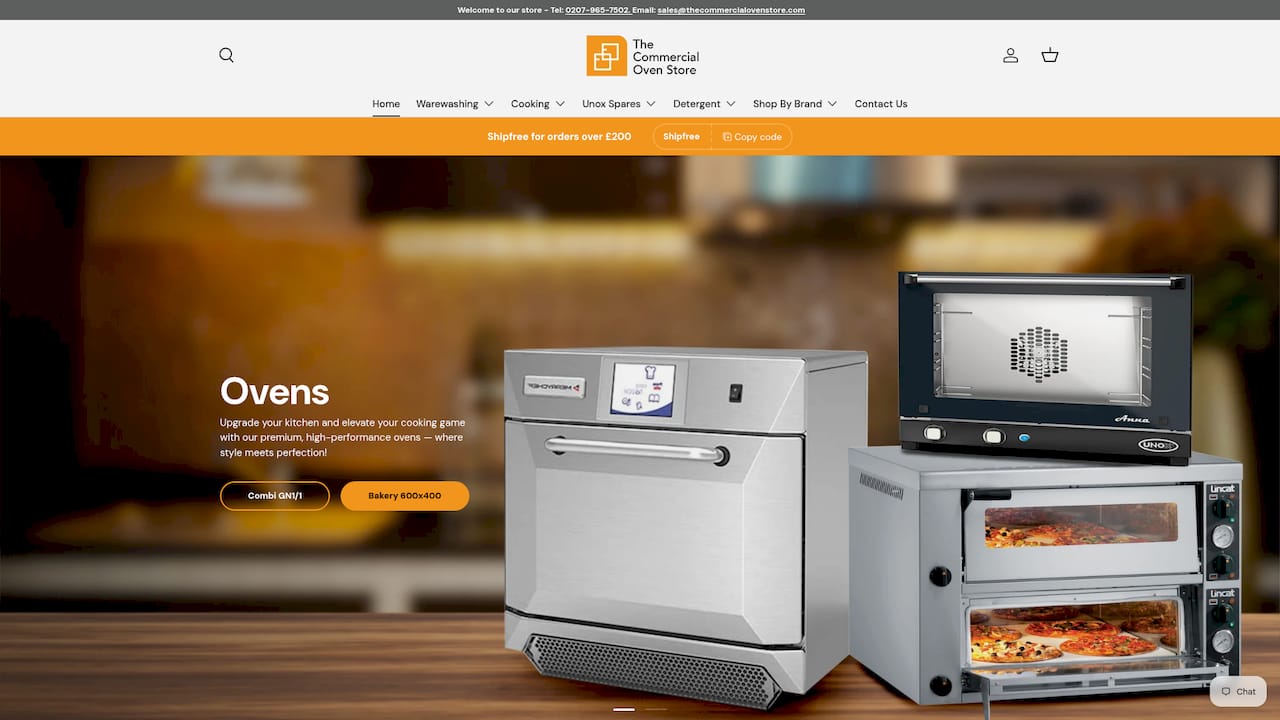
Browse our commercial ovens collection or get in touch through our main site to talk through which speed oven fits your kitchen’s volume and layout.
FAQ
What are the pros and cons of a speed oven?
A speed oven cooks faster than a conventional oven and offers consistent, programmable results, which suits high-turnover kitchens well. Its main drawbacks are a higher purchase cost and limited suitability for very large roasts, delicate pastries or slow, even bakes.
What are the common problems with speed ovens?
The most frequent issues are blocked impingement jets, uneven browning from a dirty catalytic converter or filter, and slower internal heating from a worn magnetron. Regular cleaning and an annual service check catch most of these before they affect food quality.
Which is better for me, a microwave or a speed oven?
A microwave only heats food internally and cannot brown or crisp a surface, while a speed oven combines microwave energy with forced air or infrared to finish food with texture as well as heat. A speed oven suits a busier kitchen needing both speed and presentation, while a microwave suits simple reheating tasks.
Do speed ovens air fry?
Speed ovens use impingement and convection to circulate high-velocity hot air around food, producing a similarly crisp exterior to air frying on items like chips or breaded proteins. They are not marketed as air fryers specifically, but the airflow mechanism achieves a comparable crisping effect alongside the microwave and infrared stages.